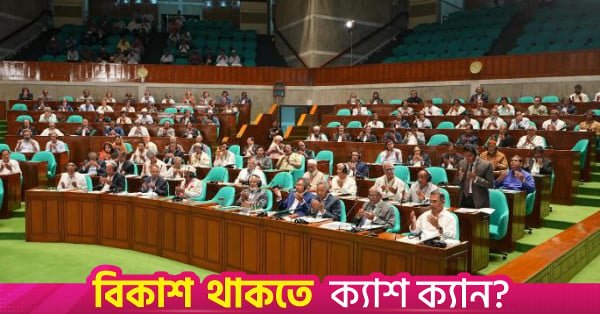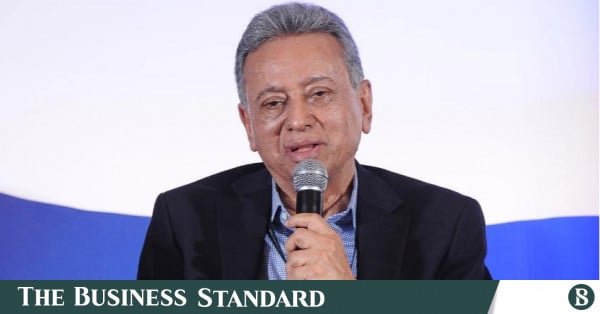
Finance Minister Amir Khosru Mahmud Chowdhury has said that over 16 years, a “fascist government” pushed the economy to the brink of collapse through widespread corruption and unchecked plundering, while also weakening social and institutional arenas.
He made the remarks today (10 April) while delivering a statement under Rule 300 in the National Parliament.
A speech under Rule 300 of the parliamentary rules of procedure refers to a formal, written statement delivered by the government in parliament on matters of urgent public importance or national policy. Ministers typically present such statements with the speaker’s permission to clarify key issues, and they are recorded as significant parliamentary proceedings.

The finance minister then put forward the statistics of different indicators in the last few years.
Economic growth and inflation
The finance minister said that during the Awami League’s 16-year tenure, economic growth declined while inflation surged.
In fiscal year 2005–06, GDP growth at constant prices stood at 6.78%, while inflation was relatively controlled at 7.17%, he mentioned.
By the end of fiscal year 2023–24, growth had fallen to 4.22%, while inflation rose to 9.73%, which he attributed to policy distortions and economic mismanagement.
Industrial growth dropped from 10.66% in 2005–06 to 3.51% in 2023–24, while agricultural growth declined from 5.77% to 3.30% over the same period.
Employment
He noted that when an economy loses industrial momentum, employment contracts and productivity declines – trends that have been evident in recent years.
Over the past decade, agriculture’s share in value addition fell by around 4 percentage points, while industry and services expanded. However, employment increased by 4.8% in agriculture, whereas it declined in industry and services.
Due to insufficient job creation in higher-productivity sectors, many young people were forced into agriculture, intensifying disguised unemployment and limiting income growth.
Currently, agriculture contributes only 11.6% to national value addition but employs nearly 41% of the workforce—highlighting low productivity and structural weaknesses in the labour market, as well as the risk of jobless growth.
Savings and investment
Between 2001 and 2006, policies ensured a healthy balance between savings and investment, with national savings at 29.94% of GDP and investment at 28.75%.
By 2023–24, this balance reversed: investment rose to 30.70% of GDP while savings declined to 28.42%. The gap was financed through foreign sources, increasing pressure on the external sector.
Exchange rate
In 2005–06, the exchange rate stood at Tk67.2 per US dollar.
By 2023–24, it rose to Tk111 taka, and further to Tk121 in 2024–25.
The minister said the currency has lost nearly half its value over 15 years, increasing import costs, fuelling inflation, and eroding purchasing power.
Money supply
In 2005–06, broad money growth was 19.3% and reserve money growth was 23.9%, indicating strong economic momentum.
By 2023–24, these fell sharply to 7.7% and 7.9% respectively.
Fiscal management
Revenue collection:
The minister said revenue mobilisation failed to improve significantly. The tax-to-GDP ratio remained stagnant, while inefficiencies and leakages constrained resource mobilisation.
In 2005–06, total revenue was Tk43,900 crore (8.2% of GDP), while expenditure was 11.1%, resulting in a deficit of 2.9%.
By 2023–24, revenue increased to Tk409,000 crore but remained at 8.2% of GDP, while expenditure rose to 12.2%, pushing the deficit to 4.05%.
He added that many projects were overpriced and poorly evaluated, particularly large-scale infrastructure projects, depriving citizens of expected benefits. Large sums were allegedly laundered abroad, as reflected in a report by the interim government’s white paper committee.
Debt management
In 2005–06, total public debt stood at 37.8% of GDP, with domestic and external debt at 14.5% and 23.3% respectively.
By 2023–24, while total debt remained similar relative to GDP, domestic debt rose to 21.5% and external debt declined to 17.1%. However, a growing share of external loans carried non-concessional or market-based rates, increasing debt sustainability risks.
Interest payments rose sharply from 85 billion taka in 2005–06 to Tk114,700 crocrore taka in 2023–24—more than a thirteenfold increase.
Heavy reliance on domestic borrowing also crowded out private sector credit, particularly affecting small and medium enterprises.
External sector: trade, remittance and reserves
In 2005–06, exports and imports were $10.5 billion and $13.3 billion respectively, with strong growth rates. Remittances stood at 4.8 billion dollars and reserves at 3.5 billion dollars.
By 2023–24, exports rose to $40.8 billion and imports to $63.2 billion, but both experienced negative growth.
The widening trade gap put pressure on reserves. Although remittances increased to $23.9 billion, informal channels and capital flight reduced reserve levels to around $20 billion.
Under the interim government, export growth improved slightly while import growth slowed. Remittances rose significantly to $30.3 billion, strengthening reserves, which reached $33.2 billion by December 2025.
Income and inequality
The minister said per capita income figures may appear impressive but remain highly unequal, with most gains concentrated among a small elite.
According to the Bangladesh Bureau of Statistics Household Income and Expenditure Survey, the income-based Gini coefficient increased from 0.467 in 2005 to 0.499 in 2022.
The income gap widened sharply: the richest 5% earned 35 times more than the poorest 5% in 2005, rising to 81 times in 2022—indicating the emergence of an oligarchic society.
Social protection
Although social safety net programmes exist, their coverage and benefits were not adjusted in line with inflation. As a result, many vulnerable groups remained excluded from inclusive growth.
Irregularities and political bias were also observed in beneficiary selection.
Institutional weaknesses
The minister identified systemic institutional degradation as a key driver of the crisis:
• Administrative structure: Professional bureaucracy was weakened over the past 16 years.
• Financial institutions: Governance failures, rising non-performing loans, and weak oversight pushed the banking sector to the brink.
• Non-performing loans rose from 13.6% in 2005 to 20.20% in 2024, while capital adequacy dropped from 7.3% to 3.08%.
• Revenue administration: Lack of transparency limited tax collection efficiency.
• Data management: Weak statistical systems hindered timely policymaking; export data had been overstated by $10 billion for years before correction.
• Supply chain: Weak market oversight enabled syndicates, leading to abnormal price hikes and supply disruptions.
A major challenge ahead
The finance minister concluded that despite quantitative growth in some indicators, structural imbalances, weak policy coordination, and institutional fragility had placed the economy in a vulnerable situation, making recovery a major challenge for the current government.
About The Author