16 July, 5 August to be observed as July Martyrs’ Day, July Uprising Day
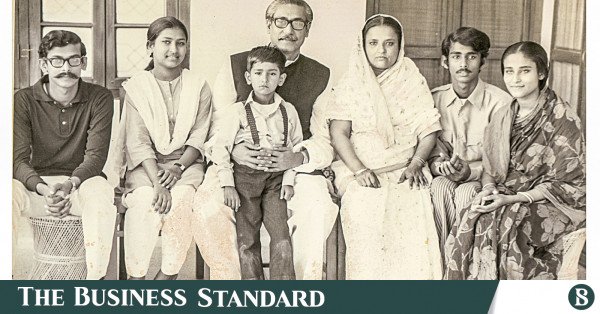
Sheikh Mujib and family/ Collected
“>

Sheikh Mujib and family/ Collected
The BNP-led government has decided not to observe any national day marking the birth or death anniversaries of Sheikh Mujibur Rahman and his family members, following the policy introduced by the previous interim government.
On 11 March, the Cabinet Division issued a circular regarding the observance of 89 national and international days, and categorised them under A, B and C.
Of these, 17 are listed under Category A, 37 under Category B and 35 under Category C.

The government will not reinstate national observances previously introduced by the Awami League (AL) government for the birth and death anniversaries of Sheikh Mujibur Rahman and members of his family, according to the circular.
During the AL regime, several dates linked to the Sheikh family were observed as national days. These included the birth anniversary of Sheikh Mujibur on 17 March, the birth anniversary of Sheikh Kamal on 5 August, the birth anniversary of Begum Fazilatunnesa Mujib on 8 August, and the death anniversary of Sheikh Mujibur on 15 August.
The AL government had declared 15 August a national day of mourning, with a public holiday observed across the country.
The latest circular also retains several decisions introduced by the interim government regarding national observances.
Among them, 5 August – the day marking the fall of the AL government – will continue to be observed as July Uprising Day. In addition, 16 July will be observed as July Martyrs’ Day, commemorating the killing of student Abu Sayeed in Rangpur during the uprising.
The interim government had introduced both observances, while the current administration has retained it.
The government, headed by Tarique Rahman, has also included the death anniversary of Lalon Shah in Category A – a recognition that had not been granted by previous administrations.
Another change retained in the circular concerns National Insurance Day, which had earlier been listed in Category B. The interim government had upgraded the day to Category A status, a decision the current government has kept unchanged.
According to the circular, Category B includes days that are traditionally observed or are considered important for environmental protection, national development, and social awareness. These events may be marked with notable programmes, where ministers will be involved, and the prime minister may be invited, depending on the significance of the event.
Up to Tk50,000 from government funds may be allocated for organising such programmes.
Category C includes 35 days that represent specific sectors and will be observed on a limited scale. Ministers may attend these programmes if deemed necessary, but no special government allocation will be provided from development funds.
The circular also notes that many ministries and departments observe additional days that are often routine, repetitive and no longer particularly relevant. To save time and public resources, government institutions have been advised to avoid unnecessary observances.
For events such as Education Week, Primary Education Week, Science Week, World Breastfeeding Week, National Livestock Week and Armed Forces Day, the respective ministries have been instructed to seek guidance from the prime minister before finalising programmes.
The government has also directed ministries to keep celebrations modest, avoiding elaborate decorations, large rallies or processions. Instead, limited seminars, symposiums and discussions on radio and television may be arranged.
About The Author