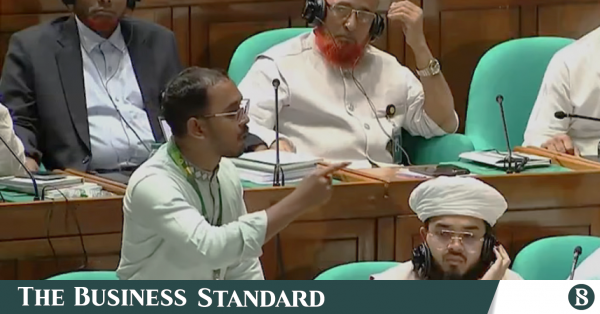
Noakhali-6 (Hatia) lawmaker Abdul Hannan Masud on Sunday (29 March) claimed that members of Generation Z do not want the 1972 Constitution, saying the younger generation is seeking answers over their political rights and representation.
Taking part in the discussion on the President’s speech in the Jatiya Sangsad, Masud, who described himself as a representative of Gen Z, said, “If you ask what Gen Z wants, they no longer want the Constitution of 1972. They want to know why, despite being born 30 years after independence, they have not been given voting rights.”
The National Citizen Party (NCP) leader said the post-independence generation had grown up in a sovereign country with its own flag, map and borders, achieved through the sacrifices of 1971.

However, he questioned whether the promise of a safe Bangladesh had been fulfilled.
“We were born in an independent country. Our forefathers shed blood in 1971 to build a secure Bangladesh for us. But have we received that security?” he asked.
Masud also raised concerns over river erosion in his constituency, Hatia, and alleged that he had faced attacks during and after the election period, reports UNB.
Addressing treasury bench lawmakers, he said, “It is because we shed blood that you are now prime minister and home minister.”
Referring to past political developments, he mentioned the 1990 mass uprising and questioned the organisation of the Magura by-election in 1994, warning against a return to similar electoral practices.
He further alleged that opposition activists had been targeted and accused certain political elements of orchestrating attacks.
He claimed that an organisational leader from Chattogram had been sent with weapons to attack his supporters.
The NCP leader also alleged that a woman was raped for casting her vote in favour of “Shapla Koli”, adding that the DNA report had not been released even after 42 days.
He criticised delays in filing the case and questioned the handling of the incident by authorities.
Masud called on the home minister to focus on identifying and bringing perpetrators of violence to justice, rather than offering legal interpretations, which he said should be left to the law minister.
About The Author