As part of the plan, investment in education and human resource development will be gradually increased to reach 5% of gross domestic product (GDP)
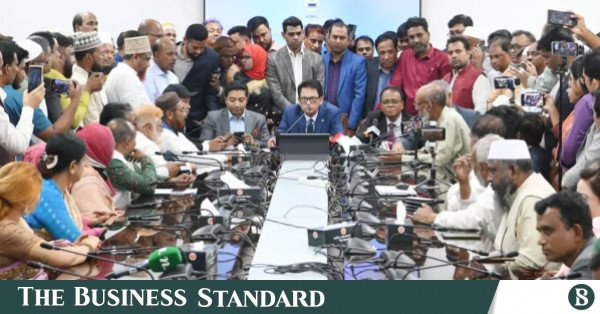
Education Minister ANM Ehsanul Hoque Milon and State Minister Bobby Hajjaj speaking at a views-exchange meeting with the Teachers-Employees Unity Council at the Ministry of Education. Photo: Collected/UNB
“>

Education Minister ANM Ehsanul Hoque Milon and State Minister Bobby Hajjaj speaking at a views-exchange meeting with the Teachers-Employees Unity Council at the Ministry of Education. Photo: Collected/UNB
The government has taken a 180-day action plan to implement several initiatives aimed at making the education system more modern, practical and responsive to current needs, Education and Primary Education Minister ANM Ehsanul Hoque Milon said.
As part of the plan, investment in education and human resource development will be gradually increased to reach 5% of gross domestic product (GDP), a target outlined in the BNP Election Manifesto 2026. The move is intended to strengthen the country’s education system and workforce.
Speaking today (9 March) at a meeting on education and human resource development initiatives, the minister said the government plans to accelerate the development of the country’s human capital by prioritising modern, practical, employment-focused and time-relevant education. The programme aims to ensure the country benefits from its demographic dividend while preparing for the future needs of an ageing population.

Officials said increased investment will provide quality education, skills-based training and employment opportunities for the large working-age population, alongside measures to ensure good health, social protection and active participation for older citizens.
The broader policy objectives include building a life-oriented, productivity-driven education system, strengthening teacher training, expanding technology-based learning, establishing multimedia classrooms, and implementing the “One Teacher, One Tab” programme to support digital teaching and learning.
Reforms will also focus on enhancing student skills through third-language learning from the secondary level, making technical education compulsory alongside general education, and promoting participation in sports, cultural activities, and moral education.
The government plans to improve school environments, gradually introduce mid-day meals and provide free Wi-Fi access for students. Other priorities include reducing educational inequalities, creating inclusive learning systems for students with special needs, expanding universal pre-primary education, and introducing a digital Edu-ID system for students.
Milon emphasised that the government’s goal is to move the education system away from rote learning and towards creativity, analytical thinking and practical skills. To encourage research and innovation, he highlighted plans to establish joint research laboratories between universities and industry, and to undertake reforms to enhance the quality of higher education.
The meeting was attended by relevant officials and policymakers, who discussed the phased implementation of these initiatives and strategies to ensure effective monitoring and execution of the action plan.
About The Author