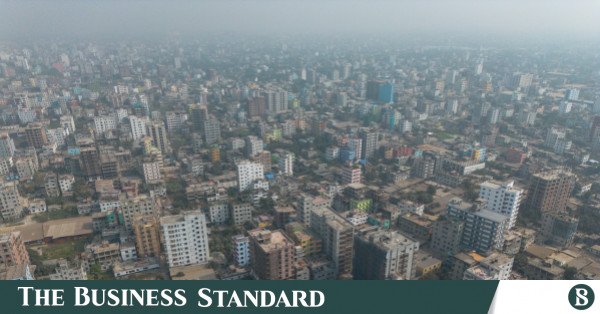
Despite being one of the capital’s most important entry points, Jatrabari and its surrounding areas remain plagued by broken roads, waterlogging, traffic chaos, and years of neglect
Md Ekhlas, a resident of Zia Sarani in Shonir Akhra, was livid.
“Do we live in Gulshan–Banani, that the administration has time to look towards us? Good roads and planning are only for the people of those areas. There is no one to look after areas like ours,” lamented the tile business owner.
The road where his shop stands is in miserable condition. And the picture is the same throughout Jatrabari and surrounding areas.

From the divisions of Chattogram, Sylhet, Khulna, and Barishal, along with the city of Narayanganj, there is only one entry point into Dhaka — Jatrabari.
Through Jatrabari, all passenger and goods vehicles from the four divisions enter Dhaka via Demra or Chittagong Road and Signboard, along with the daily traffic pressure from the commercial city of Narayanganj.
This makes Jatrabari and its surrounding areas significant for Bangladesh’s economy and people’s livelihoods. However, unplanned housing and illegal structures are severely affecting residents’ daily lives in these areas.
The roads of Jatrabari and its surrounding areas are filled with large potholes, which have become a major cause of traffic congestion and public suffering. The problems are more severe when it rains, as the roads become extra slippery, posing a risk.
Office-goers, passers-by and patients headed to hospitals in Dhaka are particularly affected by the poor condition of these roads.
Kazi Shams, a university student living in Shonir Akhra, said, “The road from Shonir Akhra underpass to Matuail Mridha Bari needs renovation. So many vehicles pass on this road that traffic congestion lasts all day. In the evening, people remain stuck for hours in the underpass. The administration should act immediately to restore order here.”
The same situation exists in the areas under Kadamtali and Demra thanas. Due to a dilapidated drainage system, even a little rain during the monsoon submerges the streets. The lack of proper sewage management causes regular sufferings for millions of people.
A canal along the Bhuigor Mouchak road beside the highway lies polluted by waste. Residents say poor waste and sewage management has turned into a public health crisis for them.
“>

A canal along the Bhuigor Mouchak road beside the highway lies polluted by waste. Residents say poor waste and sewage management has turned into a public health crisis for them.
Sadarul Amin, a schoolteacher, said, “Drainage is our biggest problem. Whenever it rains, the streets flood. The water cannot flow away. I believe waterlogging is our number one problem. Small children cannot go to school or madrasa on rainy days. Worshippers cannot even reach the mosque. These issues should be addressed with urgency.”
Around 50 educational institutions are located in this area, including Shamsul Haque Khan School and College, Dr Mahbubur Rahman Mollah College, Rokeya Ahsan College, Mannan School and College, Jamiatul Abrar Madrasa, and Matuail Women’s Madrasa. Because of the poor condition of the roads, thousands of students face difficulties commuting every day, while accidents occur on the roads regularly.
Along with broken roads, unplanned urbanisation has made daily life increasingly difficult. In Rayerbag, Gas Road, Adarshabad, Kadamtala crossroads, Badsha Mia Road, Matuail New Town, Farmer’s Moor, Konapara and Staff Quarter, unplanned urbanisation has continued unabated for years.
Multi-storey buildings and shopping centres are being built without following any rules or regulations. Moreover, institutions keep their construction materials on the main road, causing constant suffering for people.
According to the residents, the Dhaka South City Corporation pays no attention to cleaning the dirt and rubbish in the drains. Mosquitoes breed from the waste, regularly infecting people in the area with dengue, chikungunya, and other mosquito-borne and water-borne diseases. Nearly 60% of the people here suffer from breathing problems due to smoke and dust.
Dhaka’s largest landfill lies in Matuail, Jatrabari, not very far from the residential areas. The proximity of the city’s largest waste dump to homes raises concerns about the value of citizens’ welfare here.
Kaisar Karim, a resident of Matuail, said, “Dhaka’s largest dumping ground is here. Those who live in this area are treated as if they are not human, so there is no concern for their health or lives. All the waste is brought and dumped in Matuail; authorities pretend as if no one lives here.”
Another resident, Mushfiq Firoz, said, “Despite being residents of the capital, we hardly have any civic facilities. Yet we regularly pay city corporation taxes. I have never seen sanitation workers in this area.”
He added, “There is no public playground in Matuail. The vacant plots that were privately owned are being turned into houses. There is no park either. The Eidgah field beside the graveyard could be expanded and used as a playground, but if no action is taken soon, this field too will disappear.”
Residents blame the administration. Though the entirety of Dhaka shows signs of poor planning, in Jatrabari, Rayerbag, Shonir Akhra, Donia and Demra, lack of planning seems to be the final word. Neither the elected representatives nor the administration seem to have time to bring these issues under control.
Asked whether there is a way out of these problems, Professor Adil Mohammad Khan of the Urban and Regional Planning Department at Jahangirnagar University said, “These areas are not on the government’s priority list. You can see that in Gulshan there are numerous parks and sports facilities, and the area is remarkably clean. The good parks that already exist there are subject to renovation projects worth Tk150-200 crore.
“Meanwhile, in areas like Jatrabari and Demra, there are no playgrounds or open spaces, and not a trace of greenery. The projects undertaken for these areas are mostly nominal — essentially schemes for looting rather than genuine development,” said Adil, who is also a member of the Bangladesh Institute of Planners.
These areas are not on the government’s priority list… in areas like Jatrabari and Demra, there are no playgrounds or open spaces, and not a trace of greenery. The projects undertaken for these areas are mostly nominal — essentially schemes for looting rather than genuine development.
Professor Adil Mohammad Khan, member, Bangladesh Institute of Planners
He added, “Now, given the way these areas have developed in an unplanned manner, it is impossible to entirely change them overnight. However, some small-scale interventions could improve the living environment. For example, clearing and improving footpaths, establishing a few standard primary schools, and creating playgrounds or open spaces — these modest measures could make life noticeably better than it is today.”
Md Zahurul Islam, Chief Executive Officer of Dhaka South, said that they have several projects underway to address these problems.
However, he pointed out some obstacles, “The problems you mentioned are indeed very real. But we have to coordinate closely with the LGRD ministry. We do not receive full funding for long-term solutions. That is why sometimes we are unable to act even if we wish to,” he said.
“Consequently, we are forced to pursue short-term solutions. While we have a responsibility to act, residents of each area also have duties. If we want sustainable, long-term solutions, the local population must also fulfil their responsibilities. For instance, if residents themselves are conscious about waterlogging or waste management, long-term solutions could be achieved to a large extent,” he added.
The official expressed optimism regarding the current government and the Ministry of Local Government, Rural Development and Co-operatives.
“Our present government is giving priority to digging and restoring canals and water bodies. We will work according to these directions… I am very hopeful that the new minister will be able to bring permanent solutions to the problems affecting the areas under our jurisdiction,” Zahurul added.
Apart from the internal problems of the area, suffering does not end on the main highways — if anything, it intensifies.
Every day, vehicles from nearly 40 districts across the country enter Dhaka using the Mayor Mohammad Hanif Flyover and the roads beneath it. Since the inauguration of the Padma Bridge, traffic pressure on this route has grown even further.
However, due to unplanned design, weak traffic management, and widespread disregard for traffic laws, severe congestion now plagues both the flyover and road underneath it. The advantage of reaching Dhaka quickly has, for many, largely evaporated. Commuters on this route face daily hardship and constant delays.
According to project data, the Mayor Mohammad Hanif Flyover is approximately 11.5 kilometres long. It connects Shonir Akhra to Jatrabari, Sayedabad, Gulistan, and Chankharpul.
Kutubuddin, a bus driver, left Khulna at 1 pm and reached Jatrabari at 3:30 pm. An hour later, he was still stuck at the Gulistan toll plaza beneath the Jatrabari flyover. Fatigue was etched across his face. He honked intermittently, though it achieved nothing. Peering into the bus, it was clear that almost all passengers showed visible signs of exhaustion and frustration.
Kutubuddin said, “I brought the bus from Khulna to Dhaka in three and a half hours. But arriving early in Dhaka doesn’t really help — I end up sitting on the flyover for hours.”
Farzana Rahman, a private-sector employee who travels daily from Narayanganj to Dhaka, said, “Even though the average time to reach Shonir Akhra–Rayerbag from Narayanganj is manageable, the real ordeal begins when descending from the Jatrabari flyover to Gulistan. Sometimes it takes one to one and a half hours.”
About The Author