As per the central bank’s review, the six NBFIs that are being liquidated are in a dire financial state, with most of their loan portfolios turning bad and massive losses piling up.
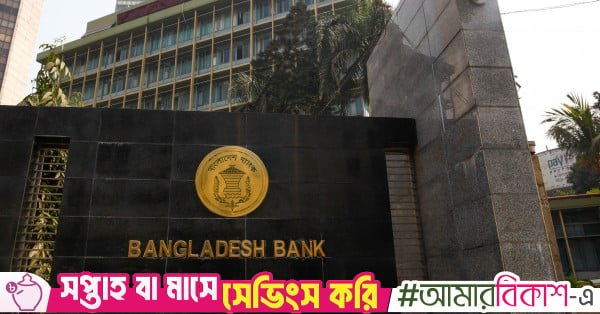
File photo of Bangladesh Bank. Photo: Mehedi Hasan/TBS
“>

File photo of Bangladesh Bank. Photo: Mehedi Hasan/TBS
The Bangladesh Bank has taken a final decision to liquidate six non-bank financial institutions (NBFIs) that have been struggling with irregularities, corruption and mismanagement, while granting an additional three months to three other institutions to improve their financial position.
The decision was taken at a board meeting of the central bank today (27 January).
The three institutions given time are Bangladesh Industrial Finance Company, GSP Finance Company and Prime Finance and Investment Limited.

An official present at the meeting said these three firms would not be placed under the liquidation process for now.
They have informed Bangladesh Bank that they will try to mobilise funds over the next three months. If they are able to recover a significant amount of defaulted loans during this period, they will be kept out of liquidation.
Administrators will be appointed by the Bangladesh Bank to three financial institutions. A senior official said that there has been strong demand from these three institutions for funds to be injected into them.

According to the central bank’s review, BIFC has 97.30% defaulted loans, with losses of Tk1,480 crore, while GSP Finance has 59% defaulted loans, with losses of Tk339 crore. Prime Finance has 78% of its loans in default, with losses amounting to Tk351 crore.
The institutions were found to be in an “unviable” condition based on three indicators: failure to return depositors’ money, extremely high defaulted loans, and capital shortfalls.
As per the central bank’s review, the six NBFIs that are being liquidated are in a dire financial state, with most of their loan portfolios turning bad and massive losses piling up.
FAS Finance is the worst affected, with 99.93% of its total loans defaulted and accumulated losses of Tk1,719 crore. Fareast Finance has 98% of its loans in default and has incurred losses of Tk1,017 crore.
At International Leasing, defaulted loans stand at Tk3,975 crore, accounting for 96% of its portfolio, most of which is considered unrecoverable, while its losses have reached Tk4,219 crore.
People’s Leasing has seen 95% of its loans turn bad, with losses amounting to Tk4,628 crore.
Aviva Finance’s defaulted loans account for 83% of its portfolio, and the company has recorded losses of Tk3,803 crore. Premier Leasing, though comparatively better off, still has 75% of its loans in default and has suffered losses of Tk941 crore.
Bangladesh currently has 35 non-bank financial institutions. Of these, the central bank has identified 20 as distressed. The total loan portfolio of these 20 institutions stands at Tk25,808 crore, of which Tk21,462 crore, or 83.16%, is classified as defaulted. In contrast, the value of their collateral is only Tk6,899 crore.
By comparison, the remaining 15 relatively sound institutions have a non-performing loan ratio of just 7.31%. Last year, they made a combined profit of Tk1,465 crore and currently hold a capital surplus of Tk6,189 crore.
The 20 troubled institutions hold deposits worth Tk22,127 crore, including around Tk4,971 crore in net individual customer deposits. Bangladesh Bank believes this amount may be needed initially to support the liquidation and restructuring process.
The central bank has also assured that employees working at institutions that go into liquidation will receive all benefits as per service rules.
About The Author