In Bangladesh, a medical emergency is rarely just a health crisis; it is a financial catastrophe. With out-of-pocket (OOP) healthcare expenditures now exceeding a staggering 70%, falling ill frequently means falling below the poverty line.
For the rural poor, selling assets to pay for redundant diagnostic tests and basic medicines is a grim, daily reality. This catastrophic expenditure is a glaring indictment of an inequitable system.
The recent directive by Prime Minister Tarique Rahman on 4 March 2026 offers a beacon of hope. The government, backed by the a2i programme and the Asian Development Bank, has set an ambitious target to roll out a national e-Health Card by June 2026.

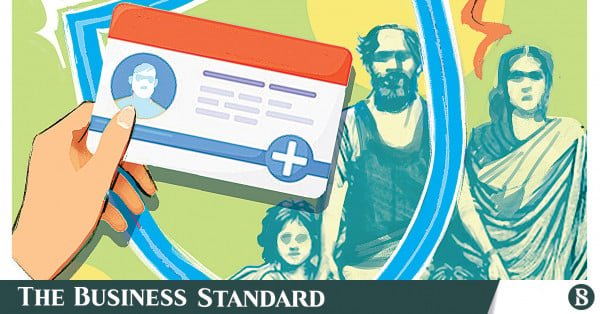
Powered by a centralised digital platform called “Health-Bridge”, this initiative aims to assign a unique, NID-linked health identity to every citizen. By integrating public and private hospitals through Shareable Health Records (SHR), it promises to end the era of lost prescriptions and needless duplication of medical tests.
Furthermore, it must ensure that outpatients receive essential medicines—including those not typically supplied by the government—free of charge or at a reasonable price directly at the counter.
The ingenuity of this approach is commendable. The government’s strategy to repurpose abandoned local government (LGED) infrastructure into digital clinics is a masterclass in resource efficiency. Furthermore, deploying 100,000 health workers—80% of whom are women—to act as a “human bridge” for rural registration demonstrates a genuine commitment to inclusivity.
However, we must pause and ask a fundamental question: Are we merely creating a digital flash drive for medical records?
If the e-Health Card only stores data, it will fundamentally fail to solve the core crisis of medical poverty. To truly transform our health sector and move towards Universal Health Coverage (UHC), this “data card” must rapidly evolve into an “insurance card”.
It must be inextricably linked to a national financing framework, building upon the foundations of the Shasthyo Surokkha Karmasuchi (SSK) pilot—a micro-health insurance scheme designed to provide free, cashless hospital care for families living below the poverty line.
To achieve this, we do not need to invent the wheel; we must simply look outward. We can learn from India’s Ayushman Bharat, which champions cashless care. A poor patient should not have to pay upfront and chase reimbursements; presenting the e-Health Card should act as an immediate financial guarantee to the hospital.
Moreover, true universal coverage cannot rely on the public sector alone. Government facilities, already stretched thin, cannot absorb the impending patient load unaided.
The government must act as a strategic purchaser, using the promise of health funds to incentivise private facility participation. This ensures that a patient receives consistent, regulated, and affordable care regardless of where they seek treatment.
The new digital framework must mandate strict public-private integration. By compelling private clinics and diagnostic centres to adopt standardised API protocols, we can synchronise them with the national grid.
The government must act as a strategic purchaser, using the promise of health funds to incentivise private facility participation. This ensures that a patient receives consistent, regulated, and affordable care regardless of where they seek treatment.
Furthermore, we must adopt the ingenious mechanics of other developing nations to sustain this system. We can look to Rwanda’s model of community-led targeting, leveraging our existing Union Parishad network alongside the new Dynamic Social Registry to accurately identify those who require full government subsidies.
We can learn from Thailand’s capitation model, paying local clinics a fixed annual budget per registered citizen. This forces clinics to focus on preventive care to keep people healthy, rather than incentivising them to overcharge for unnecessary procedures.
Finally, to fund this for our vast informal sector, Ghana’s approach of an indirect health tax (a fractional VAT surcharge) offers a highly sustainable blueprint. We already have a successful domestic precedent for this: in the 1980s and 1990s, Bangladesh effectively implemented the Jamuna Bridge Surcharge and Levy to raise domestic resources for the bridge’s construction.
The June 2026 rollout is a critical juncture. Bangladesh has established a foundational biometric system, alongside the mobile financial networks and the digital connectivity required for this leap. The true test will not be our technological capability, but our political will.
If the ruling government can successfully weave financial protection into this digital fabric, the e-Health Card will not just be a technological milestone. It will cement a lasting legacy, ensuring that in Bangladesh, the right to health is no longer dictated by the ability to pay. Are we putting technology to work for people, or are we just digitising our inequalities? The time for bold reform is now.
Dr Imrul Mohammad Sifat is a health development professional at Bangladesh Health Watch (BHW), Brac James P Grant School of Public Health
Disclaimer: The views and opinions expressed in this article are those of the author and do not necessarily reflect the opinions and views of The Business Standard.
About The Author