If not placed as a bill and passed as a law, the ordinance is set to automatically lapse after midnight on 11 April
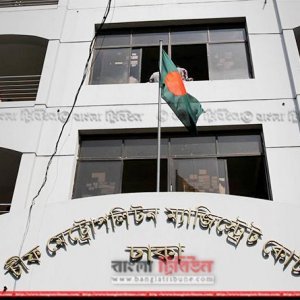
Office of the Anti-Corruption Commission. File Photo: TBS
“>

Office of the Anti-Corruption Commission. File Photo: TBS
The Anti-Corruption Commission (ACC) has effectively ground to a halt, as it cannot take key decisions – such as initiating investigations, filing cases, approving charge sheets, or imposing travel bans on accused individuals – in the absence of the three-member commission.
Following the simultaneous resignation of the chairman and two commissioners in early March, the agency has remained in such a state for the past month.
The situation arose as the current government has decided not to turn the Anti-Corruption Commission (Amendment) Ordinance 2025 into law.

Under the amended ordinance, a search committee is to be formed to appoint commissioners, led by a senior justice from the Appellate Division of the Supreme Court. The committee would also include a High Court justice, the comptroller and auditor general, the chairman of the Public Service Commission, one MP each from the ruling party and the opposition, and an individual with at least 15 years of experience in anti-corruption work.
The committee is tasked with inviting applications through public notice, collecting information, shortlisting candidates, and conducting interviews before recommending two names for each vacant post to the President. The commission could consist of up to five commissioners, including at least one woman and one ICT expert.
If not placed as a bill and passed as a law, the ordinance is set to automatically lapse after midnight on 11 April.
Under the Anti Corruption Commission Act, 2004, a five-member search committee – headed by a justice nominated by the Chief Justice – would recommend candidates, and the commission would consist of three members.
Anti-corruption drive disrupted
An ACC official, speaking on condition of anonymity, said the institution is virtually non-functional without the commission. “Over the past year and a half, the ACC carried out its largest anti-corruption drive in history. Now, without any commission approval, we cannot even initiate investigations or cases. We cannot even request courts to impose travel bans on accused individuals, increasing the risk of them fleeing,” he said.
According to ACC sources, since the resignation of the three-member commission on 3 March, no major decisions – including investigation approvals, new cases, charge sheets, asset seizures, or travel restrictions – have been taken, significantly slowing anti-corruption efforts.
ACC Deputy Director Aktarul Islam said that while ongoing investigations approved earlier are continuing, taking many vital decisions remain impossible without a functioning commission.
Transparency International Bangladesh Executive Director Dr Iftekharuzzaman said the absence of a commission has paralysed anti-graft efforts. “Without leadership, the ACC cannot function, making it effectively ineffective,” he said.
He added that the government’s approach to forming the new commission will reflect its political will. If the amended ordinance is not passed and the old system is reinstated, it may indicate reluctance toward reform – although even the amended ordinance did not fully reflect reform proposals due to bureaucratic resistance.
Record activity before collapse
The commission had recorded its highest-ever activity in 2025, filing 874 cases compared to 451 in 2024. It also approved 2,536 investigations in 2025, up from just 845 the previous year.
Asset seizure orders also surged dramatically. In 2025, assets worth Tk30,352.75 crore were frozen or seized – of which Tk24,117.37 crore were freeze orders and Tk6,235.38 crore were seized outright. This marks a massive jump from Tk361.45 crore in 2024, and even lower figures in previous years.
Similarly, fines and recoveries saw major improvement. Courts imposed four times more fines in 2025 than in 2024, with around Tk1,500 crore already deposited into the state treasury, compared to just Tk81 crore the year before.
The interim government had appointed Dr Abdul Momen as ACC chairman on 10 December 2024, along with commissioners Miah Muhammad Ali Akbar Azizi and Brigadier General (retd) Hafiz Ahsan Farid.
All three members of the commission submitted their resignation letters to the Cabinet Division on 3 March.
About The Author