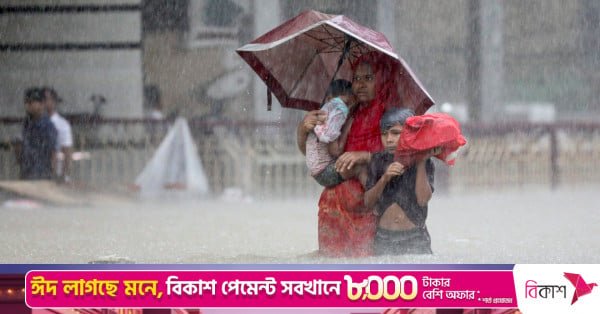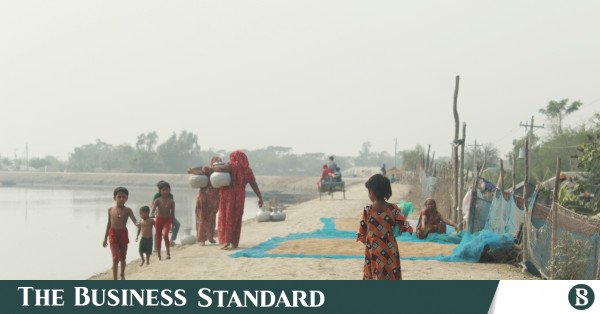
Coastal communities in Bangladesh, who are among the worst affected by climate change, are still not receiving adequate benefits from both national and international climate financing frameworks, according to experts.
Those who contribute the least to global emissions are suffering the most from its impacts and climate and disaster risk financing and insurance mechanisms must become more inclusive, accessible, and aligned with local realities, they said at a symposium at a hotel in Dhaka today (14 May).
The observations came at the event “Multi-Actor Partnerships on Climate and Disaster Risk Financing and Insurance (MAP-CDRFI),” jointly organised by CARE Bangladesh and the Organisation for Socio-Economic Development (AOSED).

The event brought together government officials, policymakers, development partners, private sector representatives, researchers, civil society members, and leaders from coastal communities.
The symposium aimed to formulate practical recommendations for national and international CDRFI mechanisms, drawing on three years of field-level experience in the climate-vulnerable districts of Bagerhat and Satkhira.
Addressing the event as the chief guest, Shaikh Faridul Islam, state minister for the Ministry of Environment, Forest and Climate Change, said climate change is no longer a future threat but a daily reality for coastal people.
He noted that vulnerable communities cannot face these challenges alone and stressed the need for coordinated efforts among government agencies, NGOs, development partners, and the private sector.
The state minister also highlighted government initiatives, including large-scale afforestation, canal re-excavation, renewable energy investment, coastal protection infrastructure, and community-based adaptation programmes.
Ulrich Kleppmann, head of Development Cooperation at the German Embassy in Bangladesh, said climate change is already transforming the lives of coastal communities.
He shared a reflection from a coastal woman who said, “We don’t need someone to teach us about climate change; we need someone to listen to us.” He said this reflects the lived reality of vulnerable people.
Kleppmann further emphasised that international climate finance systems must be better aligned with local realities, and Bangladesh’s grassroots experiences and innovative solutions can contribute to global policymaking.
CARE Bangladesh Country Director Ram Das, inaugurating the programme, said climate risk financing and loss-and-damage funding are not merely economic issues but matters of climate justice.
“The people least responsible for climate change are suffering the most,” he said, adding that financing systems must ensure direct support reaches vulnerable communities without creating additional debt burdens.
He also emphasised the importance of incorporating local knowledge into policy decisions.
Mrityunjoy Das, deputy director of the Humanitarian and Resilient Future Program at CARE Bangladesh, said the project will formally conclude on 31 May this year, but the platforms created under it will continue to support advocacy and coordination on climate finance issues.
He added that ensuring equitable climate finance remains a core priority for CARE, and efforts will continue to develop effective financing models involving government, private sector, development partners, and local communities.
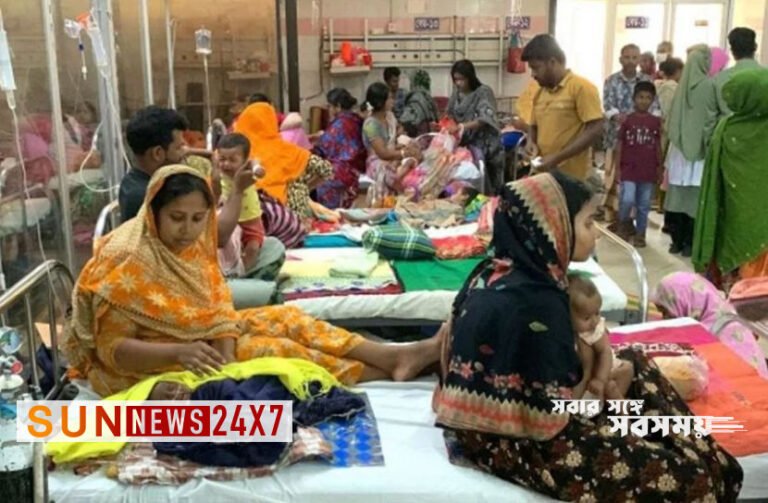
Speakers at the event noted that coastal regions are increasingly facing cyclones, storm surges, salinity intrusion, river erosion, and erratic rainfall, severely affecting livelihoods and food security. Women, children, persons with disabilities, and smallholder farmers remain among the most vulnerable groups, while many families are falling into debt and struggling to recover after disasters.
However, participants said a large share of international climate funds still fails to reach high-risk communities due to complex procedures, limited information access, and inadequate local capacity.
The event highlighted the MAP-CDRFI project funded by Germany’s Federal Ministry for Economic Cooperation and Development (BMZ). Since July 2023, the project has been implemented by CARE Bangladesh in partnership with AOSED in vulnerable areas of Bagerhat and Satkhira.
Under the initiative, 65 multi-actor platforms have been formed involving local government institutions, NGOs, women’s groups, farmers, entrepreneurs, financial institutions, and community leaders. More than 1,500 stakeholders have worked together to address gaps in climate finance, financial inclusion, and institutional coordination.
A position paper presented at the symposium recommended piloting low-cost, gender-responsive, and rights-based climate financing and insurance models in coastal areas, alongside expanding simple insurance schemes, community savings mechanisms, and digital financial services.
About The Author