The proposal has been submitted to the finance ministry as part of a broader deregulation initiative to facilitate trade and improve the ease of doing busines
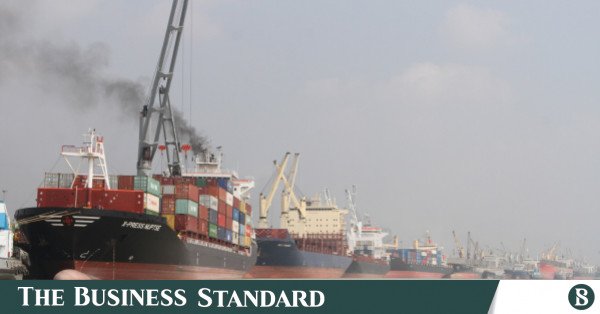
Chattogram Port/File Photo
“>

Chattogram Port/File Photo
Highlights:
- Bida proposes expanding imports cleared through private ICDs gradually
- Proposal aims reducing Chattogram Port congestion, improving logistics efficiency
- Expanded ICD use could double NCT and CCT handling capacity
- Economists say reforms may reduce costs and improve competitiveness
- Bida recommends 24/7 banking, customs services supporting uninterrupted port operations
- Single digital platform proposed integrating customs and regulatory agency systems
The Bangladesh Investment Development Authority (Bida) has proposed gradually allowing 80% of import goods to be cleared through private Inland Container Depots (ICDs), or off-docks, in a move aimed at reducing congestion at Chattogram Port and improving logistics efficiency.
The proposal has been submitted to the finance ministry as part of a broader deregulation initiative to facilitate trade and improve the ease of doing business, officials concerned told The Business Standard.

According to Bida, implementation of the proposal could increase the handling capacity of the New Mooring Container Terminal (NCT) and Chittagong Container Terminal (CCT) by around 1.6 to 2 times by reducing pressure on port operations.
Currently, the National Board of Revenue (NBR) allows the clearance of only 65 categories of imported goods through private ICDs, although all export activities are already conducted through 21 off-docks across the country.
Bida said the limited scope for import clearance through ICDs creates congestion in port operations and slows down the import process.
In most countries, both import and export activities are largely handled through off-docks, it added.
To ensure compliance, the agency has also proposed introducing a regular risk-based review system for off-docks.
Business leaders and economists said the initiative could help reduce operational costs, shorten lead time and increase investor confidence.
Professor Mustafizur Rahman, distinguished fellow at the Centre for Policy Dialogue, said Bangladesh still faces challenges related to the cost of doing business, turnaround time in port management and slow implementation of logistics reforms.
“Such initiatives are positive for attracting investment and increasing competitiveness,” he said, adding that lead time has become a major factor alongside price and quality in international trade.
According to data from the Chittagong Port Authority, the port handled 34,09,069 TEUs of containers between January and December 2025.
Abul Kasem Khan, chairperson of Business Initiative Leading Development, described the proposal as timely.
“If the use of ICDs is increased, pressure on the port will decrease and congestion will be reduced,” he said, adding that customs-related activities are internationally handled outside the main port area.
Bida has also proposed expanding banking and customs services to support effective 24-hour port operations.
Although port activities currently continue around the clock to some extent, related banking services remain largely limited to office hours and working days, causing delays in LC processing, payment clearance and other import-export procedures.
The agency recommended extending banking support throughout the week and moving most customs clearance procedures fully online to ensure uninterrupted 24/7 operations.
Bida said integrated round-the-clock operations would significantly reduce goods clearance time, improve overall efficiency and align Bangladesh’s trade system with international standards.
The agency has further proposed integrating ASYCUDA World, the National Single Window, and systems used by other regulatory agencies into a single interoperable digital platform.
According to the proposal, businesses would be able to submit information once, which would then be automatically shared among all relevant agencies, reducing duplication, delays and procedural complexities.
Abul Kasem Khan said integrating licence and permit systems with the NSW would make trade processes faster and more efficient.
“Providing information once so that it can be used by various agencies is now the global standard,” he said.
Last month, speaking at a consultative committee meeting organised by NBR and Federation of Bangladesh Chambers of Commerce and Industry, Finance and Planning Minister Amir Khosru Mahmud Chowdhury said obstacles to doing business would be removed to support private sector-led growth.
About The Author