The final phase of the withdrawal will begin on 6 June as law and order meeting reviews post-election security situation
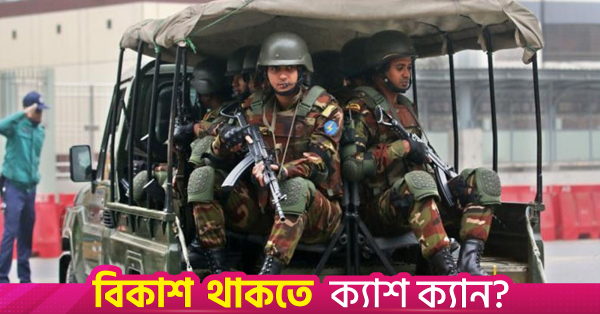
Representational image. Photo: Collected
“>

Representational image. Photo: Collected
The government has decided to withdraw all army personnel deployed in field-level duties across the country by June, following a decision taken at a meeting of the law and order-related core committee.
The final phase of the withdrawal will begin on 6 June, starting with remote districts and followed by divisional cities and major districts in phases, reports Prothom Alo, citing meeting sources. All troops are expected to return to barracks within the month.
The decision was taken at the first meeting of the reconstituted core committee held on Tuesday (5 May). The committee, chaired by Home Minister Salahuddin Ahmed, was reformed on 21 April to assess the law and order and internal security situation and determine necessary actions.

Senior officials, including the inspector general of police, Dhaka Metropolitan Police acting commissioner and director general of Border Guard Bangladesh, attended the nearly two-and-a-half-hour meeting.
The home ministry is expected to formally notify the defence ministry of the withdrawal decision.
Army personnel were initially deployed on 19 July 2024 during nationwide unrest triggered by protests over public sector job quota reforms. Following the fall of the Awami League government on 5 August amid mass protests and the subsequent collapse of the police force, troops remained in the field under the interim administration, which later granted them limited judicial powers in September.
Currently, around 17,000 personnel are still engaged in field duties, according to the Prothom Alo report.
Army chief General Waker-Uz-Zaman had earlier indicated that the military preferred to return to barracks once the situation stabilised and the police force was reorganised. A gradual withdrawal began in November last year.
The defence ministry had repeatedly requested their withdrawal, citing fatigue among personnel after prolonged deployment.
The meeting also discussed other issues, including extortion, anti-narcotics drives and law enforcement reforms. It was decided that cases would be filed against those involved in extortion, regardless of political affiliation.
Participants also reviewed cases involving journalists arrested following the July Uprising, with a decision not to oppose bail for those not accused of serious offences and to avoid harassment if they seek to travel abroad.
The committee further decided to cancel firearm licences issued during the previous government’s tenure and approved providing security personnel to administrators of Dhaka North and South city corporations.
Discussions were also held on enhancing border security in light of political developments in India’s West Bengal, as well as on police uniform changes. The existing uniform – navy blue shirts and khaki trousers – will remain unchanged.
About The Author