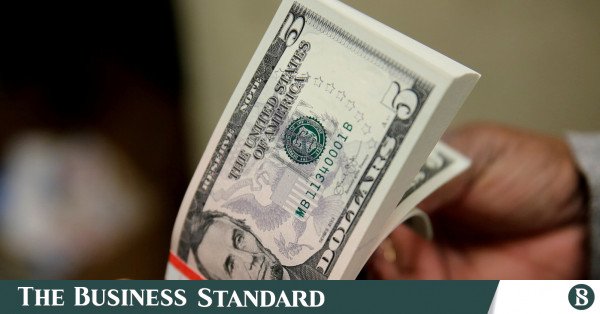
The instruction set the banks to buy remittances from money exchange houses at a maximum rate of Tk122.85 per US dollar
Representational image. File Photo: Reuters
“>

Representational image. File Photo: Reuters
Highlights:
- Bangladesh Bank orders lower dollar buying rate at Tk122.85
- Slight reduction from Tk122.90 reflects gradual exchange rate control efforts
- Critics say verbal directives undermine market-based exchange rate framework
- Officials cite inflation risks, rising fuel costs for intervention
- International Monetary Fund concerned over indirect controls, prefers market-based mechanisms
- Remittances strong, dollar supply stable despite recent market volatility
Bangladesh Bank has verbally instructed commercial banks to lower the buying rate of US dollars further, apparently in efforts to stabilise the foreign exchange market, according to official sources.
The instruction set the banks to buy remittances from money exchange houses at a maximum rate of Tk122.85 per US dollar, a senior Bangladesh Bank official confirmed to The Business Standard yesterday.

This marks a slight reduction from the earlier instruction issued on 13 April, when banks were ordered to keep the maximum buying rate at Tk122.90 per dollar, reflecting the central bank’s continued efforts to gradually bring down the dollar rate in the local market.
However, bankers and economists argue that such frequent intervention is not standard market practice. While Bangladesh Bank has already introduced a reference exchange rate framework, critics say direct verbal instructions to control rates go beyond conventional policy tools.
Infograph: TBS
“>

Infograph: TBS
Several senior central bank officials, however, defended the move, saying rising fuel prices have increased the risk of inflation, forcing the monetary authority to keep the exchange rate at a level that prevents import costs from rising further.
“If the dollar rate remains high, import costs will increase, which could add pressure on inflation. That is why we are trying to maintain a stable level,” one senior official said.
Dr Zahid Hussain, former lead economist at the World Bank’s Dhaka office, told TBS that discussions are ongoing regarding the disbursement of International Monetary Fund loan instalments, where reform uncertainty has emerged. One of the key IMF conditions was to move toward a more market-based and stable exchange rate mechanism.
“But there are concerns that exchange rate management is not being fully implemented in line with expectations. The IMF does not favour this kind of indirect control,” he said.
He further explained that central bank intervention is not unusual, but it should be done through market-based instruments such as dollar auctions.
The economist said, “So I can’t understand the reason behind such intervention. Because the directive to reduce the remittance rate means that the central bank thinks the dollar price is high in the market. However, that is due to the imbalance of demand and supply, but nothing like that has happened. But even if it is, it should be allowed to happen.”
The international dollar index rose by 0.68% between 28 February and 27 April this year, while Bangladesh’s domestic rate increased by only 0.37%. “If anything, this suggests relative stability in supply conditions, supported by strong remittance inflows,” he said, adding that import letters of credit have also declined in March while remittance flows remain robust.
Bangladesh Bank officials argue that a lower dollar rate helps importers bring in goods at lower prices, ultimately benefiting businesses and consumers.
While no Bangladesh Bank insider agreed to be named in comments to TBS on the issue, a senior central bank official noted that repeated verbal instructions to control exchange rates may not be well received by the IMF. “This is something we need to be careful about.”
There is also pressure from some business groups to appreciate the local currency to reduce import costs, he said.
Despite policy debates, remittance inflows remain strong. Bangladesh Bank data shows that remittances reached $28.92 billion in the current fiscal year up to 26 April.
Market volatility was observed in recent weeks, with some private banks buying dollars at around Tk123 per dollar last week, driven partly by upcoming payment obligations from the Bangladesh Petroleum Corporation and Petrobangla.
However, rates softened slightly yesterday, with private banks reporting remittance purchase rates between Tk122.85 and Tk122.95 per dollar.
A senior central bank official said that despite sufficient dollar supply, some banks bought remittances at higher rates, which pushed the dollar price up slightly.
He added that dollar demand also increased after forward bookings rose from mid-March. In response, the central bank instructed banks in the first week of April to stop forward bookings.
About The Author