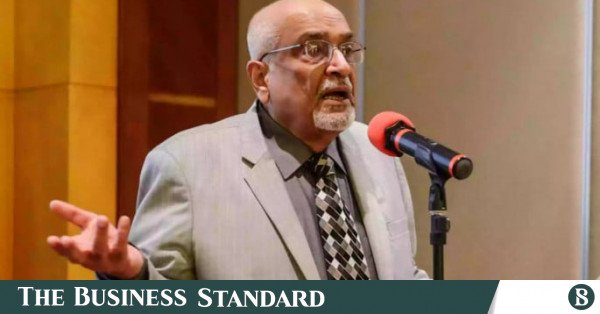
Debapriya also called for transparency regarding the activities of the cabinet sub-committee on energy security, saying its work should be made public and discussed in parliament
Economist Dr Debapriya Bhattacharya. File photo: UNB
“>

Economist Dr Debapriya Bhattacharya. File photo: UNB
The “unequal treaty” signed by the interim government with the United States is a major obstacle to Bangladesh’s energy supply and poses risks to energy security and sovereignty, said economist Debapriya Bhattacharya.
Debapriya, a distinguished fellow at the Centre for Policy Dialogue (CPD), made the remarks as the chief guest at a pre-budget shadow parliament organised by Debate for Democracy at the FDC today (18 April).
Referring to broader energy issues, he said policy decisions taken during the fallen government’s tenure were “misleading and controversial”, adding that import dependence was prioritised over domestic production due to vested interests.

He said institutions such as Bangladesh Petroleum Exploration and Production Company Limited had been weakened, while investment in local energy production was neglected in favour of importing liquefied natural gas (LNG).
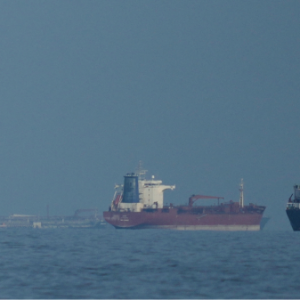
On current challenges, he said the Strait of Hormuz is not a major obstacle to energy imports, but reiterated that the agreement signed by the interim government with the US has created significant risks for the country’s energy sector.
He also suggested that Bangladesh should utilise the one-month waiver reportedly granted by the US to import oil from Russia.
Debapriya called for transparency regarding the activities of the cabinet sub-committee on energy security, saying its work should be made public and discussed in parliament.
He added that despite commitments, visible progress on forming reform commissions remains unclear.
He urged the government to disclose its plans for reforms in public financial management, revenue mobilisation and incentives.
In his presidential address, Debate for Democracy Chairman Hasan Ahmed Chowdhury Kiron said corruption and increasing dependence on imports had prevented the country from achieving energy self-sufficiency.
He said ensuring energy security would be a major challenge in the upcoming budget, particularly amid ongoing economic pressures.
Kiron also expressed concern over the suspension of the next instalment of an International Monetary Fund (IMF) loan, noting that Bangladesh is not expected to receive $1.3 billion in June, which could create additional challenges for the economy.
He emphasised the need for a people-friendly and business-friendly budget that reduces pressure on lower- and middle-income groups while supporting investment and employment.
Debaters from Jatiya Kabi Kazi Nazrul Islam University in Mymensingh emerged as winners, defeating participants from Stamford University Bangladesh at the debate competition titled “Economic protection can be achieved only by ensuring energy security in the next budget”. Judges included Dr SM Morshed and journalists Saidul Islam, Md Alamgir Hossain, Ziaul Haque Sabuj and Sheikh Abdullah.
About The Author