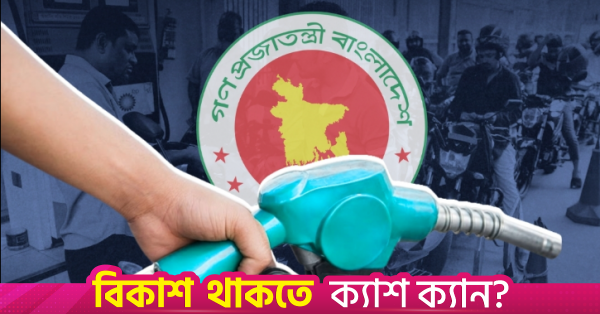
As part of efforts to stabilise the market, the government is considering retaining existing taxes and duties on fuel imports even if retail fuel prices are raised.
For instance, the government currently earns around Tk38 per litre of petrol priced at Tk120. Under the proposed approach, the tax component would not be changed even if the retail price is adjusted to Tk140, instead of rising proportionately to about Tk45.
This would effectively prevent a Tk7 increase in consumer prices. Although the move would reduce government revenue, the authorities are pursuing a strategy of keeping fuel prices slightly lower in May and June to help contain inflation.

Officials said any upward adjustment in fuel prices would add to inflationary pressure, given its wide impact on overall costs. However, keeping taxes unchanged would help limit the extent of that pressure.
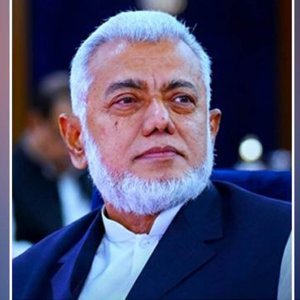
Finance Minister Amir Khosru Mahmud Chowdhury has asked the National Board of Revenue (NBR) to submit an urgent report analysing the potential impact of such a move on state revenue collection.
The directive was issued yesterday at the second meeting of the Fiscal, Monetary and Exchange Rate Coordination Council for the 2025-26 fiscal year. Several senior officials told TBS that the council also discussed broader measures aimed at easing inflationary pressure in the economy.
These include instructions to reduce additional costs faced by importers at ports, measures to lower cost build-up in pricing calculations across various commodities through directives to the commerce ministry.
The council further decided to explore the creation of a large fund to revive sick and closed industrial units. The proposed fund would be formed through a combination of loans from development partners and resources from the central bank’s own financing mechanisms.
The virtual meeting, chaired by the finance minister, was attended by the governor, finance secretary, secretary of the Financial Institutions Division, NBR chairman, Economic Relations Division secretary, commerce secretary, and senior finance division officials, along with other ministry representatives.
Speaking to TBS after the meeting, Commerce Secretary Mahbubur Rahman said the coordination council had decided to reduce value-added tax and import duties on essential commodities.
“No country in the world imposes such high levels of duties and taxes on essential goods. These duties and VAT rates will be gradually reduced.” he said. He added that discussions also focused on preventing traders from engaging in unjustified price hikes.
No need for fuel price hike if duties unchanged
Finance officials said that more than 32% in various duties, taxes and VAT are currently imposed on imported fuel oil. The NBR collects around Tk15,000 crore annually from this sector.
Due to the conflict in the Middle East, the government is now importing fuel at nearly double the previous prices, which has also doubled the volume of revenue collection.
“The BPC and Petrobangla sell fuel and gas at prices lower than their import cost. The Energy Division has long argued that the duties, taxes and VAT imposed by the NBR on fuel imports are unjustified. However, the NBR has not moved due to concerns over revenue loss,” said one finance division official.
He also mentioned that the IMF has been pressing Bangladesh to reduce subsidies. In that scenario, fuel prices would need to be raised, which would significantly increase inflation. Against this backdrop, he said keeping existing duties, taxes and VAT on fuel imports could help the public.
“Fuel prices are adjusted by the government at the end of each month. Therefore, the finance ministry has asked the NBR to submit an analysis report before the end of May, ahead of the next price adjustment, on the likely impact of such keeping taxes unchanged,” said another finance official.
Fund to revive sick industries
Finance ministry officials said a large fund will be created in the next fiscal year’s budget to revive closed and sick industries, a commitment reflected in the BNP’s election manifesto.
To this end, the council has instructed the Economic Relations Division to seek loan assistance from the Asian Development Bank, the Asian Infrastructure Investment Bank, and the World Bank.
“The fund will be formed by combining resources from development partners with financing from Bangladesh Bank,” said a ministry official.
However, amid the ongoing conflict in the Middle East, the government has not taken any decision to increase incentives to boost remittance inflows. Instead, the focus will be on simplifying remittance transfer processes and ensuring that banks can disburse funds to recipients’ families as quickly as possible.
The Bangladesh Bank has been tasked with taking necessary measures in this regard.
Tk9.2 lakh crore FY27 budget
Finance officials said the ministry at the Coordination Council meeting proposed a large budget of over Tk9.20 lakh crore for FY27, as the government moves to contain inflation and create jobs.
They said higher spending will be driven mainly by global economic risks, rising subsidies and increased allocations for social protection. Additional interest payments and a planned partial salary adjustment for government employees are also contributing to the expansion of the budget.
Officials noted that total revenue mobilisation for the next fiscal year may be set at around Tk6.90 lakh crore. Of this, more than Tk6 lakh crore is expected to come from the NBR.
In the current fiscal year’s original budget, the NBR was tasked with collecting nearly Tk5 lakh crore. The Centre for Policy Dialogue (CPD) has warned that the shortfall could reach Tk1 lakh crore by year-end. Despite this, the revised budget has already raised the revenue target by an additional Tk20,000 crore.
Rising subsidy burden, economic outlook
Higher global fuel prices are expected to raise subsidy requirements by Tk36,000 crore, the finance minister said on Thursday. The original allocation for gas and electricity subsidies stood at Tk42,000 crore.
Officials said the additional pressure has pushed the government to increase revenue targets.
Inflation for the next fiscal year is being targeted at 7.5%. Finance officials said easing geopolitical tensions in the Middle East and stabilising fuel prices could help bring inflation closer to the target.
The GDP growth estimate has not yet been finalised, with officials considering a range of 6.2% to 6.5%. International agencies, however, have projected Bangladesh’s growth at around 3.9% for the current fiscal.
The finance minister, finance secretary and ERD secretary travelled to Washington on Friday night to attend IMF meetings. An official present at the Coordination Council meeting said discussions were concluded early due to the visit. Budget deliberations are expected to resume after their return.
In a statement to parliament on 10 April, the finance minister said budget preparations are underway amid multiple economic pressures. He said the objective is not only growth, but also a sustainable, transparent and inclusive economy, while acknowledging public expectations and inherited constraints.
Fiscal framework and financing mix
The FY26 budget was set at Tk7.90 lakh crore, later revised to Tk7.88 lakh crore following cuts in development spending and higher allocations for subsidies and operating costs.
Officials said the FY27 budget deficit is projected at around Tk2.70 lakh crore, within 5% of GDP. Of this, around Tk1.50 lakh crore is expected from domestic borrowing, while Tk1.20 lakh crore will come from external sources, largely as budget support.
The finance minister has directed the NBR to prepare a plan to raise the tax-to-GDP ratio to 10% by FY28. Measures to reduce the cost of doing business and revive closed industries were also discussed at the coordination meeting.
Spending priorities, welfare programmes
Around 67% of expenditure in the next budget is expected to go towards operating costs, while 33% will be allocated to development spending. Officials said large-scale new development projects are unlikely in the near term.
The government also plans to introduce a “Family Card” programme covering 50 lakh families, along with separate cards for farmers, fishermen and livestock producers. A youth sports initiative will provide scholarships for talented athletes aged 12 to 14.
Salary increases for public sector employees and expanded job creation commitments are expected to cost nearly Tk1 lakh crore in the next fiscal year.
About The Author