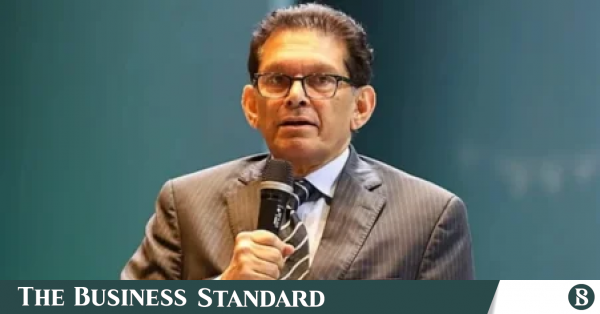
‘Even if the energy situation improves, we still face the larger problem of a decline in multilateralism,’ FM Khalilur Rahman says at the 9th Indian Ocean Conference in Mauritius.
Foreign Minister Dr Khalilur Rahman. Photo: Collected
“>

Foreign Minister Dr Khalilur Rahman. Photo: Collected
Seeking collective action amid the global energy crisis, Foreign Minister Khalilur Rahman has said there might be a ceasefire, but the energy issue is not going to be resolved within two weeks.
“All of us are in trouble, as the current energy challenges are creating disruptions. That will reverberate through the coming years. Even if the energy situation improves, we still face the larger problem of a decline in multilateralism,” he said while speaking at the 9th Indian Ocean Conference in Mauritius yesterday (10 April).
Indian External Affairs Minister S Jaishankar, among others, also spoke at the conference.

Bangladesh on Wednesday (8 April) thanked the Indian government for the recent supply of diesel and requested an increased volume of diesel and fertiliser. The Indian side indicated that it would consider the request “readily and favourably.”
Khalilur said the larger challenge – the loss of trust and confidence in the global system – will have to be addressed through their own actions.
“If we stay strong on our home front, it will be much easier for us to overcome the storms coming from outside,” he said.
The minister said some analysts believe this crisis will have implications much greater than the twin oil shocks of the 1970s.
“So, if the effects of the current crisis are going to be larger than the shocks of the 1970s, we can imagine the type of risks we are facing. This is the immediate problem, but perhaps a larger issue is the context in which it is happening,” he said.
“The kind of orderly world, which was not entirely orderly, but orderly enough for us to believe that the global system would take care of our problems, is now coming under very serious pressure,” the minister said.
He added that they are witnessing assaults on multilateralism and an increasing prevalence of unilateral actions within global frameworks.
“They are no longer helping us effectively in dealing with these issues. So, we face a significant challenge, one that exists within an even larger context. This is a time for collective action because individual countries will not be able to meet these challenges on their own,” he said.
The Indian Ocean region is going through a tumultuous period, with severe energy challenges threatening economies and societies, he said, adding that the Indian Ocean belongs to all who live by it, depend on it and dream through it.
“In these overwhelming times, our blue waters must unite, sustain and inspire us far more than before,” said the minister.
The India Foundation, in association with the government of Mauritius and India’s Ministry of External Affairs, is hosting the 9th Indian Ocean Conference (IOC 2026) in Mauritius.
Centred on the theme “Collective Stewardship for Indian Ocean Governance,” IOC 2026 has brought together leaders, policymakers and experts from across the Indian Ocean region to deliberate on shared responsibilities, cooperative frameworks and the future of regional governance.
About The Author