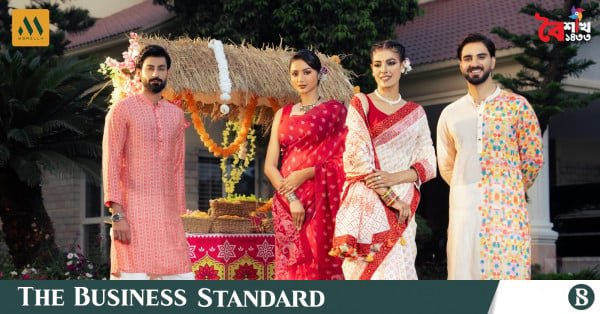
This Noboborsho, let your colours speak louder than words; your motifs tell your story, and your attire celebrates life itself
Grace, colour, and culture come together in every thread on Noboborsho. Photo: MBRELLA
“>

Grace, colour, and culture come together in every thread on Noboborsho. Photo: MBRELLA
The essence of Baishakh is not merely visual; it is deeply sensory. The air filled with the soft tunes of folk music, the shimmer of red-bordered shari, the glint of alta on hands and feet, the aroma of Panta Ilish, the ritual of haalkhata and even the subtle smell of tender mango buds, all signs that Baishakh has arrived.
For Bangalis, Pahela Baishakh or Noboborsho is a festival of cultural pride. Both in Bangladesh and West Bengal, it’s celebrated on 14th April each year with vibrant fashion at the heart. From sharis, panjabis, kurtis, to masks and hand fans, Baishakh is basically a full-colour palette walking around the city.
Lightly patterned sharis paired with plain-coloured blouses is an elegant choice for minimalist style. Photo: Colour Craze
“>

Lightly patterned sharis paired with plain-coloured blouses is an elegant choice for minimalist style. Photo: Colour Craze
Heritage in every drape: Sharis that turn heads this Baishakh
Whenever we think of Pahela Baishakh, one visual pops up immediately: red and white. Regardless of the trends or designs that emerge each year, these two colours continue to be the essence of the Bangla New Year. If colours were capable of falling in love, red and white would be the ideal couple, embodying romance, timelessness, and inseparability.

White, with its minimalist charm, is like a blank canvas, inviting fresh stories of beginnings and rebirth. And red? Red is the heartbeat: love, luck, laughter, and all the emotions that make life vibrant.
They join forces to bring us the star of the show: The classic, red-bordered white shari, ever present in countless designs, motifs, and styles.
“We usually wear a variety of colours, but typical red and white are not worn very often throughout the year. So even if it’s just for one day, we wanted everyone to remember our culture and heritage, and we are actively promoting it to encourage people to wear cultural attire,” said Zaheda Fatema, owner of Hoimo.
Little ones now have their own version of Baishakhi sharis. Photo: HOIMO
“>

Little ones now have their own version of Baishakhi sharis. Photo: HOIMO
While red and white are iconic, many people enjoy exploring other shades. Earthy, muted, and nature-inspired colours are gaining popularity, reflecting a modern twist on traditional aesthetics. “This time, we focused on earthy tones, such as matte brown and dark brown. Colours inspired by nature have received a very warm response,” shared Marufa Akter Shorna, owner of Colour Craze.
Baishakh sharis are a canvas of creativity. From floral motifs and delicate embroidery to appliqué work, block prints, or combinations of prints, there’s something for every eye. “To welcome Baishakh 1433, we used traditional motifs like Alpana, polka dots, flowers, vines, and paisleys,” said Kaniz Fatema, owner of Hoimo.
Blouses are now as creative as the sharis themselves. While traditional white and red blouses remain, new ones include off-white, maroon, and a range of other colours. Many women now prefer lightly patterned sharis paired with plain-coloured blouses, an elegant choice for those who love minimalist and refined style.
Marufa also highlights the more adventurous options: blouses with traditional embroidery, boho-inspired designs, and even skin-print patterns. Prices range from Tk700 to 1800, making them accessible yet stylish.
Panjabi perfection: Soft tones, sharp style for the modern man
For men, Panjabis remain the top choice. This year, alongside the classic white and red, soft shades like off-white, ivory, coral, and earthy tones are trending. Many Panjabis combine prints and subtle embroidery, creating a beautiful balance of tradition and modernity.
Coordinated attire is not just stylish; it’s fun, memorable, and perfect for Instagram-worthy family photos. Photo: VIRGO
“>

Coordinated attire is not just stylish; it’s fun, memorable, and perfect for Instagram-worthy family photos. Photo: VIRGO
Panjabis with light embroidery along the placket or sleeve edges are especially popular. For those seeking a semi-formal or neat look, short kurtas or coordinated Kabuli-Panjabi sets are in trend. And given the heat of Baishakh, buyers are wisely opting for cotton, viscose, and cotton-blend fabrics that are comfortable, breathable, and stylish.
Baishakh fashion is not just for adults. Children, too, have their own share of festive style. Sharis for young girls, panjabi kurtas for boys, and coordinated outfits for toddlers are all part of the celebration. Brands are paying careful attention to kids’ fashion, ensuring that even the youngest participants feel festive and stylish.
Zaheda Fatema, the owner of Hoimo, said, “This Baishakh, we specially introduced sharis for girls, a new initiative for us. Childhood deserves to be colourful and memorable, and we wanted to create that magic.”
Why stop at individual celebrations? Families and couples can embrace Baishakh in style with matching outfits.
“We receive many orders for combo sets, and we always pay close attention to big events like Baishakh and Eid,” shared Faiza Ahmed Rafa, owner of Artemis.
Coordinated attire is not just stylish; it’s fun, memorable, and perfect for Instagram-worthy family photos. Celebrating together in matching outfits adds a special charm to the festival, making it even more meaningful.
Ultimately, Pahela Baishakh is more than clothes. It is a celebration of culture, a festival of colours, and a heartbeat of tradition and joy. It is the joy of wearing your heritage, telling your story. This Noboborsho, let your colours speak louder than words; your motifs tell your story, and your attire celebrates life itself.
Whether it’s the minimalist charm of a white blouse, the earthy elegance of a modern Panjabi, or the playful vibrancy of a child’s shari, Baishakh fashion is a festival, a joyous ode to culture, creativity, and celebration. So go ahead: dress boldly, celebrate vibrantly, and let your fashion tell the story of your Baishakh.
About The Author