Chemical, battery, tannery industries hit hard by supply disruption
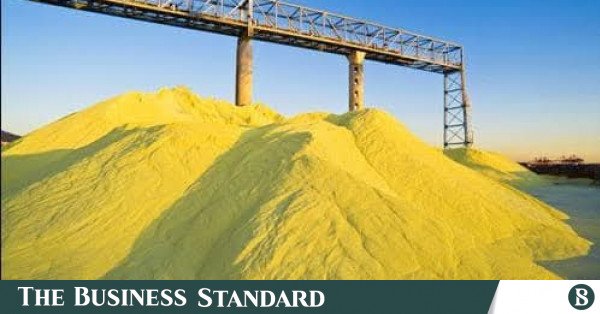
Large supply of granulated Sulphur. Photo: Collected
“>

Large supply of granulated Sulphur. Photo: Collected
The US-Israel war against Iran has disrupted sulphur supply from Middle Eastern sources, affecting production in a range of industries from leather and battery to fertiliser that use this oil refinery byproduct and its chemical compound sulphuric acid.
The closure of state-owned fertilizer company TSP Complex, which produces sulfuric acid for itself and private industries, had created a supply shortage of sulfuric acid even months before the Middle War began on 28 February.
Now with the Strait of Hormuz closed and supplies from the Middle East suspended, sulphur shortage for chemical industries worsened, causing further decline in sulfuric acid production.

Infograph: TBS
“>

Infograph: TBS
As a result, sulphuric acid prices have surged by 8-10 times, hitting battery and leather industries hard.
AA Rashayan Shilpa Ltd, a private sulphuric acid producer in Faridpur, has remained shut since 3 March due to raw material shortages.
Rashed Ahmed, company secretary of AA Rashayan Shilpa Ltd, said the factory has been shut mainly due to a shortage of raw materials.
He said disruptions in shipments have worsened the situation, forcing the company to look for alternative routes to import sulphur.
The factory has a daily sulphuric acid production capacity of 40 tonnes.
Iqbal Hossain, a chemical trader, said they are not receiving supplies from factories, adding that the situation has become difficult for businesses.
“Sulphuric acid used to cost Tk38 per kg, but now it has risen to around Tk220 per kg. Even at such high prices, it is hard to secure supply,” he added.
Industries that use sulpuric acid are increasingly relying on private chemical companies since the state-run TSP Complex plant in Patenga, Chattogram, has been closed since November due to mechanical faults.
Officials said the company is now supplying sulphuric acid to industrial units under the state-owned Bangladesh Chemical Industries Corporation (BCIC) from its existing limited stock, which is nearing depletion.
TSP Complex Limited Managing Director Engr Sen Sukhen Chandra said the plant remains shut due to mechanical faults, with raw material shortages adding to the problem.
“Even with the available raw materials, the factory can run for a maximum of eight days. We could not procure supplies despite multiple tenders,” he said.
However, he added that TSP fertiliser production is continuing through phosphoric acid imports to avoid any impact on the agricultural sector.
Sereniabat Rezaul Bari, managing director of the procurement division at Bangladesh Chemical Industries Corporation (BCIC), declined to comment on the complexities surrounding sulphur procurement.
Producers cite import disruptions
Apart from making sulphuric acid, sulphur is widely used to produce chemical fertilizers, matches and pharmaceuticals.
According to National Board of Revenue (NBR) data, Bangladesh imported 2,224 tonnes of sulphur in December last year, valued at Tk9.93 crore.
Imports rose to 3,412 tonnes in January, worth Tk21.22 crore, before falling to 2,418 tonnes in February, valued at Tk15.34 crore.
No sulphur imports were recorded in March, indicating that the raw material shortage may be worsening, industry officials said.
According to international trade data platforms, Saudi Arabia was the largest source of sulphur imports for Bangladesh in FY25, accounting for around 50-60% of total supply.
Bangladesh also imports sulphur from other Middle Eastern countries as well as India. China, Turkey and South Korea are among the other listed sources.
Although Russia is considered the second-largest source, imports from the country have been disrupted due to Western sanctions, export restrictions and payment and shipping constraints, traders said.
Among local importers, BCIC, Crescent Chemicals, Wata Chemicals Ltd and AA Rashayan Shilpa Ltd are the major players, with Crescent Chemicals leading the market.
Shamsul Huq, company secretary of Wata Chemicals Ltd, said sulphur imports have been facing difficulties for some time.
“Supplies from Russia, one of the key sources, have stopped, while shipments from the Middle East are also being disrupted, pushing up both shortages and prices,” he said.
He added that the company remains operational, but most of its sulphuric acid production is used to meet its own demand, particularly for producing alum.
Industries under pressure
Acid traders say they are not receiving enough supply from sulphuric acid producers to meet market demand, with only 20-30% of the required volume currently available.
They said the market first became unstable after TSP Complex Ltd stopped supplying sulphuric acid to the private sector in November last year, when prices rose from Tk20-25 per kg to Tk35-40. After the war began, prices climbed further to Tk60 and have since surged to as much as Tk20-21 lakh per truck (10 tonnes).
Md Kabir Hasan, president of the Bangladesh Acid Merchant Association, told TBS, “Prices usually range between Tk20 and Tk25 per kg, but rose to Tk35-40 after the TSP Complex plant closed. Although we expected prices to ease, private producers increased rates further, citing sulphur shortages after the war, with truck prices reaching Tk20-21 lakh recently.”
AKM Jahirul Hasan, head of sales at J Co Battery Engineering Works, told TBS the crisis began even before Eid.
“In a normal market, we used to buy 10 tonnes of sulphuric acid at Tk270,000, or Tk27 per kg. On 2 April, we had to buy one tonne at Tk250 per kg,” he said.
He added that sulphuric acid is a key raw material for the battery industry, and the shortage is raising production costs while also disrupting output.
Md Emam Hossain, managing director of ABS Tannery Limited, said sulphuric acid is required at the first stage of processing raw hides.
“We need at least five tonnes of acid per month. Even in late February, we bought it at Tk43 per kg, but now prices have risen to Tk220-240,” he said.
Md Shakhawat Ullah, vice president of the Bangladesh Tanners Association, said acid that used to cost Tk35 per kg is now being sold for up to Tk250 and is often difficult to source.
“This is increasing production costs and disrupting operations at tanneries,” he added.
About The Author