Petrobangla officials said maintaining higher LNG imports was essential to sustain electricity generation from gas-fired power plants
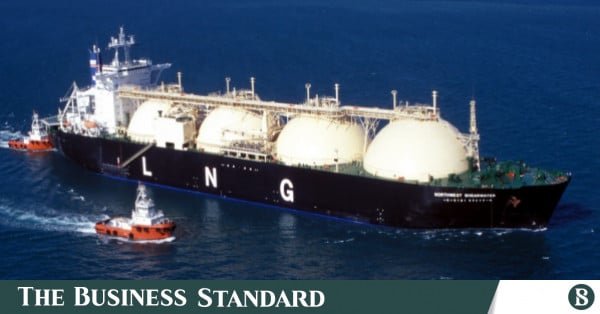
Representational Image.
“>

Representational Image.
Highlights:
- Bangladesh to import 11 LNG cargoes despite soaring global prices
- Earlier plan reduced to nine cargoes reversed over supply concerns
- Higher imports aim to prevent power shortages, load-shedding risks
- LNG prices doubled due to geopolitical tensions, Strait disruptions
- Increased reliance on volatile spot market amid supplier force majeur
- Government boosts subsidies to balance rising costs and energy security
The government plans to import 11 liquefied natural gas (LNG) cargoes in May despite surging global prices as it seeks to ensure an adequate gas supply for power generation during the peak summer season.
Earlier, Bangladesh had considered scaling back May imports to nine cargoes from its original plan of 11 – the same as April levels – amid supply disruptions triggered by the US-Israel war on Iran and the closure of the Strait of Hormuz.

However, the authorities have reversed the plan amid concerns that reduced imports would force cuts in gas supply to power plants and lead to load-shedding in the impending hot and humid month of May, when electricity demand could reach around 17,000MW.
Infograph: TBS
“>

Infograph: TBS
Petrobangla officials said maintaining higher LNG imports was essential to sustain electricity generation from gas-fired power plants.
“With 11 LNG cargoes, we expect to supply up to 935 million cubic feet per day (mmcfd) of gas to power plants, sufficient to generate more than 5,000MW of electricity,” said AKM Mizanur Rahman, director (finance) at Petrobangla.
“The decision on the number of cargoes required for May was made considering power demand, fertiliser needs for Boro cultivation, and industrial consumption,” he added.
So far, Petrobangla has secured four cargoes for May – two from the spot market and two through short- and long-term contracts. The remaining seven cargoes are expected to be finalised in the coming days.
Imports come at a steep cost
The decision to maintain the full import plan comes with a significant financial burden, as LNG prices in the international market have more than doubled.
According to Petrobangla data, the average spot LNG price rose to $21.77 per MMBtu during March and April, up from $10.18 earlier in the year – an increase of nearly 114%.
The surge has been driven largely by geopolitical tensions and disruptions affecting shipping through the Strait of Hormuz, a key route for global energy supplies.
To import 11 cargoes in May, Petrobangla will require an additional Tk4,500 crore compared with pre-war cost estimates, Mizanur said.
To cope with rising costs, the government has allocated up to Tk17,000 crore in additional subsidies on top of the Tk6,000 crore originally earmarked for LNG imports in the FY2025-26 budget.
Officials said the company is likely to spend around Tk9,000 crore extra for LNG imports in April and May alone.
Shift towards spot market purchases
Ongoing supply disruptions have also forced Bangladesh to rely more heavily on the volatile spot market.
Before the Middle East conflict, the country planned to procure nine of the 11 May cargoes through long- and short-term contracts, with only two from the spot market.
The latest plan shows a sharp reversal, with eight cargoes now expected from the spot market and only three from existing contracts.
The change follows force majeure declarations by major LNG suppliers, including QatarEnergy, OQT Trading of Oman, and Excelerate Energy.
Of the three contracted cargoes, two will come from QatarEnergy Trading and one from Aramco Trading Company of Saudi Arabia, with supply originating from Angola and the United States.
To secure additional shipments, Rupantarita Prakritik Gas Company Limited (RPGCL) on 1 April floated a tender inviting 24 international suppliers under its Master Sales and Purchase Agreement (MSPA) to submit price offers for three spot cargoes scheduled for delivery in early May.
Power plants get priority
Petrobangla said gas supply to power plants would remain the top priority in May to minimise load-shedding.
The state-owned company plans to allocate up to 935mmcfd of gas to the power sector. In Bangladesh, around 100 mmcfd of gas can generate approximately 500-550MW of electricity, meaning the planned supply could support the generation of roughly 4,700-5,150MW.
Gas supply to power plants has already improved in early April. As of 5 April, average supply stood at 875mmcfd, with a peak of 913.2mmcfd recorded the same day – up from 852.5mmcfd on 1 April.
But the supply still falls far short of the total demand of 2,524.9mmcfd for power generation, according to Petrobangla data.
For May, around 85mmcfd of gas will be allocated to the fertiliser sector, far below its demand of 329mmcfd, while the remaining supply will be distributed among industries and households.
Overall gas supply is expected to remain stable, ranging between 2,570 and 2,650mmcfd.
Demand expected to rise
Officials warned that electricity demand could rise to as high as 17,000MW in May, especially if rainfall remains limited.
Last year, peak electricity generation reached 16,018MW on 10 May against a demand of 16,700MW, resulting in load-shedding of 651MW.
According to the Bangladesh Power Development Board, gas-fired power plants account for 11,794MW of installed capacity – about 43.02% of the country’s total generation capacity of 27,414MW.
Balancing cost and supply
Petrobangla officials said managing the twin challenges of ensuring supply while containing rising costs had become increasingly difficult.
“Ensuring uninterrupted gas supply to power plants is critical to avoid load-shedding during peak summer,” Mizanur said. “At the same time, unprecedented volatility in LNG prices is putting immense pressure on the subsidy framework. We are trying to strike a balance between affordability and supply security.”
With Bangladesh becoming increasingly dependent on expensive spot LNG purchases amid ongoing geopolitical disruptions, policymakers now face the task of maintaining gas supply stability while coping with mounting subsidy pressures.
About The Author