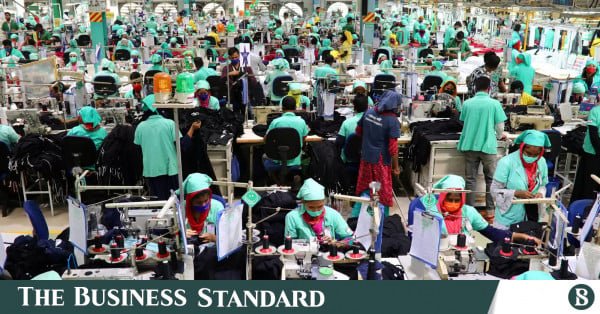
A prolonged conflict could further drive up input costs, inevitably trickling down to consumers through higher commodity prices, warn industry leaders
Photo: World Economic Forum
“>

Photo: World Economic Forum
Highlights:
- Middle East war drives fuel, shipping, raw material costs higher
- Industrial production faces severe cost-push crisis across sectors
- Exporters absorb rising costs, profits shrink, losses likely
- Raw material prices surge widely, some rising over 180%
- Supply chain instability causes shortages, panic buying, halted orders
- Rising costs likely passed to consumers through higher prices
Industrial production in Bangladesh is facing a severe cost-push crisis as the Middle East war drives up global fuel prices, shipping tariffs, and raw material costs.
A prolonged conflict could further drive up input costs, inevitably trickling down to consumers through higher commodity prices, warn industry leaders.

Exporters, particularly in the garment sector, are already facing financial strain as they are forced to absorb higher raw material costs for orders that have already been confirmed. With global demand weakening, their ability to pass on increased costs to buyers has diminished, eroding profit margins and raising the risk of losses.
Infograph: TBS
“>

Infograph: TBS
Industry insiders say the uncertainty has also triggered panic buying among importers, who are placing larger orders to secure supplies, further fuelling price hikes. In some cases, buyers have even halted new orders amid volatility in global markets.
Interviews with more than a dozen entrepreneurs in both the export and domestic sectors indicate that import costs for various raw materials and chemicals have surged by 10% to 183%.
Key increases include prices of non-cotton fabric by around 19%, polyester filament yarn by 79%, cotton yarn by 18%, chemicals by 50% to 183%, steel raw materials by 17%, clinker by 34%, plastic resin by 67%, and pharmaceutical active ingredients by approximately 30%.
Despite no official increase in domestic fuel prices, transportation costs have already risen by nearly 30%, adding further pressure on production expenses.
Khorshed Alam, chairman of Little Star Spinning Mills Limited, said the price of lyocell fibre has increased from $1.60 per kilogram before the war to $1.90, marking a rise of about 19%. Polyester fibre prices have also risen by around 28%.
Chemical prices have seen some of the sharpest increases. Saleudh Zaman Khan, managing director of NZ Apparels, said prices have risen by 50% to 183% depending on the type, while dyeing chemicals alone have increased by 40% to 50% within a month.
He also highlighted a steep rise in sulphuric acid prices – from Tk55-60 per kilogram to Tk230 within days – warning that such increases could discourage proper use of effluent treatment plants, potentially leading to increased environmental pollution.
Shamim Ahmed, president of the Bangladesh Plastic Goods Manufacturers and Exporters Association, noted that plastic resin prices have surged to $1,600 from $900 in the global market, while Bangladesh remains almost entirely dependent on imports for this key raw material.
Similar trends are evident in the cement and steel sectors. Chanchal Kumar Roy, executive director of Bangladesh Cement Manufacturers Association, said clinker prices have risen from $43 to $58 per tonne, while steel importers report prices increasing from $600 to $700 per tonne. Some importers have delayed opening letters of credit due to the higher costs.
The pharmaceutical sector is also under pressure. DH Shamim, managing director of pharmaceutical raw material importer BBCON, said that prices of almost all raw materials have increased by an average of up to 30% due to global conditions, raising production costs and putting pressure on the industry.
He noted that gas shortages and rising costs of solvents and other basic intermediates have also increased the cost of producing APIs (active pharmaceutical ingredients), ultimately pushing up overall manufacturing costs.
Although domestic fuel prices remain unchanged, manufacturers claim that transportation costs have already begun to climb in several sectors.
Khorshed Alam pointed out that truck fares between Savar and Narsingdi’s Madhabpur have climbed to Tk8,500, up from the previous rate of Tk6,500.
Acute instability in supply chains
Industry stakeholders report that price hikes are being compounded by acute instability in global supply chains and order processing. Kamruzzaman Kamal, marketing director of PRAN-RFL Group, said, “We are facing a shortage of plastic raw materials and are currently sustaining our operations solely on existing pipeline stocks.”
He cautioned that a prolonged war could lead to production bottlenecks as early as next month.
Saleudh Zaman Khan noted, “The supply of certain chemicals has become unavailable. The agents who previously imported and supplied us from India are now unable to continue their imports.”
He added, “Since we have some stock remaining, we can sustain operations for a few more days. However, smaller firms will face production disruptions very soon.”
Losses for pre-existing orders
As prices continue to surge, exporters and manufacturers with pre-existing orders are bracing for significant losses.
ABM Shamsuddin, managing director of Hannan Group, said, “As we have already finalised our export orders, it will not be possible to pass the additional costs on to the buyers. We are forced to absorb these expenses, which may result in losses given our already thin profit margins.”
He added, “We anticipate that fabric prices may climb further, as suppliers are now issuing proforma invoices with extremely short validity periods, often less than seven days.”
Shamim Ahmed noted, “Due to the fresh hike in raw material prices, many plastic product manufacturers will face losses because they have already accepted purchase orders. It will not be possible to collect the additional costs from the buyers.”
However, he added, for new orders, it might be possible to negotiate higher prices to account for the increased costs.
Garment industry stakeholders cautioned that the cooling global demand for apparel makes it difficult to pass on the full extent of increased production costs to international buyers. This scenario is expected to place significant fresh strain on the country’s RMG exporters, who are already navigating a volatile market.
About The Author