Industry insiders warn if the fuel shortage persists, motorcycle sales could face a decline
Photo: Salahuddin Ahemd/TBS
“>

Photo: Salahuddin Ahemd/TBS
Highlights:
- Eid usually boosts motorcycle sales significantly in Bangladesh.
- Fuel crisis caused unexpected slowdown in Eid-season sales.
- March sales dropped compared to previous Eid expectations.
- Fuel shortages linked to Iran war disruptions.
- After-sales income fell as riders reduced motorcycle usage.
- Electric vehicle sales surged amid ongoing fuel crisis.

Motorcycle manufacturers and sellers in Bangladesh consider Eid-ul-Fitr as their busiest sales season. Despite maintaining steady sales throughout the year, the demand typically experiences a sharp increase before Eid, driven by special offers and discounts that attract consumers.
This year, however, the industry is witnessing an unexpected slowdown, with many attributing the sluggish performance to an ongoing fuel crisis.
Although some brands managed to maintain stable sales due to aggressive marketing campaigns and discounts, others say the situation fell short of expectations.
Industry insiders warn that if the fuel shortage persists, motorcycle sales could face a decline in April, a critical post-Eid period.
The crisis stemmed from the Iran war that began on 28 February. Since then, fuel supply disruptions have become increasingly visible across the country.
Infograph: TBS
“>

Infograph: TBS
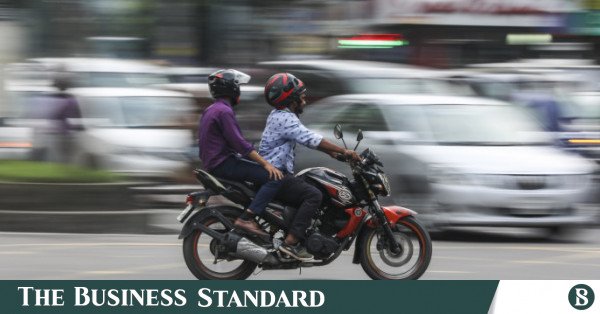
Fuel stations often see bikers waiting for hours in long queues to manage fuel.
Despite repeated assurances from authorities that there is no fuel shortage, the ground reality presents a different picture.
Biplob Kumar Roy, general secretary of the Bangladesh Motorcycle Assemblers and Manufacturers Association, said on average 30,000 to 35, 000 motorcycles are sold every month, and the sales increase during the Eid season.
“However, in March, entrepreneurs collectively sold about 45, 000 motorcycles, down from the previous Eid season as around 60, 000 motorcycles were sold during the Eid last year,” he said.
Biplob believes that if there were no abnormality in the oil supply, motorcycle sales would have been more than 50, 000.
Kausar Ahmed, director of the Bangladesh Motorcycle Assemblers and Manufacturers Association, said, “Motorcycle sales have decreased due to the fuel crisis. The automobile sector is also facing the same situation.”
Kausar, who is the CEO of Rupsha Trading Corporation, which is the sole distributor of Zongshen and Hyundai brands in Bangladesh, said if the fuel situation does not improve, sales may decline further in April, which will greatly affect the sector.
The sector had already been grappling with challenges following the political transition in 2024, which led to economic uncertainty and rising inflation.
Entrepreneurs had hoped for a rebound with the formation of a new government and the onset of the Eid season. Instead, the fuel crisis has caused another blow to the industry.
Business leaders assert that the impact extends beyond sales alone. The broader automobile sector is also feeling the strain, as fuel availability directly influences consumer behaviour.
Some distributors report a noticeable decline in sales of their brands, warning that continued instability in fuel supply could deepen losses in the coming months.
Hossain Mohammad, general manager of ACI Motors, said, “This year’s Eid season, there was an expectation of at least 35% growth. However, although YAMAHA Motorcycles’ sales did not decrease compared to normal, the growth was at least 15% less than expected.”
ACI Motors has been the distributor of YAMAHA Motorcycles since 2016.
The concern is that a prolonged crisis may affect current sales and damage long-term market confidence.
Bangladesh’s motorcycle industry has grown rapidly recently, now meeting nearly 99% of domestic demand through locally manufactured or assembled units.
Major global and local brands have established a strong presence, offering a wide range of models tailored to different customer segments.
Companies usually introduce special offers during Eid to capitalise on increased consumer spending. This year, many companies had projected at least a 30 to 35% increase in sales. While some brands managed to maintain steady performance, overall growth fell short of expectations.
Interestingly, not all segments of the market are experiencing the downturn equally. Some companies say motorcycle sales are still steady. but income from after-sales services has dropped by up to 20% as motorcycle users are riding less because of fuel shortages.
Meanwhile, the domestic manufacturer Runner Automobiles has been hit particularly hard. Monthly sales, which usually hover around 2,000 units, dropped to just 500 units in March. However, there is a notable shift in consumer preference: electric vehicles (EVs) are gaining traction.
In fact, Runner reported that EV sales doubled last month, reaching nearly 500 units, matching their motorcycle sales, said Sonat Dutta, chief financial officer of the automobiles.
Over the previous six months combined, EV sales had not even reached this figure. The surge indicates that consumers are actively seeking alternatives to fuel-powered vehicles amid the ongoing crisis, he said.
Industry analysts estimate the size of Bangladesh’s motorcycle market at Tk7,000 to Tk8,000 crore, with an annual growth rate of 16 to 17%.
Over the past decade, annual sales have nearly doubled – from less than 200,000 units in 2015 to around 400,000 units at present.
However, the current fuel crisis threatens to disrupt this growth trajectory.
The ripple effects are also being felt by ride-sharing drivers, who form an important part of the transport ecosystem.
Sohel, a Pathao rider with over two years of experience, says his income has dropped significantly during the Eid period.
He explains that fuel shortages and long waiting times at filling stations have forced him to limit his trips, forcing him to prefer shorter distances and often negotiate higher fares for longer journeys to compensate for the added hassle of refueling.
“Taking long trips means higher fuel consumption, and then I have to stand in line again,” he says. Waiting times can stretch for hours, which eats into his working hours and reduces his overall income.
To cope with the situation, he now refuels early in the morning when queues are shorter. Even then, the process takes up to half an hour, the rider said.
About The Author