Exchange rate band suggests dollar price may rise up to Tk130 considering currency movement of other trading partner countries
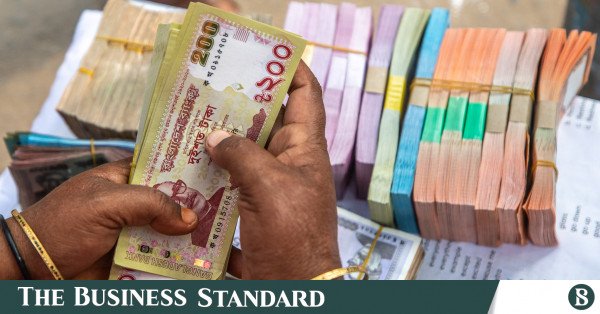
Representational image. Photo: Mumit M
“>

Representational image. Photo: Mumit M
Highlights:
- Bangladesh Bank allows gradual taka depreciation after global oil price shock
- Policy balances inflation risks and foreign reserves amid rising import costs
- Taka still overvalued; depreciation supports exports and remittance inflows
- Exchange rate may weaken toward Tk130 within IMF-guided band
- Oil and currency shocks could cut reserves by $6.5 billion
The Bangladesh Bank has allowed a gradual depreciation of the taka against the dollar since March to cope with the sharp rise in global energy prices following the Iran war, backtracking from its earlier stance of maintaining the exchange rate through intervention.
The global oil price shock has placed the central bank in a difficult position, balancing two major risks – price stability and foreign exchange reserves – as higher import payments may deplete reserves and fuel inflation.

Considering this scenario, the Bangladesh Bank has decided to allow exchange rate depreciation to protect reserves and manage upcoming import payment pressures, which are also inflationary in nature.
Infograph: TBS
“>

Infograph: TBS
Although devaluation is inflationary, the central bank has chosen the harder option, as the Real Effective Exchange Rate (REER) suggests that the current exchange rate remains overvalued.
Moreover, devaluation will encourage exports and remittances, which are expected to slow in the coming days due to the ongoing Middle East conflict.
How much the taka may depreciate
The exchange rate has already started to depreciate gradually since 8 March, as the dollar rose close to Tk123 after remaining stable at Tk122.30 for months.
REER, measured based on 17 currencies and incorporating both inflation and exchange rate data of major trade partners, stood at Tk126 on 29 March, indicating that the central bank has room to devalue the taka by Tk3.24 to remain export competitive.
Moreover, the exchange rate band prepared daily by the central bank, based on currency movements of trading partners, shows an upper band of Tk130 and a lower band of Tk125. The upper band suggests that the Bangladesh Bank can still allow a 5.6% depreciation until the dollar reaches Tk130.
The exchange rate band, prepared following a formula recommended by the IMF, also suggests that the current exchange rate is below the lower band.
The band was introduced in December 2024 when the Bangladesh Bank implemented greater exchange rate flexibility in line with a staff-level agreement with the IMF. This band is not publicly disclosed and is used internally to monitor the foreign exchange market.
Under the IMF formula, the Bangladesh Bank is supposed to buy dollars when the exchange rate falls below the lower band and sell dollars when it exceeds the upper band.
However, the central bank stopped buying dollars through auctions in March due to the global oil price shock, while still allowing a slower-than-expected depreciation through price guidance.
It will also refrain from selling dollars from reserves unless the exchange rate exceeds the upper band, according to a senior central bank executive.
Why depreciation is needed
Explaining the need for devaluation, Ezazul Islam, director general of the Bangladesh Institute of Bank Management (BIBM), said the central bank should allow gradual depreciation until it reaches the upper band, considering the oil price shock.
Moreover, the new government has expansionary fiscal plans in the upcoming budget. There is also pent-up post-election demand for loans and business expansion, which may increase demand and put pressure on the exchange rate.
In this situation, as a precautionary measure, the central bank should protect reserves so it can sell dollars in the future if the exchange rate overshoots.
“Therefore, allowing gradual depreciation at this time will help absorb a larger shock if war-related uncertainty persists,” he added.
A senior Bangladesh Bank executive told TBS that the exchange rate must depreciate sufficiently to protect the economy.
He said the pace of devaluation remains slower than in India, a major import source for Bangladesh. If the Indian currency is more undervalued, Indian products become cheaper for Bangladeshi consumers, increasing imports and affecting domestic industries.
Moreover, exports and remittances are expected to slow in the coming days due to job losses and weaker consumption caused by the war.
He said a depreciating exchange rate allows exporters to sell products at more competitive prices, improving profitability. It also encourages resource reallocation, with businesses shifting towards export-oriented sectors.
Import-competing industries also benefit, as domestic products become relatively cheaper than foreign goods.
Although devaluation is inflationary, its impact on inflation tends to weaken over time.
Referring to an IMF working paper titled “Exchange Rate Responses in Bangladesh”, he said the study examined exchange rate responses to inflation between 1972-73 and 1999 using both annual and monthly data.
The findings suggest that past consumer price inflation generally led to currency devaluation, measured by a decline in the trade-weighted nominal effective exchange rate. However, the impact of inflation on devaluation weakened after financial reforms in the early 1980s.
The effect of devaluation on inflation was not significant and remained consistent throughout the sample period.
Oil, rate shocks may lead to $6.5b reserve loss
An internal Bangladesh Bank study forecasts that a combined oil and exchange rate shock could reduce foreign exchange reserves by $6.5 billion by 2026.
The study, prepared for internal use, analysed three scenarios: an oil price shock, an exchange rate depreciation shock, and a combined shock.
Under the combined scenario, inflation may rise by 0.5 to 2 percentage points above the baseline by December 2026. In the absence of oil price shocks, inflation is expected to remain broadly stable at around 10.5% this year.
The study suggests that if the government absorbs higher global oil prices using fiscal space and keeps domestic fuel prices unchanged, inflationary pressure will remain contained.
It recommends allowing some exchange rate depreciation, implementing partial oil price adjustments, and maintaining a contractionary monetary policy stance.
Foreign exchange reserves have begun declining, falling to $29.29 billion on 29 March after a slight rise from higher Eid remittances. Two weeks earlier, reserves stood at $29.59 billion, according to Bangladesh Bank data.
Plans to seek emergency IMF support for fuel imports
The Bangladesh Bank is planning to seek emergency support from the IMF for fuel imports, which will be requested without conditions, according to a senior official. The governor is expected to raise the issue at the IMF’s annual meeting in April.
This support will be separate from the ongoing $4.7 billion loan programme, of which $1.5 billion is expected to be disbursed by June. The emergency funding is intended to support fuel imports before that timeline.
The official said the IMF provides such emergency assistance to member countries, and the oil price shock is likely to put significant pressure on the balance of payments.
The Bangladesh Bank has also expressed interest in securing a $2 billion credit line to ease balance of payments pressure during a recent meeting with senior journalists.
IMF objects to slow depreciation through price guidance
Although the central bank has allowed depreciation, the process remains influenced by price guidance. Commercial banks are reportedly receiving verbal instructions to trade dollars within specific ranges.
While the central bank’s website showed the interbank exchange rate at Tk122.75 on 30 March, many banks were buying remittances above Tk123, according to market insiders.
Previously, the Bangladesh Bank purchased dollars through auctions at pre-set rates. For example, if it aimed to buy $80 million and banks bid between Tk122.30 and Tk122.55, it would accept bids at a predetermined lower rate, such as Tk122.30.
This effectively signalled acceptable pricing, leading banks to align future bids with the central bank’s preferred rate, as holding unsold dollars results in losses.
The IMF has objected to this practice, arguing that exchange rates should be market-determined rather than influenced by pre-set pricing.
About The Author