Power Development Board alone accounts for around Tk16,000 crore
TBS Illustration
“>

TBS Illustration
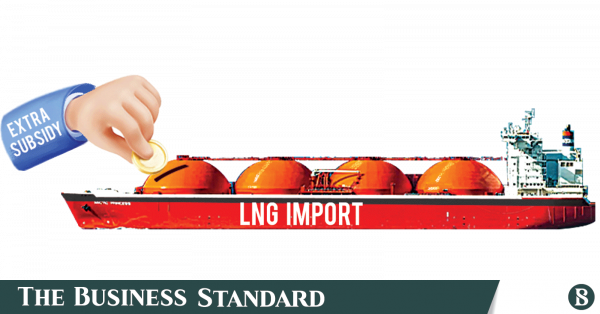
State-owned energy corporation Petrobangla has moved to mobilise funds from internal sources by directing its gas distribution companies to clear outstanding dues in phases, as the country grapples with soaring LNG import costs.
According to Petrobangla, total outstanding receivables – excluding disputed amounts – stood at Tk28,495.25 crore as of 31 January 2026.
Of this, the Bangladesh Power Development Board alone accounts for around Tk16,000 crore, while the remaining dues are from fertiliser plants, industries, households and other gas-dependent sectors.

Infographics: TBS
“>

Infographics: TBS
To accelerate recovery, Petrobangla held a virtual meeting on 11 March with representatives from gas distributors, including Titas, Jalalabad, Bakhrabad, Karnaphuli, Sundarban, Gas Transmission Company, Sylhet Gas Fields, Bangladesh Gas Fields Company, and Bapex.
At the meeting, Petrobangla Chairman Md Arfanul Hoque instructed distributors to deposit outstanding gas bills in phases to ease the corporation’s mounting financial burden.
Recovery drive gains pace
Petrobangla set a March recovery target of Tk5,095.51 crore, against which it managed to realise Tk4,748.48 crore by the end of the month, achieving 93.19% of the target.
Company-wise performance shows mixed results, with Titas Gas Transmission and Distribution Company Limited recovering Tk2,786.07 crore against a Tk3,000 crore target, while Bakhrabad Gas Distribution Company Limited exceeded its target by depositing Tk519.85 crore against Tk450 crore.
Jalalabad Gas Transmission and Distribution System Limited collected Tk524.45 crore (87.41%), and Karnaphuli Gas Distribution Company Limited slightly surpassed its target of Tk500 crore, achieving 102.22%.
PGCL and SGCL performed strongly with 101.55% and 99.98%, depositing Tk177.72 crore and Tk99.98 crore, respectively.
In contrast, Gas Transmission Company lagged with 80% recovery (Tk40 crore), while Sylhet Gas Fields showed weak performance, achieving only 22.67% with collecting Tk50 crore against a Tk220.51 crore target.
Despite having no prior outstanding dues, RPGCL and Bangladesh Gas Fields Company contributed Tk36.66 crore and Tk2.64 crore, respectively, during March.
Distributor-wise dues
Petrobangla’s eight distributors owe a staggering Tk28,495.25 crore.
Of the money Titas Gas Transmission and Distribution Company owes Tk15,138.85 crore, Bakhrabad Gas Distribution Company Tk3,382.27 crore, Jalalabad Gas Transmission and Distribution System Tk3,427.21 crore, Karnaphuli Gas Distribution Company Tk2,137.75 crore, PGCL Tk1,596.40 crore, SGCL Tk633.34 crore, Gas Transmission Company Tk1,974.71 crore and Sylhet Gas Fields Tk204.72 crore.
LNG cost pressure intensifies
AKM Mizanur Rahman, director (finance) at Petrobangla, told TBS that the recovered funds will be utilised to cover LNG import costs, payments to international oil and gas companies such as Chevron Corporation and Tullow Oil, regasification charges to Summit Group and Excelerate Energy, as well as port charges and other sectors.
The financial strain has worsened amid global disruptions. Following the start of the Iran war, long-term LNG suppliers invoked force majeure, pushing Bangladesh into the volatile spot market.
With the closure of the Strait of Hormuz – through which around 20% of global oil and gas shipments pass – LNG prices surged sharply. Petrobangla has been compelled to procure spot LNG at an average of $23 per MMBtu, more than double pre-war levels, in an extremely tight market.
Officials warned that with over 70% dependence on Middle Eastern sources, supply constraints have further intensified the crisis.
Subsidy pressure and internal inefficiencies
To cope with rising costs, Petrobangla has sought Tk17,000 crore in additional subsidies, on top of an earlier allocation of Tk6,000 crore. A meeting was held recently with the finance and planning ministries to discuss the subsidy issue.
Officials also pointed to inefficiencies in fund management by some distributors.
One Petrobangla official said, “Instead of depositing the gas sale money to Petrobangla, many distributors kept the money in banks only to distribute bank interest as a performance bonus.”
Officials say the intensified recovery drive was taken to reduce reliance on government subsidies. “If we can funnel funds from Petrobangla’s internal source, it will give breathing space to the government to manage fiscal pressure,” said Mizanur.
About The Author