The initiative will cover 629,510 workers across 254 tea gardens in 11 districts.
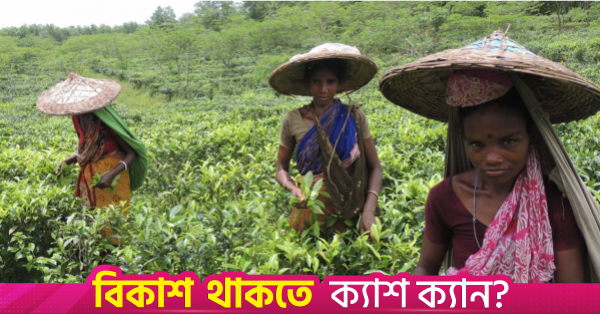
The struggle of Bangladeshi tea workers to raise their minimum wage has been dragging in for years. Photo: Collected
“>

The struggle of Bangladeshi tea workers to raise their minimum wage has been dragging in for years. Photo: Collected
The government has undertaken a Tk144 crore project to ensure safe water supply and sanitation facilities for tea garden workers by 2028.
The initiative will cover 629,510 workers across 254 tea gardens in 11 districts.
Titled the Safe Water Supply and Sanitation Project (Phase II), it will be implemented over a two-year period under the Department of Public Health Engineering.

Under the project, tube wells, sanitary latrines, biofil toilets and community toilets will be installed in each tea garden. In addition, training programmes and hygiene awareness campaigns will be conducted to improve workers’ health practices.
The project aligns with the United Nations Sustainable Development Goals (SDGs), particularly the target of ensuring access to water and sanitation for all by 2030. Prior to the commencement of construction, agreements will be signed with the respective tea garden authorities. The Ministry of Local Government, Rural Development and Co-operatives, along with private sector stakeholders, will also be involved in implementation.
Women account for 75% of tea garden workers. Currently, 254 tea gardens have 7,490 water sources serving an average of 84 people each, while 20,073 toilets are used by an average of 32 workers per facility.
A study by the Journal of Environmental Science and Natural Resources found that workers often defecate in open fields, roadside bushes, drains or riverbanks. It also revealed that women frequently do not wash their hands properly after defecation or before food preparation.
The project aims to ensure equitable distribution of safe drinking water by establishing reliable water sources. All installations will be climate-proof, allowing them to remain functional during adverse weather conditions.
According to the project document, improved access to safe water and sanitation will help protect the health of women and children and enhance disease resistance among beneficiaries.
The revised Development Project Proposal (DPP) for the initiative, covering the period from January 2026 to December 2028, has been sent to the Ministry of Local Government, Rural Development and Co-operatives for approval and necessary action.
About The Author