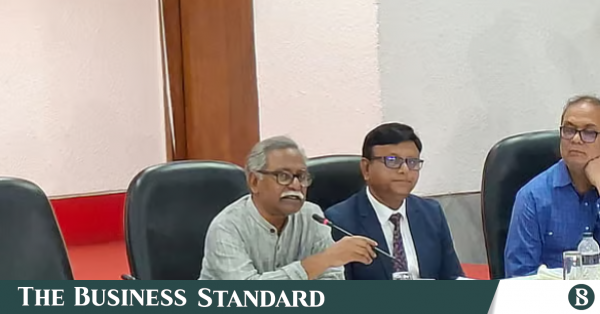
During a discussion of the “Energy Sector Reform and CAB’s 13-Point Demands” at the CIRDAP auditorium. Photo: Collected
“>

During a discussion of the “Energy Sector Reform and CAB’s 13-Point Demands” at the CIRDAP auditorium. Photo: Collected
Bangladesh’s ongoing energy crisis is largely the result of policy failures, import dependence, and foreign company-focused agreements, said Jahangirnagar University’s former professor Anu Muhammad.
He spoke today at 11am during a roundtable discussion on “Energy Sector Reform and CAB’s 13-Point Demands” at the CIRDAP auditorium in Dhaka. The event was organised by the Consumers Association of Bangladesh (CAB) to promote good governance and energy justice in the power and energy sector.
Anu Muhammad said that while there were expectations for democratic reforms and necessary initiatives during the interim government, the reality was very different.

He claimed that several advisers and special assistants, despite holding official positions, effectively acted as corporate lobbyists during foreign contract negotiations.
He warned that Bangladesh’s current energy crisis is rooted in overreliance on foreign loans and international institutions, including the World Bank, IMF, ADB, and JICA, and that this dependency must be reduced to overcome the crisis. He added that the power sector’s import-dependent structure is part of a long-term master plan, with JICA playing a role in its design.
Criticising the Ministry of Power, Energy and Mineral Resources, he said control of the sector has long been dominated by multinational companies, with contracts negotiated between the same parties repeatedly, both local and foreign, resulting in massive expenditure and growing dependency.
He also urged the country to move beyond the “VIP culture,” calling it the main problem behind the crisis. “The VIP population’s overconsumption worsens the situation. Bangladesh must break free from this,” he said.
The roundtable included Ashraf Uddin Bakul, MP for Narsingdi-5, former interim government adviser Farida Akhter, former CPB general secretary Ruhin Hossain Prince, Revolutionary Workers Party general secretary Saiful Haq, and labour rights activist Taslimah Akhter. Prior to the discussion, CAB presented its 13-point demands aimed at reforming governance and ensuring energy justice in the sector.
About The Author