Once considered an exotic fruit, dragon fruit is now gaining widespread popularity due to its high market demand, attractive appearance, and profitability.
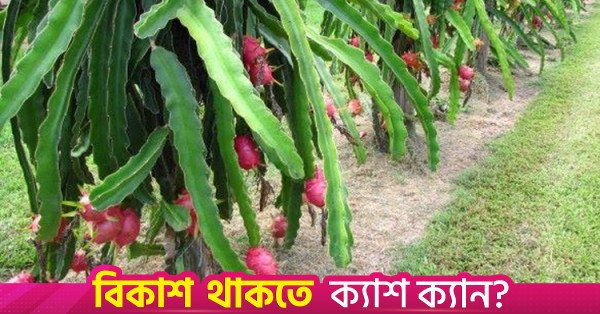
Dragon fruit farming boosts income, transforms Barind agriculture, offering hope to Rajshahi farmers. Photo : BSS
“>

Dragon fruit farming boosts income, transforms Barind agriculture, offering hope to Rajshahi farmers. Photo : BSS
Commercial cultivation of dragon fruit is rapidly transforming the agricultural landscape of the Barind region, offering new income opportunities and renewed optimism for farmers in Rajshahi and surrounding districts.
Once considered an exotic fruit, dragon fruit is now gaining widespread popularity due to its high market demand, attractive appearance, and profitability. Farmers across the drought-prone Barind tract are increasingly shifting to its cultivation, encouraged by low irrigation needs and comparatively minimal production costs.
According to the Department of Agricultural Extension (DAE), dragon fruit is a cactus species capable of surviving in arid conditions with very little water. Its resilience to natural adversities has made it particularly suitable for the dry climate and clay-loam soil of the Barind region. At present, the fruit is being cultivated in almost all upazilas of Rajshahi, while urban residents are also growing it on rooftops as a hobby.

Shariful Islam, a farmer from Godagari upazila told BSS, he has been cultivating dragon fruit for several years and is expanding further due to its profitability. This season, he plans to cultivate the fruit on 27 acres of land. He noted that the plants require extended light exposure-around 20 hours daily-to enhance fruiting.
Deputy Director of the DAE in Rajshahi, Nasir Uddin, while talking to BSS informed that the highest production is recorded in Godagari upazila, where dragon fruit has been cultivated on around 190 hectares of land this season. He added that the region’s soil and climate are highly conducive to the fruit’s cultivation, making it an increasingly attractive option for farmers.
Additional Director of the DAE, Abdul Wadud, said dragon fruit farming has proven highly profitable in the Barind tract. The crop requires relatively low investment, is less prone to pests, and is not significantly affected by excessive rainfall, contributing to its growing popularity.
The greater Barind region, including Rajshahi, Naogaon, Chapainawabganj, and Natore districts, has witnessed notable success in dragon fruit cultivation. Farmers are achieving high yields within a year of planting, while low irrigation requirements are reducing overall costs.
Driven by strong market demand and rising profits, many farmers-particularly in areas like Godagari-are converting their land into dragon fruit orchards. Alongside traditional crops such as mango and rice, the commercial production of fruits like dragon fruit, malta, and oranges is expanding steadily.
Agricultural experts believe this growing trend is not only diversifying farming practices but also strengthening the local economy and creating new employment opportunities across the region.
About The Author