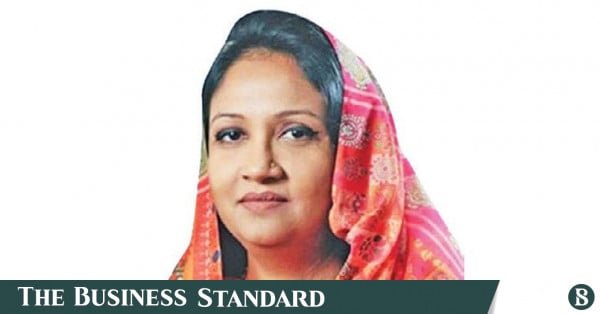
State Minister for Women and Children Affairs and Social Welfare Farzana Sharmin Putul has said recipients of the family card programme are not eligible for old-age, widow or other government allowances simultaneously.
Speaking in an exclusive interview with The Business Standard, she said the higher benefits offered under the family card scheme are driving its popularity among beneficiaries.
Under the programme, each recipient receives Tk2,500 per month – significantly higher than the Tk750-Tk800 provided through existing allowances for the elderly, widows and persons with disabilities.

“There is no direct link between the family card and the discontinuation of previous allowances,” the state minister said. “However, the rule is that one person cannot receive two benefits at the same time. While filling out the family card form, beneficiaries are asked which benefit they wish to retain.”
She added that most beneficiaries are opting for the family card due to its higher value. “Once they accept the family card, the previous allowance is discontinued as per the rules,” she said.
“The rule is one person cannot receive two government benefits at the same time. Once someone accepts the family card, the previous allowance is discontinued as per the rules.”
The government launched the family card programme earlier this month as part of its broader social protection initiative, with an initial focus on vulnerable groups.
Ensuring transparency
Addressing concerns over transparency, Putul said the programme is still in its pilot phase and may involve some “trial and error.” However, she emphasised that the ministry is taking a strict stance against irregularities.
“In my constituency, we have identified 44 ineligible individuals who received cards. Their cards have been put on hold for now. The poorest will be prioritised,” she said, adding that issues will be resolved through a review process before scaling up the programme.
Zero tolerance for corruption
On administrative reform, the state minister said tackling corruption requires both legal measures and a shift in mindset.
“Whoever commits wrongdoing will be handed over to the law. I want to ensure full transparency in both my constituency and the ministry,” she said.
Commitment to July Charter
Clarifying her position on the July uprising and the “July Charter,” she said the spirit of the movement must be translated into lasting reforms through legal and parliamentary processes.
“The July uprising belongs to all of us. We fully embrace its spirit. But to make reforms sustainable, they must be institutionalised through proper legal and parliamentary frameworks,” she said.
Regarding BNP’s decision not to take oath as members of the constitutional reform council, she said there were “logical and legal reasons” behind the move. She added that the aspirations of the July movement would be implemented through parliamentary committees.
Balancing public duty and personal life
As one of the youngest female state ministers, Putul said balancing official responsibilities with constituency engagement remains challenging.
“Ministerial duties require round-the-clock work. It has become difficult to spend as much time in my constituency as before. Still, I try to visit villages and listen to people’s problems directly,” she said.
Concluding the interview, she urged young people and women to join politics and reaffirmed her commitment to institutionalising the ideals of the July uprising through legal frameworks.
About The Author