The first meeting of a special parliamentary committee will be held at 11am that day at the cabinet room in the Jatiya Sangsad Bhaban
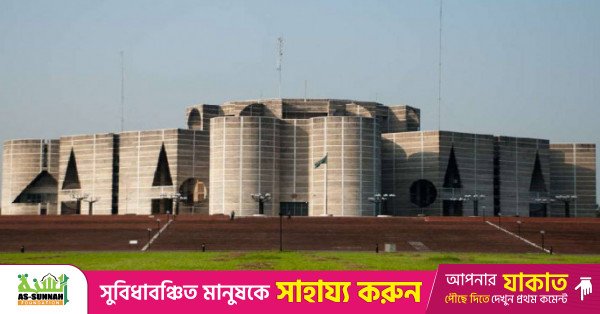
Jatiya Sangsad Bhaban or National Parliament House. Photo: Collected
“>

Jatiya Sangsad Bhaban or National Parliament House. Photo: Collected
The formal process of reviewing 133 ordinances issued during the tenure of the interim government will begin 24 March.
The first meeting of a special parliamentary committee will be held at 11am that day at the cabinet room in the Jatiya Sangsad Bhaban. The meeting will be chaired by committee president and BNP vice-chairman Zainal Abedin MP.
Speaking to The Business Standard yesterday, Zainal Abedin said the committee will examine the ordinances in detail, including whether any provisions are irrelevant or problematic.

“We will basically assess whether any provision in these ordinances conflicts with the Constitution, whether they are inconsistent with existing laws, or whether similar laws have already been enacted,” he said.
In response to a question on whether any ordinances would receive priority, the senior lawyer said all 133 ordinances would be reviewed thoroughly under constitutional standards. “No specific ordinance will be given special priority. All will be examined with equal importance,” he added.
The 14-member committee includes representatives from the opposition, with three members from Jamaat. All members will participate in the review process, after which a comprehensive report will be submitted to parliament by 2 April.
The special committee, formed to review the ordinances, is headed by Zainal Abedin. Other members include Mirza Abbas Uddin Ahmed, home minister Salahuddin Ahmed, chief whip Nurul Islam Moni, law minister Md Asaduzzaman, Dr M Osman Faruk, Barrister AM Mahbub Uddin Khokon, Abdul Bari MP, Muhammad Naushad Jamir, and Jamaat representatives Mujibur Rahman, Rafiqul Islam Khan and GM Nazrul Islam.
On 15 March, law, justice and parliamentary affairs minister Md Asaduzzaman proposed in parliament that the ordinances be sent to a special committee for review. The session was presided over by Speaker Hafiz Uddin Ahmed Bir Bikram.
The proposal was adopted by voice vote, and the ordinances were subsequently referred to the committee. The law minister requested that the committee submit its report by 2 April.
The list of ordinances includes amendments to laws related to Bangladesh Bank, local government bodies such as zila and upazila parishads, city corporations and municipalities, as well as revisions to the Sheikh Hasina National Youth Development Institute, the Bangladesh
Energy Regulatory Commission, and the Special Security Force. It also includes an ordinance revoking security provisions for family members of the Father of the Nation.
Other ordinances cover public service, the Bangladesh Public Service Commission, public procurement, banking, Grameen Bank, voter lists, local government, delimitation of parliamentary constituencies, the Representation of the People Order, civil courts, the Code of Criminal Procedure, and the International Crimes Tribunal.
Two ordinances related to the July mass uprising are also on the agenda: the July Mass Uprising Memorial Fund Ordinance, 2025, and the July Mass Uprising (Protection and Liability Determination) Ordinance, 2026.
Additional ordinances include those on microfinance banks, private export processing zones, Bangladesh Gas, Cumilla Development Authority, Narayanganj Development Authority, the Negotiable Instruments (Amendment) Ordinance, 2026, the Bangladesh House Building Finance Corporation (Amendment) Ordinance, 2026, and the Bangladesh Forest Industries Development Corporation Ordinance, 2026.
The committee has been asked to submit its report by 2 April.
About The Author