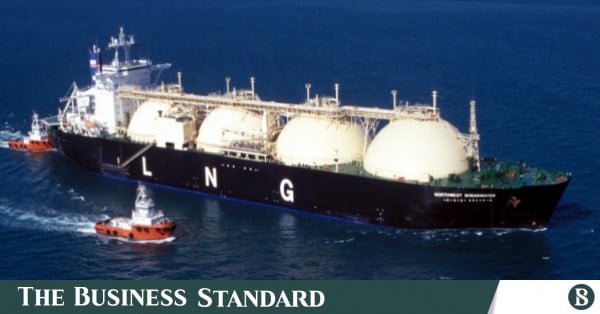
Bangladesh and other South Asian economies could face rising economic and energy security risks as they expand liquefied natural gas (LNG) infrastructure at a time when global markets are being shaken by geopolitical tensions in the Middle East, according to a new report by an international research organisation, Global Energy Monitor (GEM).
The report, released on Thursday, said LNG terminals and gas pipeline projects worth $107 bn have been announced or are under construction across India, Bangladesh, and Pakistan, based on data from GEM’s Asia Gas Tracker.
The report warned that the rapid expansion of LNG infrastructure in South Asia could leave the region highly exposed to price volatility and supply disruptions, as shipping disruptions have emerged around the Strait of Hormuz.

Even if the global LNG market becomes more balanced later this decade, the fuel will remain vulnerable to sudden price spikes caused by geopolitical crises, supply shortages, or shipping disruptions, the report cautioned.
For emerging economies that rely heavily on LNG imports, these price swings could translate into higher electricity tariffs, industrial disruptions, and growing pressure on public finances.
For Bangladesh, the risks are particularly significant, as it relies heavily on imported fuels for electricity generation and industrial production, leaving it vulnerable to fluctuations in global energy prices.
However, the report notes that policy shifts toward renewable energy could offer Bangladesh a more stable and sustainable path forward.
“As LNG prices continue to rise and supply tightens following the US attack on Iran, it would be a forward-looking decision for Bangladesh’s new government to move away from LNG and toward renewable energy,” said Julie Joly, director of the oil and gas programme at Global Energy Monitor.
“Renewables can provide the energy security that LNG clearly cannot,” she added.
Institute for Energy Economics and Financial Analysis (IEEFA) Lead Energy Analyst for Bangladesh Shafiqul Alam said, “Bangladesh’s experience with LNG has proven highly volatile. Hopes that LNG would provide an affordable alternative to declining domestic gas—caused by years of underinvestment—have instead exposed the country to unstable global markets.
“As prices surged, gas tariffs increased by up to 271% across sectors between January 2023 and April 2025, while recent high-priced spot purchases are likely to raise subsidy burdens further.” “In this context, Bangladesh must prioritise renewable energy, which offers a reliable hedge against global fossil fuel price shocks and supply disruptions,” he added.
About The Author