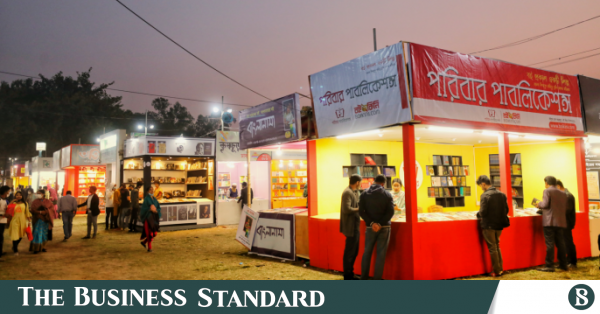
Amar Ekushey Book Fair, one of the largest celebrations of Bangla language and culture, is usually a time of excitement for readers, writers and publishers alike. This year, however, the atmosphere has been clouded by controversy, uncertainty and growing concern among publishers.
Although the fair was eventually held after changes to its schedule due to Ramadan and the country’s political realities, many publishers say the event has brought them more financial losses than profit.
Debate over timing from the outset

The timing of this year’s book fair was debated for months.
Initially, there had been plans to hold the fair in December, considering the election and other circumstances. That proposal was later suspended and discussions began again over a new schedule.
Eventually, organisers decided to start the fair towards the end of February as a compromise. However, a large portion of the fair has coincided with the month of Ramadan.
Publishers had expressed concerns from the beginning that during Ramadan, people tend to spend less time outside in the evening, which could affect book sales.
Earlier, Sirajul Kabir Chowdhury, director of Anyaprokash Publications, said the situation had become extremely difficult for the industry.
“The business situation this year is miserable. There are hardly any buyers even on holidays. What we used to earn in a single day now takes ten days,” he said.
Publishers question the timing
According to publishers, visitor numbers at the fair have been noticeably lower this year.
With Ramadan underway, many readers are unable to spend much time at the fair after evening, while others remain occupied with iftar and family commitments.
As a result, despite the fair traditionally being the peak season for new book releases, sales at many stalls have fallen short of expectations.
Some publishers say it became clear within the first week of the fair that the season would be financially difficult.
A significant part of Bangladesh’s publishing industry depends heavily on the book fair. Many publishers rely on sales during this single month to account for a major portion of their annual income.
But this year, those expectations have not been fulfilled.
Razzak Rubel, publisher of Gronthik Prokashon, said the situation had become deeply worrying.
“Forget profit – this year we may not even recover the cost of publishing. Holding the fair at this moment was not appropriate,” he said.
Stall rent waived, but losses remain a concern
Considering the situation, the organisers introduced several relief measures. The rent for stalls and pavilions has been partially or fully waived.
However, publishers say this alone cannot offset the losses.
They point out that significant investment is required to prepare for the fair – including stall decoration, printing books, hiring staff and transport costs. When sales remain low, recovering those investments becomes difficult.
Kamruzzaman, manager of UPL Publications, said publishers had warned earlier that organising the fair at this time might not be a wise decision.
“We had said from the beginning that holding the book fair at this time would not be a good decision. If it had been held after Eid, business might have improved somewhat,” he said.
“The situation is so bad that we have not even been able to recover stall costs. On top of that, we have to pay salaries to sales staff and cover various other expenses. Overall, we are facing huge losses,” he added.
A cultural festival and an economic marketplace
Amar Ekushey Book Fair is not just a place for selling books. It is also a symbol of the Language Movement, a celebration of culture and a meeting point for writers and readers.
But the reality is that it also serves as the largest marketplace for Bangladesh’s publishing industry.
Many publishers say the fair must continue because of its cultural significance. At the same time, they stress that the timing and planning of the event should reflect market realities.
Otherwise, while the cultural festival may endure, the publishing industry itself could become financially weaker.
About The Author