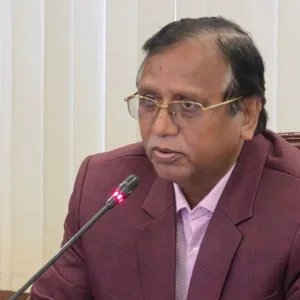
“We cannot be courageous because of mob violence. When media and newspaper offices are set on fire, it becomes extremely worrying,” Manabzamin Editor-in-Chief Matiur Rahman Chowdhury says
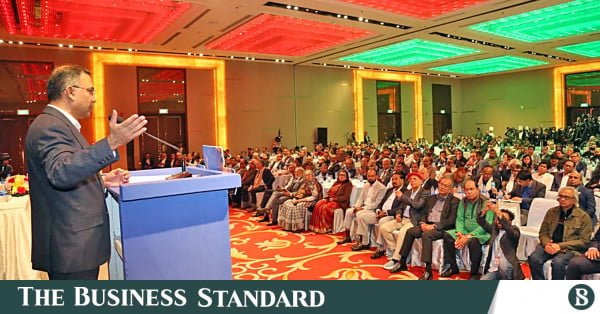
BNP Chairman Tarique Rahman speaks at an event at the Sheraton Dhaka on 10 January 2026. Photo: Focus Bangla
“>

BNP Chairman Tarique Rahman speaks at an event at the Sheraton Dhaka on 10 January 2026. Photo: Focus Bangla
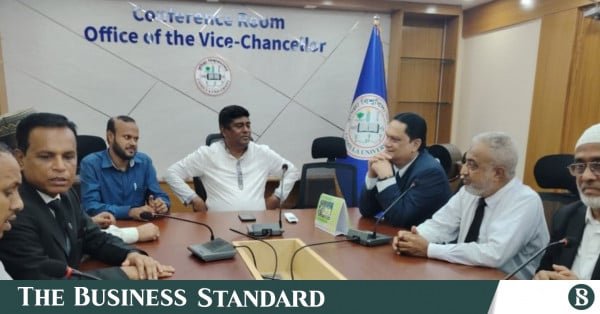
Editors and journalists today (10 January) shared their concerns, expectations, and visions for Bangladesh’s democratic future during an exchange of views with BNP Chairman Tarique Rahman.
The meet-and-greet, held at a hotel in Dhaka, brought together senior figures from print media, television, and online media, where discussions focused on democracy, press freedom, governance, political culture, and emerging national challenges.
Speaking at the programme, Mahfuz Anam, editor of The Daily Star, said, “We want democracy, independent journalism, and good governance.”

He noted that political parties are paying insufficient attention to climate change despite Bangladesh being one of the world’s most vulnerable countries.
“Bangladesh is already seeing the impact of climate change in coastal areas. Climate change should be a very important priority,” he said.
Mahfuz further said, “It is quite incredible how we are moving towards river pollution and doing nothing about it. Another major issue is our groundwater, which also needs to be addressed.”
“We are one of the richest countries in terms of water resources, yet we are polluting all our rivers,” he added.
Nurul Kabir, editor of New Age, reflected on the political dynamics witnessed during the mass uprising, saying various trends in the political spectrum became visible, with right-wing, left-wing, and centrist political forces all actively involved.
He noted that alongside them were millions of people who were not directly affiliated with any political group but wanted to see a peaceful social and political order, and who also made sacrifices.
“Instead of blaming one another, this is the time to discuss how to move forward by giving political and social developments an institutional shape, which would be a fair response at this moment,” he added.
Nurul Kabir further said, “There has never been a place in the world where democracy was established without legal, political, social, and cultural freedom of the media. As a result, the struggle for democracy and the democratic freedom of the media go hand in hand.
“If we want a democratic transformation in Bangladesh in the future, there must be a democratic environment for journalism alongside democratic politics.”
He also said that when comparing different political periods, it must be acknowledged that there was greater tolerance during BNP rule than under the Awami League government.
Addressing Tarique Rahman directly, Mahmudur Rahman, editor of Amar Desh, said the BNP chairman had been outside the country for 17 years and may not fully grasp what transpired during that time.
“You have listened to what your people told you, and now you are listening to what your new friends in the media are telling you. But that is not the full history of the past 17 years,” he said, adding that he would like to present his account if such discussions are held again in the future.
Manabzamin Editor-in-Chief Matiur Rahman Chowdhury said journalists want the freedom to write and speak, noting that while press freedom has increased since 5 August 2024, it remains constrained due to mob violence.
“We cannot be courageous because of mob violence. When media and newspaper offices are set on fire, it becomes extremely worrying,” he said.
Sharing his expectations from Tarique Rahman, Matiur said the challenges ahead are serious and cannot be addressed by any single party acting alone. “If attempts are made only from within one party, the same mistakes of the past will be repeated, and we may reach a point from which it will be difficult to return,” he warned.
He also claimed that the country is facing an existential crisis due to rising extremism, adding that, at this moment, there is no alternative to Tarique Rahman to free the country from this threat.
About The Author