Daily sales drop from Tk30,000 to about Tk8,000.
Representational image. Photo: Mehedi Hasan/TBS
“>

Representational image. Photo: Mehedi Hasan/TBS
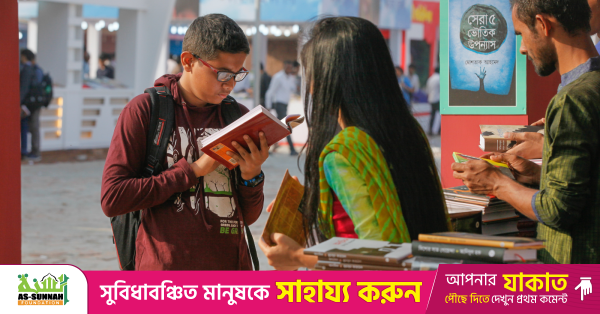
Ten days into the Amar Ekushey Book Fair, the familiar buzz of the event is yet to return this year. Visitor turnout remains relatively low, publishers say sales are below expectations, and participation by publishing houses has also declined – leaving the country’s largest gathering of books and readers moving at a slower pace.
The fair, the biggest cultural event of the language month, has begun under somewhat different circumstances this time. Though stalls across the Bangla Academy premises and Suhrawardy Udyan are now lined with books, the expected crowds are still missing.
A slow start

This year’s Amar Ekushey Book Fair began toward the end of February, making the usual February atmosphere somewhat different. In the first few days, many stalls were not fully ready, and visitor turnout was also comparatively low.
Publishers say the fair started slowly due to the late schedule and preparation gaps. As a result, the familiar liveliness of the book fair was largely missing in the opening days.
Thin crowds, slow sales
A walk around the fair shows many stall attendants waiting for customers. Several publishers say book sales have yet to meet expectations, as lower visitor turnout has directly affected business.
Samiul Islam, a salesman at Biddyaprokash, told TBS, “Sales are very poor this year. In previous years we sold books worth Tk25,000-30,000 a day, but this year it has dropped to around Tk7,000-8,000.”
Those involved cite several reasons behind the situation. With Ramadan underway, many people are now more focused on Eid shopping, leaving the fair with fewer visitors than usual.
Sirajul Kabir Chowdhury, director of Anyaprokash, described the business situation as “miserable”.
“Even on holidays there are hardly any customers. What we used to earn in a single day earlier has taken ten days this time,” he said.
Mahrukh Mohiuddin, managing director of The University Press Limited (UPL), said the government, readers and even writers still do not fully understand the economics of the publishing industry.
“Until they understand how the publishing economy works, our difficulties will continue,” she said. “This year has shown how little attention the government gives to the publishing sector. Without a situation like this, we might not have realised how vulnerable the sector actually is.”
However, she added that she prefers to look at the brighter side.
“If this situation draws the government’s attention, it could help improve the condition of the publishing industry,” she said.
Participation also declines
The number of publishing houses taking part in this year’s fair has also declined slightly. According to Bangla Academy, a total of 549 publishing houses are participating this year, compared with 718 stalls last year. Of them, 81 are located at the Bangla Academy premises, while 468 are at Suhrawardy Udyan. In addition, around 87 stalls have been set up at the Little Magazine corner.
The Little Magazine corner, once lively with young writers and readers, now often appears quieter. Those involved say the presence of young visitors is lower than in previous years.
Still, publishers say the overall picture of the fair after the first week, though slow, is not entirely discouraging. They hope visitor numbers will pick up as the fair progresses and that the release of new books in the coming days will help bring back the familiar vibrancy of the event.
About The Author