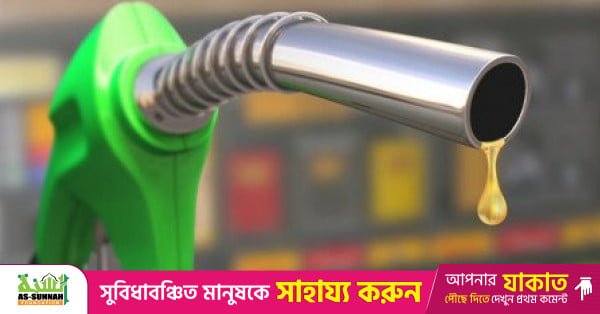
The Bangladesh Petroleum Corporation (BPC) has introduced a rationing system by setting limits on fuel sales, a move that has already begun to affect several petrol pumps in Chattogram and Rajshahi today (7 March).
The restrictions come amid heightened global uncertainty over fuel supply due to geopolitical tensions in the Middle East. Limited supply, coupled with a surge in demand, has resulted in long queues of motorcycles and private cars at filling stations in both cities.
In Chattogram, ride-sharing motorcyclists have been among the worst affected. Subrata Chowdhury, a rider waiting in line at QC Petrol Pump in the Goni Bakery area, told The Business Standard that the amount of fuel available after a long wait is often insufficient to remain on the road even for half a day.

In a notice, BPC said the limits were imposed to prevent fuel wastage and abnormal stockpiling. Under the directive, a motorcycle can purchase a maximum of two litres of petrol or octane per day, while cars are allowed up to 10 litres.
The limit for jeeps and microbuses has been set between 20 and 25 litres.
Separate limits have also been introduced for diesel. Pickup vans and local buses can collect between 70 and 80 litres of diesel per day, while long-distance buses, covered vans and trucks are allowed between 200 and 220 litres.
Visits to several filling stations across Chattogram showed that the rush for fuel began early in the morning. Hundreds of motorcycles were seen queuing for octane at QC Petrol Pump in Gony Bakery, Badshah Miah Petrol Pump in Katalganj and Siraj & Co Petrol Pump in Laldighipar.
A nozzle operator at QC Petrol Pump said the tendency among customers to purchase fuel has increased unusually in recent days. Many customers are attempting to buy more than their regular requirement, he said, and disputes sometimes arise when staff refuse to provide fuel beyond the prescribed limit.
Mohammad Idris, manager of a petrol pump in the Pologround area, said the amount of fuel supplied to each vehicle is being recorded through receipts. However, some customers are requesting fuel without receipts to speed up the process, occasionally leading to arguments.
To manage the crowds, some stations have introduced special measures. At the CMP Petrol Pump, owned by the Chattogram Metropolitan Police, bamboo barricades were installed at the entrance from Thursday afternoon to regulate the flow of vehicles.
Pump owners said many stations in the city last received fuel from depots on Thursday.
With no fresh supply arriving since then, stocks began to decline rapidly early in the week, forcing some stations to suspend sales temporarily.
Panic buying in Rajshahi
Fears of a possible fuel shortage have also triggered panic buying in Rajshahi.
Motorcyclists and car drivers have been rushing to pumps to secure fuel, while some consumers have begun stockpiling additional supplies. In several cases, excessive demand forced pumps to suspend sales after running out of fuel earlier than expected.
Most bikers arriving at the stations were seen requesting more fuel than their immediate needs, accelerating the depletion of existing stocks.
This morning, long queues were observed at Gul Gafur Petroleum Station in the Kumarpara area of the city, where customers waiting for extended periods were seen arguing with pump authorities over delays.
Under government directives, motorcycles are being supplied with a maximum of two litres of fuel, while private cars are allowed up to 10 litres.
Several motorcyclists complained that they had to stand in queues for hours without certainty of obtaining fuel. Many said the prevailing panic has prompted consumers to stockpile additional fuel.
Ferdous Panir Chowdhury, manager of Gul Gafur Petroleum in Rajshahi, said the long queues were mainly due to shortages at other pumps in the city.
“Because other stations are running out of fuel, many customers are coming here,” he told The Business Standard. He added that the existing stock at the station may run out by noon due to excessive demand, but supply would resume once new fuel shipments arrive the following day.
Despite the pressure on supply, he said the station is not charging above the government-fixed prices.
Transport operators, however, dismissed concerns about a genuine shortage, alleging that some pump owners are creating an artificial crisis.
Nazrul Islam Helal, general secretary of the Rajshahi Road Transport Group, said the transport sector has not yet faced any disruption.
“Our operations are running normally and buses are operating as usual. Some pump owners appear to be trying to create a perception of scarcity,” he said.
Meanwhile, agricultural authorities said irrigation activities have not been affected so far. Mohammad Nasir Uddin, deputy director of the Department of Agricultural Extension in Rajshahi, said there has been no shortage of fuel for irrigation purposes.
He added that field-level agricultural officers have been instructed to monitor the situation and collect information from the ground.
About The Author