Instead, experts say the government must ensure quick fuel imports – even at higher prices – to keep economic activities running.
Representational Image.
“>

Representational Image.
The government’s subsidy burden on the power and gas sectors is feared to rise largely as global energy prices climb following the ongoing war in the Middle East and the closure of the Strait of Hormuz.
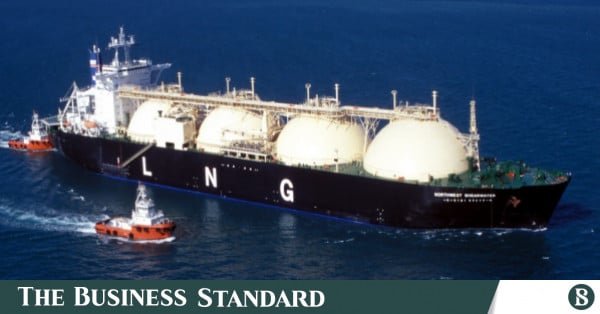
Economists say Bangladesh has been forced to import liquefied natural gas from the spot market at nearly double the usual price, while also seeking refined fuel from global markets at higher rates. Coal prices have also increased, adding further pressure on the government’s subsidy commitments.
They warn that the surge in international oil, gas and coal prices will inevitably push up the government’s subsidy bill. However, amid already high inflation, the authorities have limited room to immediately raise domestic energy prices to adjust to the rising costs.

Instead, experts say the government must ensure quick fuel imports – even at higher prices – to keep economic activities running.
Infographics: TBS
“>

Infographics: TBS
If imports are delayed, economic activities could stall, economists said, noting that many countries are competing to secure energy supplies from global markets. A prolonged energy shortage could cause economic losses that would be difficult to recover later.
To manage the rising fiscal pressure, experts suggested that the government should focus on strengthening tax collection rather than raising tax rates. Tougher measures to recover unpaid taxes from evaders could help offset part of the growing subsidy burden.
In the current fiscal year’s budget, the government allocated Tk36,000 crore in subsidies for the power sector and Tk6,000 crore for LNG imports.
However, weak revenue collection has already created payment backlogs. Arrears owed to private power producers have reached around Tk14,000 crore.
Additionally, coal-fired power plants at Rampal Power Plant and Payra Power Plant – with a combined generation capacity of 2,640 megawatts – are owed about Tk4,700 crore.
Power companies had earlier warned that electricity supply during the irrigation and summer seasons could be affected if these outstanding payments are not cleared.
Government spending on energy subsidies has already risen significantly in recent years. In the previous fiscal year, the government spent Tk62,000 crore on power subsidies and Tk9,000 crore on LNG subsidies.
Bangladesh does not typically subsidise petroleum fuels and has made profits from fuel sales in recent years. However, the current global crisis may force the government to bear additional costs.
Following the escalation of the Middle East conflict, Bangladesh has been unable to import crude oil from Saudi Arabia and the UAE under government-to-government agreements.
Since the country lacks sufficient capacity to refine crude oil from alternative sources, the energy ministry has started seeking refined petroleum products from international markets at higher prices.
At the same time, LNG exports from Qatar and Oman – Bangladesh’s main suppliers under long-term agreements – have been halted amid the conflict.
To address the supply gap, the government has already moved to import two LNG cargoes from Singapore at around two-and-a-half times the usual price.
Azam J Chowdhury, chairman of the East Coast Group, said LNG prices have already increased by about 35%, while LPG prices are hovering more than 10% above contract prices.
He warned that prices could rise further as inventories in importing countries decline and supply tightens due to the Hormuz blockade.
Former finance ministry senior secretary Mahbub Ahmed said rising global oil and gas prices will significantly increase subsidy pressure on the government.
“Imports from Bangladesh’s key suppliers have been disrupted, which may even create concerns about energy security,” he said.
He added that the government may need to make strong political decisions to recover taxes from evaders to cope with the growing subsidy burden.
If the conflict persists, the government may also consider limited adjustments in fuel prices, though such a move could further push up inflation, he noted.
Fahmida Khatun, executive director of the Centre for Policy Dialogue, said Bangladesh may have to import oil, gas and coal at significantly higher prices due to disruptions in global energy supply routes.
“This will sharply increase subsidies in the power sector and also raise gas subsidies,” she said.
Despite the financial pressure, she said the government has little option but to ensure adequate fuel imports to maintain energy security and keep industries running.
Without sufficient energy supplies, economic activity and industrial production could grind to a halt, she warned.
To ease subsidy pressure, she suggested reducing wastage in the power and energy sectors and limiting supply to less critical areas.
Mahmud Hasan Khan, president of the BGMEA, said the government could also reduce costs by withdrawing existing duties and value-added tax imposed at different stages of fuel imports and supply.
About The Author