MA Shakil backs health reforms, plans to recruit 100,000 workers (80% women) to strengthen primary care
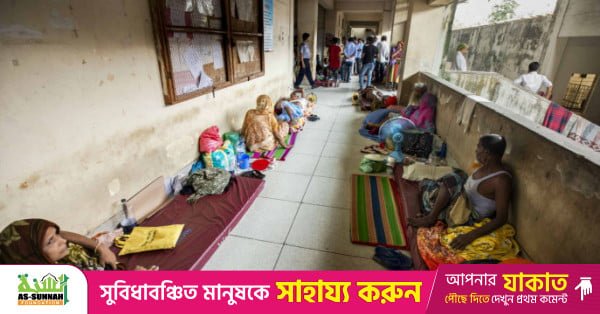
Due to the shortage of beds in government hospitals, people’s enthusiasm towards private hospitals is increasing in Bangladesh. PHOTO: TBS
“>

Due to the shortage of beds in government hospitals, people’s enthusiasm towards private hospitals is increasing in Bangladesh. PHOTO: TBS
Experts have emphasised the urgent need for a strong and inclusive health commission to oversee the implementation of long-awaited reforms in Bangladesh’s health system.
They called on policymakers to prioritise the recommendations of the Health Sector Reform Commission, many of which align with the BNP election manifesto.
The remarks came at a discussion titled “Implementing Health-Related Manifesto Commitments: Stakeholder Dialogue and Priority Roadmap”, held at the CIRDAP auditorium in Dhaka today (3 March).

The event was organised by the Alliance for Health Reforms Bangladesh and the Department of Clinical Oncology at Bangladesh Medical University.
National Professor and Bangladesh Diabetic Association President AK Azad said not all recommendations could be implemented at once.
“Everything cannot be implemented in a single day. We must set priorities, identify what can start immediately, and what can be introduced in phases,” he said.
Azad warned that diabetes and hypertension have reached epidemic proportions in Bangladesh, largely linked to dietary habits.
He called for immediate legislation making it mandatory for food products to display nutritional information on packaging.
“This is something that can be implemented right away,” he added.
He also stressed the need for long-term planning in vaccine production and expansion, noting that developed countries make vaccines such as influenza and pneumonia mandatory for certain age groups as preventive measures that could be considered in Bangladesh.
MA Shakil, leader of the Doctors Association of Bangladesh (DAB), described the inclusion of health commission proposals in the BNP manifesto as a positive step.
He praised the attention given to safety, training, and professional dignity of doctors and health workers.
He highlighted plans to recruit 1,00,000 health workers at union and ward levels to strengthen primary healthcare services, with 80% being women.
“With the integration of family planning and health services, there is now an opportunity to utilize human resources under a unified framework,” he added.
M Mushtuq Husain, advisor at the Institute of Epidemiology, Disease Control and Research (IEDCR), stressed the urgency of forming a strong and inclusive health commission.
He said the commission should include representatives from ruling and opposition parties, members of parliament, experts, and former and current officials.
“However, it should not be an executive or ‘super’ body, but rather a platform for monitoring, guidance, and recommendations,” he said.
He added that for sustainable reform, Bangladesh Health Services should be structured separately, and an appropriate authority must be established to implement changes.
Former health secretary Sayedur Rahman emphasised ensuring four antenatal care visits to promote safe motherhood, reducing unnecessary caesarean sections, and increasing institutional deliveries.
Sayedur also proposed integrating ambulance networks to allow the use of the nearest available vehicle during emergencies.
He suggested adopting a public-private partnership (PPP) model for high-cost services such as MRI and dialysis in government hospitals.
Experts noted that although nearly 65% of healthcare services in Bangladesh are delivered by the private sector, much of this data is not integrated into the national management information system (MIS).Without effective public-private coordination, comprehensive planning will remain difficult.
Prof Syed Akram Hussain, chairman of the Department of Clinical Oncology at Bangladesh Medical University and joint convener of the Alliance for Health Reforms Bangladesh, presented on “Political Commitment and Reform Alignment.”
Prof Syed Abdul Hamid, convener of the Alliance for Health Reforms Bangladesh, delivered a presentation titled “From Structure to Service: Operational Realities of Bangladesh’s Health System.
About The Author