He also said the government will take effective steps to preserve and develop the languages of the country’s small ethnic communities
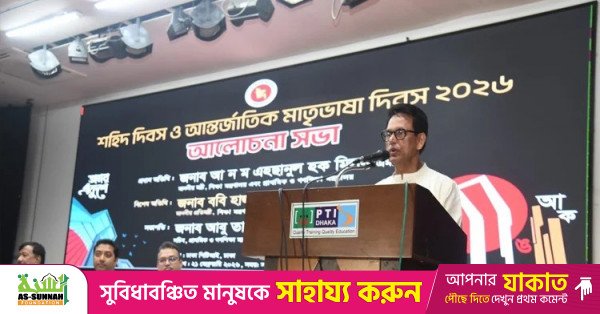
Primary and Mass Education Minister ANM Ehsanul Hoque Milon spoke at a discussion session held at the Primary Teachers Training Institute (PTI) in capital’s Mirpur area today. Photo: Collected
“>

Primary and Mass Education Minister ANM Ehsanul Hoque Milon spoke at a discussion session held at the Primary Teachers Training Institute (PTI) in capital’s Mirpur area today. Photo: Collected
Primary and Mass Education Minister A N M Ehsanul Hoque Milon today (21 February) underscored the need for restructuring the education system to make it employment-oriented, skill-based, and relevant to the demands of the times.
“The current conventional education system in the country is contributing to rising unemployment. The education system will be restructured to make it skill-based, job-oriented and aligned with modern needs,” he said.
Milon made the remarks as chief guest at a PTI discussion in Mirpur, organised by the Primary and Mass Education Ministry for Shaheed Day and International Mother Language Day.

Dr Milon said education is not meant to increase unemployment but to serve as a tool for creating a skilled workforce.
“The expansion of skill-based education is still insufficient compared to actual demand. The education system will be redesigned to nurture students as competent, employable, and productive individuals,” he added.
Highlighting the importance of the mother tongue, the minister said Bengali is the primary medium of our thoughts and feelings.
However, in the era of globalisation, learning English as a second language is essential to enhance linguistic competency, he added.
He also said the government will take effective steps to preserve and develop the languages of the country’s small ethnic communities.
Speaking on the occasion as special guest, State Minister for Primary and Mass Education Bobby Hajjaj said, “The ministry will follow a ‘zero tolerance’ policy against corruption in all its departments. No room for any corruption will be allowed in the next five years.”
Bobby emphasised three key pillars for improving education quality—curriculum, classroom, and consistency.
He expressed commitment to ensuring qualitative coordination among Bengali medium, English medium, technical, and madrasah education.
About The Author