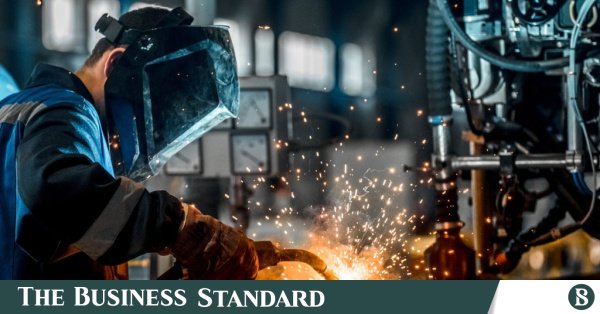
Bangladesh Welding Electrodes Ltd (BD Welding), the country’s first welding electrode manufacturer, is seeking a new investor and a reconstituted board to revive operations after nearly a decade of production suspension amid a prolonged financial crisis.
The Dhaka Stock Exchange-listed company plans to use fresh investment to build a factory at its site in Dhamrai, Dhaka, install machinery and resume production.
It has sought assistance from the relevant authorities in finding an investor capable of financing the revival.

In a letter to the authorities signed by its board chairman, Md Shafiqul Islam, the company outlined its financial difficulties and the challenges it faces in restarting operations.
The company’s reconstituted seven-member board has already lost three directors to resignation, while its managing director died on 3 January 2023, further weakening its leadership structure.
According to the letter, BD Welding spends around Tk1 lakh a month on office staff salaries, security personnel, rent, electricity, telephone, internet and other operating expenses. Although office rent and utility bills have been regularised, annual listing fees payable to the Dhaka Stock Exchange (DSE) and Central Depository Bangladesh Ltd (CDBL) remain unpaid, along with some website-related dues.
BD Welding Chairman Shafiqul Islam declined to comment despite repeated attempts to reach him by phone.
From pioneering manufacturer to listed company
Established in 1967 with key plant and machinery supplied by Switzerland’s Oerlikon, BD Welding was the country’s first welding electrode manufacturer. The following year, British Oxygen Company (BOC) established another plant in Chattogram.
After independence, the abandoned facility was acquired from the government by the then management in 1984, along with its liabilities to Agrani Bank. The company subsequently resumed operations as a private limited company.
It was converted into a public limited company in 1997 and raised capital through a public offering before being listed on the stock market in 1999.
The company regularly paid its annual listing fees until 2012 but stopped payments in 2013 as its financial and operational difficulties deepened.
BD Welding has not paid any cash dividend since its stock market listing. General investors currently hold 65.39% of its shares.
Flood damage, insurance dispute and factory closure
Flash floods and landslides extensively damaged BD Welding’s Chattogram factory, affecting machinery, raw materials and other assets. Production was suspended in 2016, triggering a prolonged shutdown.
The company sought compensation from Federal Insurance Company Ltd, which rejected its claim. BD Welding subsequently sued the insurer in the District and Sessions Judge Court, which ordered it to pay Tk2 crore.
Federal Insurance appealed against the verdict, and the case remains pending before the higher court.
Meanwhile, loan defaults prompted an attempt to auction the factory, which the then management halted through negotiations with the bank.
In 2017, following an extraordinary general meeting (EGM) decision, BD Welding sold its Chattogram factory land, excluding structures and machinery, to repay bank loans.
Using the remaining proceeds, it purchased 217.45 decimals of land in Dhamrai to relocate the factory. Complications involving the Chattogram Development Authority (CDA) initially delayed ownership transfer, but the issue was resolved and registration of the Dhamrai property was completed in 2021.
BSEC intervenes to restructure board
As BD Welding’s financial and operational crisis deepened, the Bangladesh Securities and Exchange Commission (BSEC) intervened in 2021 to reconstitute its board.
The commission initially appointed two independent directors and later added three more, establishing a new board structure.
The reconstituted board secured the withdrawal of restrictions on selling the Chattogram land after discussions with the commission. Registration of the land sale was completed towards the end of 2021, while the proceeds helped complete registration of the Dhamrai property.
Despite securing the new site, the company failed to arrange sufficient funds to construct a factory shed and reinstall machinery.
Most employees were subsequently placed on unpaid leave, while a handful of office staff continued administrative work. Security guards were also deployed at the Dhamrai site.
Unpaid fees and salary arrears deepen crisis
The board restructuring failed to resolve the company’s underlying financial problems. Three of its seven directors have resigned, while the death of its managing director in January 2023 further weakened its management structure.
The company has managed to regularise office rent, electricity, telephone and internet bills. However, outstanding listing fees payable to the DSE and annual fees payable to CDBL remain unpaid.
It has also failed to clear employees’ salary arrears. According to the chairman’s letter, the current directors are overseeing the company’s affairs without receiving any remuneration.
With production still suspended and no substantial operating income, the company continues to struggle to meet even its limited administrative expenses.
New investor seen as key to revival
BD Welding considers securing a new investor essential to overcoming its financial difficulties and resuming production.
The proposed investment would fund the construction of factory infrastructure in Dhamrai, installation of plant and machinery, and recruitment of workers to restart manufacturing.
The company expects the move to protect shareholders’ investments, restore employment opportunities for former employees and contribute to the development of the country’s welding electrode industry.
Its revival now hinges on securing fresh investment, strengthening its board and management, and resolving the financial and legal challenges that have kept operations suspended for years.
About The Author