Bangladesh is observing National Revolution and Solidarity Day today (7 November), marking the 51st anniversary of the historic events of 7 November 1975, with calls from the president and prime minister for national unity to protect the country’s independence, sovereignty and democratic rights.
The government has declared a public holiday and arranged programmes across the country to commemorate the day, which is being observed with due dignity and enthusiasm.
In separate messages, President Mirza Fakhrul Islam Alamgir and Prime Minister Tarique Rahman highlighted the historical significance of 7 November 1975 and urged people to draw inspiration from its spirit to build a democratic, just and self-reliant Bangladesh.

In his message, President Fakhrul described 7 November as an unforgettable day in the country’s history, saying the united movement of soldiers and civilians restored Bangladesh’s independence and sovereignty at a critical juncture.
He said the uprising thwarted conspiracies against the country amid subservient misrule, corruption and anarchy.
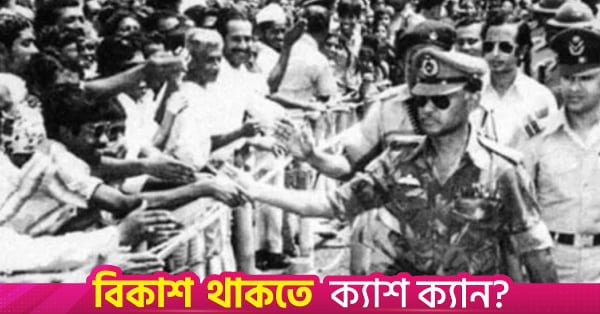
The president recalled that Shaheed President Ziaur Rahman, Bir Uttam, was freed from captivity on the day and subsequently entrusted with the responsibility of leading the country out of a crisis with overwhelming public support.
“At this moment of profound crisis, he emerged as a saviour of the nation,” he said.
He described the solidarity between soldiers and civilians as an unprecedented national awakening inspired by the spirit of independence.
Drawing a parallel with the mass uprising of 2024, Fakhrul said the unity of students, women, men, members of the Armed Forces and people from all walks of life had brought an end to 16 years of what he described as fascist rule.
He said the country had once again been saved from the threat of becoming a subservient state.
The president called on people to rise above political differences, resist conspiracies, eliminate corruption and discrimination, and work together to safeguard national independence and sovereignty.
He also urged citizens to build a democratic, just, humane and secure Bangladesh.
In his separate message, Prime Minister Tarique Rahman said soldiers and civilians united on 7 November 1975 to thwart conspiracies against the country’s independence and sovereignty.
Describing the day as a defining moment in national history, he said it had clearly distinguished those working for and against Bangladesh’s interests.
The prime minister said patriotic soldiers and civilians defeated forces seeking to turn Bangladesh into a subservient state, deprive people of their democratic and political rights, establish one-party authoritarian rule and undermine the honour and dignity of the Armed Forces.
He said the forces defeated in 1975 later united under the banner of the Grand Alliance and, following a prolonged period of conspiracy, turned the country into a subservient state.
“Finally, after more than a decade and a half, the country was freed from fascism through a bloody mass uprising led by brave students and people, at the cost of thousands of martyrs,” he said.
Tarique drew a connection between the Liberation War of 1971 and the mass uprising of 2024, saying the former secured the country’s independence while the latter sought to protect that independence and the people’s freedom.
He said people from all walks of life took to the streets in 2024 to defend the country’s freedom, just as soldiers and civilians had united in 1975 to resist threats to national independence and sovereignty.
“Our foremost commitment on this year’s 7 November should be to ensure that no one can ever again deprive the country and its people of their rights or turn Bangladesh into a subservient state. National unity is essential to fulfil this commitment,” he said.
The prime minister said the Liberation War of 1971, the 7 November 1975 uprising, the anti-autocracy movement of 1990 and the mass uprising of 2024 shared a common aspiration: building an independent, self-reliant, secure and welfare-oriented state that guarantees democratic and political rights.
Concluding his message, he called for the unity of patriotic and democracy-loving people, declaring, “Neither Delhi nor Pindi, nor any other country; Bangladesh comes first.”
He expressed hope that the spirit of 7 November would inspire efforts to build a better Bangladesh.
As part of the government’s nationwide programme, the national flag is being hoisted at government and private buildings across the country and at Bangladesh missions abroad.
Major roads and road islands have been decorated with national flags through joint initiatives by the Ministry of Housing and Public Works, the Local Government Division, city corporations and municipalities.
Special prayers and milad mahfils are being held at mosques, temples, churches, pagodas and other places of worship, seeking national peace, prosperity and progress.
Hospitals, prisons, orphanages, child centres, correctional facilities and other institutions are serving improved meals. Children’s parks operated by city corporations and municipalities have also been opened free of charge for the day.
Authorities are arranging drawing competitions for children at district and upazila levels, while educational institutions are holding discussions and essay competitions on the significance of the occasion.
National newspapers are publishing special articles and supplements. Bangladesh Television, private television channels and radio stations are broadcasting special programmes.
The Bangladesh Shilpakala Academy is organising patriotic music programmes. District and upazila administrations are also arranging discussions and exhibition football matches.
Special commemorative discussions are being held with families of martyred freedom fighters, wounded freedom fighters and other valiant freedom fighters.
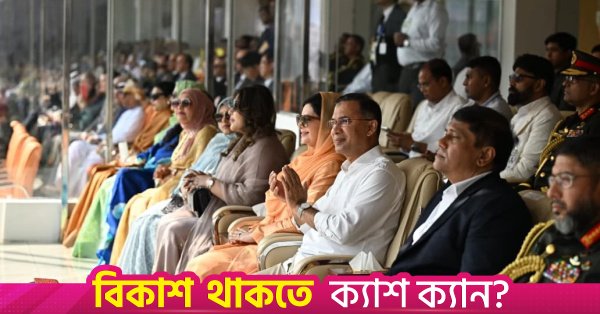
The Armed Forces are observing the day through flag-hoisting ceremonies, milad mahfils, receptions and special darbars. The Bangladesh Cadet Corps is also staging a display at the Army Stadium in Dhaka.
Agencies under the Ministry of Home Affairs, including Bangladesh Police, Border Guard Bangladesh, Bangladesh Ansar and Village Defence Party, the Department of Narcotics Control, Bangladesh Coast Guard, the Prisons Directorate and Fire Service and Civil Defence, are organising special programmes.
Meanwhile, the ruling Bangladesh Nationalist Party (BNP) is observing the occasion through a seven-day programme from 5 to 11 November.
The party hoisted national and organisational flags at 6am today at its central office and offices across the country.
This morning, BNP Chairman and Prime Minister Tarique Rahman, accompanied by senior party leaders and activists, placed wreaths at the graves of Shaheed President Ziaur Rahman and former Prime Minister Begum Khaleda Zia.
The party is scheduled to hold a rally at 3pm, starting in front of its central office in Naya Paltan. District and metropolitan-level rallies are also taking place across the country today, with further rallies scheduled at thana and upazila levels tomorrow.
The BNP and its affiliated organisations are also holding discussion meetings and other programmes as part of the observance.
Opposition Bangladesh Jamaat-e-Islami is also marking the day.
In a statement issued on Thursday (5 November), Jamaat Ameer and Opposition Leader Dr Shafiqur Rahman urged people to observe the occasion appropriately.
He described 7 November as a significant day in national history, when patriotic soldiers and ordinary citizens united to protect Bangladesh’s independence, sovereignty and national interests.
Referring to the instability and uncertainty following the counter-military coup of 3 November 1975, he said the united efforts of soldiers and civilians on 7 November had brought a new dimension to the country’s political situation.
He added that public participation, accompanied by chants of “Nara-e-Takbir, Allahu Akbar”, had further strengthened the determination to safeguard national independence and sovereignty.
About The Author