At mobile operators’ demands, the Bangladesh Telecommunication Regulatory Commission (BTRC) has proposed extending spectrum allocation tenures from 15 to 20 years.
It has also proposed revising prices across three frequency bands, a move that could reduce the government’s average annual revenue from spectrum sales.
The telecommunications ministry sent a letter to the finance ministry on 1 November, seeking its opinion on the proposal, which also includes permission for operators to pay spectrum fees in 12 instalments.

A senior finance official, requesting anonymity, said the government earns substantial revenue from spectrum allocation, and the proposed structure could reduce its revenue.
“The ministry will review why the BTRC has proposed allocating spectrum at these prices over a 20-year period before giving its opinion,” he told The Business Standard.
He added that the government would consider its revenue earnings alongside the quality and affordability of mobile services.
TBS contacted BTRC Chairman Major General (retd) Md Emdad Ul Bari for clarification on the proposals, but received no response to calls or text messages.
New fee structure
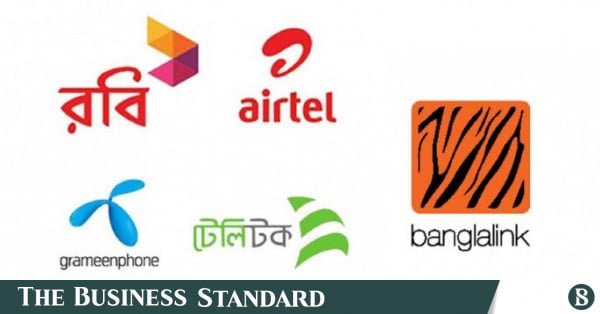
Grameenphone, Robi, and Banglalink are due to renew a combined 79.2MHz of spectrum on 10 November, comprising 32.4MHz for Grameenphone, 22.4MHz for Robi, and 24.4MHz for Banglalink. Their existing licences are due to expire on 10 March 2039.
According to the proposal, the price per megahertz of spectrum for Grameenphone, Robi and Banglalink would be Tk316 crore in the 900MHz band, Tk264 crore in the 1800MHz band and Tk229 crore in the 2100MHz band, excluding income tax and VAT.
Currently, spectrum in the 900MHz and 1800MHz bands costs Tk263 crore per MHz, while the price of the 2100MHz band stands at Tk245.9 crore per MHz.
BTRC officials said they expected the operators to renew their licences when the current terms expire. However, they said allocating spectrum for a period extending beyond the licence tenure would require further review.
12 instalments over 20 years
While operators were previously allowed to pay spectrum fees in up to 10 instalments, the latest proposal provides for 12 equal instalments over the 20-year allocation period.
Operators would have to pay the first instalment within 30 days of receiving renewal notice and the second within the following 180 days. The remaining 10 instalments would be payable annually. A 15% annual late-payment charge would apply to any delayed instalment.
Quoting the BTRC, the telecommunications ministry in its letter said increasing the allocation tenure would raise the overall payment burden, prompting the proposal to increase the number of instalments from 10 to 12 to ease pressure on operators’ cash flows.
The ministry also said the government could take a different decision on spectrum pricing depending on the overall economic situation.
It also proposed a tripartite meeting involving representatives from the telecommunications ministry, the Finance Division and the BTRC to settle the financial and technical issues and complete the renewal process within the stipulated timeframe.
Spectrum is the backbone of mobile network operations. It consists of radio frequencies through which mobile towers transmit voice calls, data and messages to users’ devices.
The spectrum is owned by the state and managed by the BTRC. Mobile operators pay fees to use designated frequency bands to provide 2G, 3G, 4G and 5G services across the country.
Adequate spectrum allows operators to expand network capacity, improve internet speeds, reduce call drops and enhance voice call quality.
About The Author