There is a cruel irony in Bangladesh’s garment success: the people who keep the country’s biggest export industry running still have to bring its roads to a standstill to demand wages they can live on.
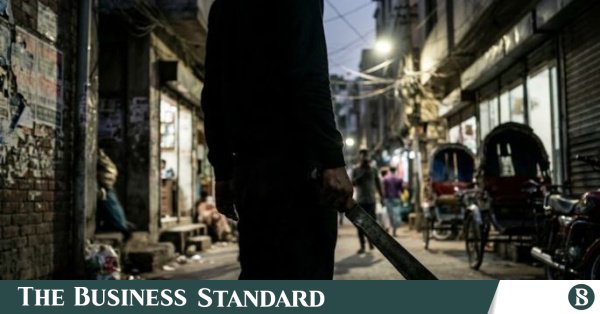
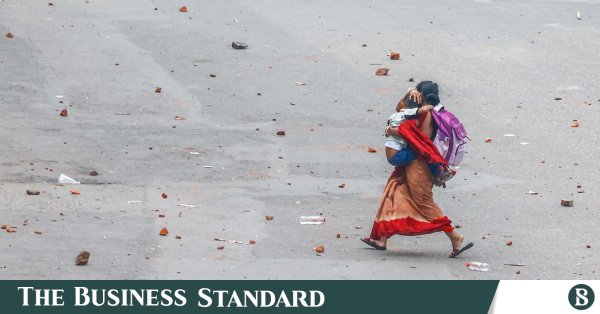
On 31 October, that frustration spilled onto the streets. Garment workers blocked roads in Mirpur, highways in Ashulia and Savar, and the Dhaka–Tangail corridor around Kaliakair in Gazipur.
Clashes with police left workers and law enforcement personnel injured, while more than 100 of factories suspended operations or declared holidays.

Their central demand was straightforward: a minimum monthly wage of Tk30,000, more than twice the existing Tk12,500.
The following day, 1 November, the government constituted a six-member minimum wage board.
But the announcement did not immediately end the unrest.
Workers again blocked roads in Mirpur, Ashulia, Hemayetpur and Gazipur, police used tear gas and water cannons to disperse demonstrators, and Border Guard Bangladesh personnel were deployed in Gazipur to maintain order.
The announcement was significant, but the continuing protests exposed a familiar reality in Bangladesh: wage negotiations often gain urgency only when workers take their grievances beyond factory gates.
This is the uncomfortable side of the country’s economic success. The ready-made garment (RMG) sector employs around four million people and accounts for more than 80% of Bangladesh’s export earnings.
According to BGMEA’s figures, garments represented 80.62% of the country’s total exports in the 2025–26 fiscal year.
Yet the workers who sew, cut, finish and pack those exports repeatedly find themselves fighting for a basic standard of living.
A cycle written in protests
The history of minimum wage revisions in Bangladesh’s garment industry tells a familiar story. The first wage structure was gazetted in December 1984, setting the entry-level monthly wage at Tk627. It took effect in 1985.
Subsequent revisions raised the minimum to Tk930 in 1994, Tk1,662.50 in 2006, Tk3,000 in 2010, Tk5,300 in 2013, Tk8,000 in 2018 and Tk12,500 in 2023.
The new board is therefore the eighth wage-setting exercise since the beginning of the process.
The figures look impressive on paper. But nominal increases do not necessarily translate into improved living standards when food prices, house rent, transport and healthcare costs continue to rise.
The latest revision, from Tk8,000 to Tk12,500, took effect on 1 December, 2023, following protests in which workers had demanded Tk23,000.
The unrest turned deadly on 30 October that year, when two workers died amid clashes and factory fires.
One, Russell Howladar, died after being shot, although the circumstances of the shooting were unclear. Another worker, Imran Hossain, was found dead inside a factory after a fire.
The final wage was substantially below the workers’ demand. The immediate confrontation eventually subsided, but the economic problem remained.
Now the demand has risen to Tk30,000. This is not simply about securing a bigger payslip. It reflects the widening gap between what workers earn and what they need to feed their families, pay rent and meet basic expenses.
A minimum wage that cannot cover basic living costs is a legal floor, not a guarantee of dignity.
What does a living wage actually look like?
The argument becomes clearer when wage figures are compared with actual living costs.
According to the Bangladesh Bureau of Statistics, general point-to-point inflation stood at 8.34% in September 2026. Food inflation was 7.22%, while non-food inflation reached 9.30%.
The pressure is therefore not confined to the price of rice, vegetables or cooking oil. Housing, transport and other everyday expenses also weigh heavily on low-income households.
An even more revealing comparison comes from the Anker Research Institute’s 2025 living-wage estimates for Bangladesh.
Its benchmark puts the monthly living wage at Tk25,166 for Dhaka’s surrounding satellite cities, where much of the garment industry is concentrated, and Tk30,459 for Dhaka city.
The estimates are based on a family of four with an average of 1.58 income earners. The corresponding costs of a basic but decent standard of living are Tk39,762 and Tk48,022 respectively.
These are research benchmarks, not legally prescribed minimum wages, and they need updating to reflect 2026 prices. But they offer a useful measure of the economic challenge.
The existing Tk12,500 minimum is less than half the estimated 2025 living wage for Dhaka’s satellite cities. Meanwhile, the workers’ Tk30,000 demand is close to the Dhaka city benchmark.
This does not automatically establish Tk30,000 as the correct national minimum. Living costs differ between locations, household structures vary, and employers’ capacity must also be considered.
But it makes one thing difficult to ignore: the demand cannot reasonably be dismissed without a transparent, evidence-based calculation.
The wage board must answer a basic question: how much does a worker actually need to live with dignity, rather than merely survive until the next payday?
The issue also has a gender dimension. Women make up more than half of the garment workforce, according to industry estimates.
Inadequate wages therefore affect not only individual workers but also women’s financial independence, household nutrition, childcare and the welfare of entire families.
A wage board is not a pay rise
The government’s decision today to constitute a new wage board is an important step. The six-member board is chaired by Senior District and Sessions Judge Sheikh Ashfaqur Rahman.
Its members include independent representative Professor Mosleh Uddin Ahmed of Dhaka University; employer representatives Asif Ayub of the Bangladesh Employers Federation and ABM Shamsuddin of BGMEA; and worker representatives Anwar Hossain of Bangladesh Jatiyatabadi Sramik Dal and Babul Akhter of the Bangladesh Garment and Industrial Workers Federation.
The board was constituted under Section 138 of the Bangladesh Labour Act, 2006, as amended in 2026. Section 139 empowers it to recommend minimum wages.
The 2026 amendment reduced the wage revision cycle from five years to three. Since the present wage structure took effect in December 2023, the next review falls due this December.
But the formation of the board should not be confused with a wage settlement. No revised salary structure has yet been announced, and its recommendations must go through the statutory process before the government declares new minimum rates.
The law also provides a useful framework for the board’s work. Under Section 141, it must consider living costs, standards of living, production costs, productivity, inflation, the nature and risks of work, employers’ financial capacity and the socioeconomic conditions of relevant areas.
These are not optional considerations. They should form the foundation of the board’s calculations.
Its work must go beyond negotiations between representatives of workers and factory owners. It needs a transparent timetable, updated household expenditure data, credible inflation projections and meaningful worker participation.
Representation on paper means little if workers’ arguments carry no real weight in the final recommendations.
Who absorbs the cost?
Factory owners frequently point to rising production costs, energy shortages, international competition and pressure from global buyers. These are genuine challenges.
Bangladesh’s garment manufacturers operate in a highly competitive international market, where even small changes in costs and order prices can affect profitability.
But there is a fundamental contradiction when international brands publicly promote ethical sourcing while their purchasing practices do not adequately account for the costs of decent wages.
Research by the International Labour Organization and other researchers has documented how low purchasing prices, shorter lead times and unpredictable orders can put pressure on suppliers and contribute to poor working conditions.
When manufacturers are squeezed by buyers, the pressure can travel down the supply chain.
This does not absolve factory owners of their responsibilities. Employers must provide fair wages, pay salaries on time and maintain safe working conditions. They cannot use international competition as a permanent justification for keeping wages below a decent standard.
International brands, meanwhile, must make their purchasing practices consistent with their public commitments to workers’ rights.
If a brand expects suppliers to comply with labour standards, its pricing and order arrangements must allow them to do so.
The current unrest also reveals that the problem extends beyond the minimum wage. Workers have raised concerns about delayed or unpaid salaries, arbitrary dismissals and alleged blacklisting practices. For many, the struggle is not simply about how much they earn, but whether they can retain their jobs and receive their salaries on time.
The labour minister has also said discussions with industry representatives covered clearing outstanding worker dues and ensuring regular salary payments.
Those commitments must be monitored, not forgotten after the protests subside.
A promised salary revision months from now cannot pay this month’s rent.
The price of instability
Road blockades and factory shutdowns undoubtedly hurt commuters, businesses and the wider economy. The latest unrest disrupted production across Ashulia, Savar, Gazipur and Mirpur.
Reports of factory suspensions varied according to location and reporting time, with at least 30 factories in Ashulia and 18 to 20 in Kaliakair, Gazipur, declaring holidays on 31 October.
Further disruptions today forced additional closures of more than 300 factories and prompted the deployment of border guards in Gazipur.
Such disruptions can delay export shipments, weaken buyer confidence and create financial pressure on manufacturers.
Workers themselves may ultimately suffer if prolonged production stoppages affect orders, factory revenues and regular salary payments.
But treating protests as the original problem misses the point. They are symptoms of a wage-setting system that has struggled to keep pace with the cost of living and left workers believing that they are heard only when production stops.
Stability cannot be demanded from workers while their economic insecurity is treated as somebody else’s problem.
The RMG sector is too important to Bangladesh’s economy to be managed through recurring crises. Its success depends on millions of workers whose contributions are measured not only in export figures but also in the hours they spend at sewing machines, often for wages that leave little room for a decent life.
Make this board count
The new wage board has an opportunity to break this cycle. It should publish a clear timetable, disclose the evidence behind its recommendations and calculate wages against the actual costs of food, housing, healthcare, transport and inflation.
It should also examine whether one national wage rate adequately reflects living costs across industrial areas, and ensure that the revised structure protects workers across different grades rather than focusing only on the entry-level rate.
The government must protect workers’ right to organise and ensure that negotiations are free from intimidation. Factory owners and international buyers must share responsibility for making a fair wage structure economically sustainable.
Regular salary payments, effective grievance mechanisms and protection against arbitrary dismissal must become routine rather than concessions extracted during unrest.
The demand for Tk30,000 deserves serious and transparent consideration – not automatic acceptance, but certainly not dismissal as an impossible demand.
The board must determine a wage that reflects workers’ actual needs while accounting for the industry’s economic realities.
Bangladesh’s garment workers are not asking for charity. They are asking for a fair share of the value they create.
A wage board is only a table around which people sit; it is not a pay rise. Its success will be measured not by the announcement of its formation, but by whether a worker can buy food, pay rent, support a family and return to the factory without having to risk injury on the streets to be heard.
The backbone of Bangladesh’s economy should not have to bleed every time it asks for the right to live with dignity.
About The Author