Under the proposal, Bangladesh and Saudi Arabia will jointly own a new company operating the factory, with each government holding a 50% stake, according to sources in the foreign and industries ministries
Photo: UNB
“>

Photo: UNB
Highlights:
- Bangladesh and Saudi Arabia plan a 50:50 joint-venture fertiliser factory
- The proposed factory will produce 1 million tonnes of DAP annually
- Bangladesh will guarantee purchases for 20–25 years
- Saudi Arabia will supply gas and essential raw materials
- Commercial production is targeted to begin in 2030
- The project aims to reduce import dependence and fertiliser costs
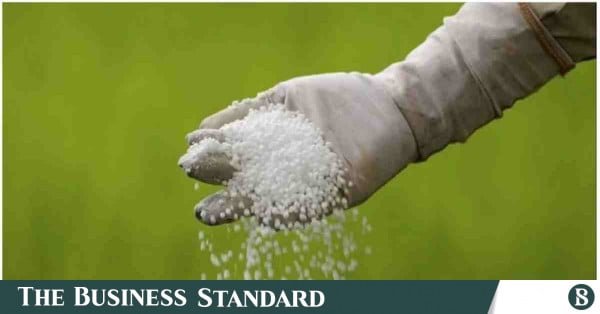
The government is planning to establish a joint-venture fertiliser factory in Saudi Arabia with an annual production capacity of 10 lakh tonnes of Di-ammonium Phosphate (DAP), aiming to secure long-term supplies and reduce reliance on imports from multiple sources.
Under the proposal, Bangladesh and Saudi Arabia will jointly own a new company operating the factory, with each government holding a 50% stake, according to sources in the foreign and industries ministries.

Bangladesh will guarantee the purchase of all fertiliser produced for 20 to 25 years, while Saudi Arabia will ensure an uninterrupted supply of gas and other required raw materials.
The two governments will contribute equally to 30% of the total investment, while the remaining 70% will be financed through loans from Saudi Arabia’s financial sector. The project is expected to begin commercial production in 2030.
Infograph: TBS
“>

Infograph: TBS
A non-binding memorandum of understanding (MoU) is expected to be signed during Prime Minister Tarique Rahman’s proposed visit to Saudi Arabia in November.
Industries Secretary Abdun Naser Khan told TBS over the phone on Thursday that the plan was still at a preliminary stage.
“The Ministry of Foreign Affairs and the Bangladesh Chemical Industries Corporation (BCIC) are working on this matter,” he said, declining to elaborate further.
A techno-economic study has also been proposed to assess the project’s technical and commercial feasibility. The proposed MoU would not create any obligation for either country to implement the project.
TBS emailed the Saudi Arabian Embassy in Dhaka on Wednesday seeking comments, but received no response before publication.
Reducing import reliance and ensuring supply
Bangladesh’s sole DAP fertiliser factory produces only a small amount compared with national demand.
Production sometimes stops completely because of shortages of raw materials, leaving the country heavily dependent on imports, a significant share of which comes from Saudi Arabia.
A foreign ministry official, speaking on condition of anonymity, said, “If a joint-venture factory is established in Saudi Arabia, long-term DAP fertiliser supply for Bangladesh can be ensured. Simultaneously, an opportunity to procure fertiliser at a more affordable price compared to current imports may be created.”
According to agriculture ministry estimates, annual field-level demand for DAP fertiliser stands at 14-15 lakh tonnes.
The Bangladesh Agricultural Development Corporation (BADC) must also maintain a buffer stock of 5 lakh tonnes, bringing the total annual requirement to around 19-20 lakh tonnes.
The private sector imports approximately 5 lakh tonnes, while BCIC’s domestic production remains limited. The BADC imports the remaining requirement through government-to-government (G2G) agreements and open tenders.
Agriculture ministry projections suggest the BADC may need to import 9.40-10 lakh tonnes of DAP fertiliser annually in the coming years.
The proposed Saudi factory’s annual capacity would be close to that volume, potentially allowing Bangladesh to secure a major portion of its imports through a guaranteed long-term source.
In its feedback on the proposal, the agriculture ministry indicated that the government could provide a buy-back guarantee for the factory’s entire output.
Ownership and financing proposal
Under the proposal, the BCIC, which operates under the industries ministry and oversees eight state-owned fertiliser factories in Bangladesh, will hold the country’s 50% stake in the proposed Saudi-based joint-venture company.
The company’s board will have equal representation from both governments.
The project’s construction cost has not yet been determined. Its total investment, financing arrangements and commercial terms will be finalised after technical and financial feasibility studies.
The proposed 20-25-year purchase guarantee is expected to help attract Saudi investment by securing a long-term buyer for the factory’s output. However, the project’s financial viability and production costs will need to be established through the studies.
MoU preparations ahead of PM’s visit
Officials from the West Asia Wing of the foreign ministry said Prime Minister Tarique Rahman’s visit to Saudi Arabia may take place in the second half of November, although the dates have yet to be finalised.
The ministry has prepared a concept note for the proposed MoU and sought input from the Industries ministry. It has also sought the agriculture ministry’s views on future DAP demand, import requirements and the proposed purchase guarantee.
After the MoU is signed, the two countries will need to assess the project’s technical and commercial feasibility. Final agreements covering investment, financing, raw material supplies and fertiliser purchases will follow if both sides agree to proceed.
The foreign ministry official said the proposal also aligns with Saudi Arabia’s Vision 2030, which aims to diversify the country’s economy and reduce its dependence on oil.
Long-standing DAP import agreement with Saudi Arabia
Bangladesh has imported DAP fertiliser from Saudi Arabia under G2G agreements since FY2015-16, according to a Ministry of Agriculture report.
The latest two-year agreement was signed on 15 December 2024. It provides for 15 shipments a year, including 11 committed and four optional lots. The committed shipments require Bangladesh to import at least 4.40 lakh tonnes annually.
The country’s total DAP imports have also increased, rising from 12.72 lakh tonnes in FY2023-24 to 13.99 lakh tonnes in FY2024-25 and 16.20 lakh tonnes in FY2025-26.
If the proposed factory becomes operational, it could supply a substantial portion of Bangladesh’s import requirements. However, the final project plan will need to address how its production will fit with existing G2G commitments and future demand.
Import costs and subsidy concerns
DAP fertiliser is sold to consumers at Tk21 per kg, with the government subsidising the gap between import and retail prices.
On 13 October, the Cabinet Committee on Government Purchase approved the import of 40,000 tonnes from Saudi Arabia under a G2G agreement at $861.50 per tonne. At Tk123 per dollar, the import price alone works out to around Tk106 per kg, excluding transport and handling costs.
The proposed joint venture aims to explore more affordable procurement. However, its cost-effectiveness will depend on production expenses, loan interest, raw material and transport costs, and the financial implications of the long-term purchase guarantee.
Production at sole factory falls far below target
Established in 2006 on 66 acres in Rangadia, Anwara upazila, Chattogram, DAP Fertilizer Company Limited is the country’s only DAP-producing factory, with an annual capacity of 5.28 lakh tonnes.
However, raw material shortages have kept production well below capacity. Against a BCIC target of 1 lakh tonnes in FY2025-26, the factory produced only 40,000 tonnes. It has recorded no production so far in the current financial year, remaining shut since 28 June due to a shortage of phosphoric acid.
Officials consider an uninterrupted supply of raw materials essential to avoid similar disruptions at the proposed Saudi factory.
First potential overseas industrial investment
Bangladesh Bank sources say the government has no precedent of directly investing in an industrial factory abroad. The proposed Saudi project could be its first such venture.
Overseas investment must comply with Bangladesh Bank’s foreign exchange rules, including approval for investments exceeding $10,000.
The project will therefore require scrutiny of investment approvals, foreign exchange management, debt liabilities and potential financial risks. Its final structure will depend on feasibility studies and bilateral negotiations.
About The Author