An estimated 25.6 million people in Bangladesh cannot afford a nutritious and diversified diet, while around 16 million face acute food insecurity.
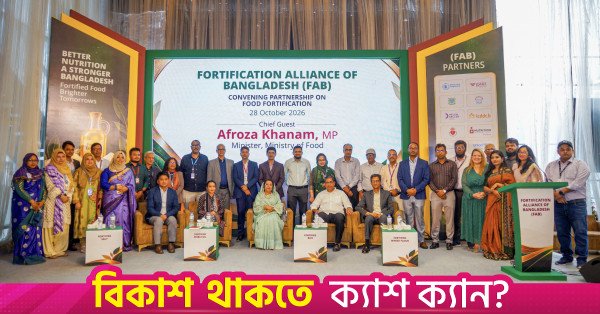
Minister of Food Afroza Khanam, MP, along with representatives from government agencies, UN organisations, development partners, and private-sector entities, pose for a photo during the official launch of the Fortification Alliance Bangladesh (FAB) at Krishibid Institution Bangladesh today, 28 October 2026. Photo: Courtesy
“>

Minister of Food Afroza Khanam, MP, along with representatives from government agencies, UN organisations, development partners, and private-sector entities, pose for a photo during the official launch of the Fortification Alliance Bangladesh (FAB) at Krishibid Institution Bangladesh today, 28 October 2026. Photo: Courtesy
The Fortification Alliance Bangladesh (FAB) was launched today (28 October) to strengthen food fortification efforts and address micronutrient deficiencies across the country.
The alliance was launched at the Krishibid Institution Bangladesh in Dhaka, bringing together government agencies, development partners, UN organisations, academics, civil society and private-sector representatives, reads a press release.
The alliance aims to support the government in improving coordination, strengthening regulatory oversight, ensuring food quality and safety, and expanding access to affordable fortified foods, particularly for vulnerable populations.

The United Nations World Food Programme (WFP) will chair the alliance, while the Global Alliance for Improved Nutrition (GAIN) will serve as co-chair.
Bangladesh has made progress in food fortification through initiatives such as universal salt iodisation and vitamin A fortification of edible oil. Fortified rice and wheat flour have also been prioritised as ways to deliver essential nutrients to a large population.
However, micronutrient deficiencies, commonly known as hidden hunger, remain a concern, particularly among women and children.
According to the press release, an estimated 25.6 million people in Bangladesh cannot afford a nutritious and diversified diet, while around 16 million face acute food insecurity. An estimated 1.6 million children are expected to require treatment for acute malnutrition in 2026.
Speaking as chief guest at the launch, Food Minister Afroza Khanam stressed the need for stronger collaboration among government agencies, development partners and food producers to ensure fortified foods meet quality and safety standards and reach those who need them most.
State Minister for Local Government, Rural Development and Cooperatives Mir Shahe Alam also attended the event.
Representatives from the ministries of health, food and industries, the Bangladesh Food Safety Authority, the Bangladesh Standards and Testing Institution, UN agencies and development organisations were also present.
FAB will focus on supporting national fortification strategies, strengthening public-private partnerships, improving monitoring and quality assurance, and raising public awareness of fortified foods.
About The Author