Mobile operators have urged the Bangladesh Telecommunication Regulatory Commission (BTRC) to further cut proposed spectrum renewal prices, saying spectrum costs relative to revenue in Bangladesh are more than double the global average and are constraining network investment and service quality.
Grameenphone, Robi Axiata and Banglalink are due to renew a combined 79.2MHz of spectrum on 10 November, comprising 32.4MHz for Grameenphone, 22.4MHz for Robi and 24.4MHz for Banglalink.
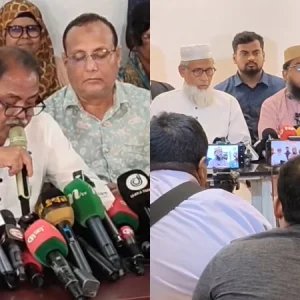
Lt Col Mohammad Zulfikar (retd), secretary general of the Association of Mobile Telecom Operators of Bangladesh (AMTOB), said operators in Bangladesh spend 15.7% of their revenue on spectrum, compared with the global average of 7.7% and 10.4% in the Asia-Pacific region.

“BTRC carried out a detailed study by an expert researcher on spectrum pricing and proposed a price for the renewal of spectrum that is modestly lower than before. We appreciate the endeavour, but we believe the price can further be reconsidered,” he said.
In a letter to the BTRC on Sunday, AMTOB sought further cuts to proposed base prices for the 900MHz, 1800MHz and 2100MHz bands. It also proposed a 20-year renewal period, with payments in 20 equal annual instalments and no price revision during the extended tenure.
The association also called for the annual spectrum charge to be withdrawn.
Zulfikar said lower prices would allow operators to invest more in network expansion, improve service quality and extend coverage, urging the regulator to meet with the industry.
Proposed cuts could lower renewal costs
The BTRC has proposed reducing renewal prices by 10% to 30%. If approved, the cuts could bring the combined renewal cost for the three operators to around Tk13,100.50 crore from Tk16,845.20 crore at existing rates – a reduction of about 22%.
The proposal, submitted to the government in October, is awaiting final approval. It follows a study that assessed spectrum value based on projected income, engineering costs, international comparisons and wider economic benefits.
The study warned that excessive prices could discourage operators from acquiring spectrum, undermining network investment and potentially reducing government revenue. Improved connectivity, it said, could generate economic benefits beyond direct spectrum payments.
High costs raise investment concerns
A TBS report published in September found Bangladesh’s spectrum prices among the highest regionally and globally. An industry valuation analysis found local prices were four to six times those in Nordic markets after adjustments for market size and structure.
Bangladesh priced 2.3GHz and 2.6GHz spectrum at around $6 million per MHz in its 2022 auction. By comparison, India’s 3.3GHz band cost $1.8 million to $2.1 million per MHz, while Pakistan’s 2.3GHz and 2.6GHz bands cost $1 million to $1.25 million. Direct comparisons vary by frequency band, licence duration and auction terms.
In January, Grameenphone acquired 10MHz of 700MHz spectrum at Tk237 crore per MHz, paying Tk2,370 crore. Robi and Banglalink did not participate, citing pricing and auction concerns.
AMTOB has warned that high spectrum costs divert funds from base station expansion, network modernisation and new technologies, potentially slowing the growth of mobile financial services, e-commerce, education and healthcare.
BTRC Chairman Major General (retd) Md Emdad Ul Bari earlier told TBS that spectrum pricing must balance investment incentives with predictable government revenue.
“While lower prices could boost investment and indirect tax, the government still needs predictable direct returns,” he said.
About The Author