Coastal town generates around 34.5 tonnes of plastic waste daily: UNDP
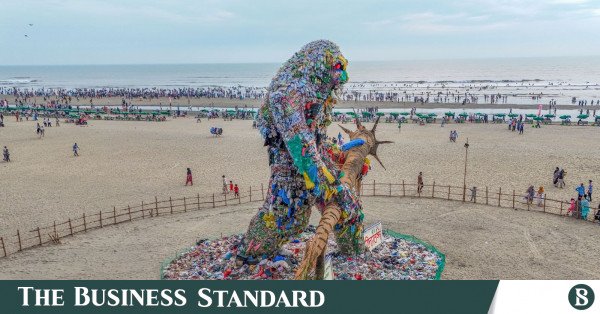
A ‘plastic monster’ made from around five tonnes of discarded plastic, including bottles, polythene bags, snack packets and fishing nets collected from Cox’s Bazar and Saint Martin’s Island, stands on Sugandha Point beach, symbolising the threat plastic pollution poses to marine life and coastal ecosystems. The photo was taken on Saturday. Photo: Mohammad Minhaz Uddin
“>

A ‘plastic monster’ made from around five tonnes of discarded plastic, including bottles, polythene bags, snack packets and fishing nets collected from Cox’s Bazar and Saint Martin’s Island, stands on Sugandha Point beach, symbolising the threat plastic pollution poses to marine life and coastal ecosystems. The photo was taken on Saturday. Photo: Mohammad Minhaz Uddin
Cox’s Bazar’s beaches are struggling with mounting plastic waste as millions of tourists visit the coastal town annually, with daily visitor numbers soaring to 100,000-150,000 during holidays from around 30,000 on regular days.
Discarded bottles, cups, snack packets, and shopping bags pile up around Laboni, Sugandha and Kolatoli beaches, straining the town’s waste management system.
To highlight the problem, a 50-foot sculpture made from around five tonnes of discarded plastic has been installed near Laboni Point recently. Created by Bidyanondo Foundation and the Cox’s Bazar district administration, it depicts a monster holding an uprooted coconut tree, symbolising plastic pollution’s threat to the coastal environment.

The installation urges tourists to reduce plastic use and dispose of waste responsibly.
Cox’s Bazar receives an estimated 40 lakh to 50 lakh tourists annually, according to the Hotel Owners Association.
The town generates around 34.5 tonnes of plastic waste daily, according to the UNDP. Much accumulates around hotels, restaurants and tourist spots, while some reaches the sea through drains and canals, threatening the coastal and marine environment.
Plastic waste poses a long-term marine threat
Plastic pollution extends beyond visible litter. Sunlight and waves break plastic into microplastics that contaminate seawater and sediment, enter marine food chains, and potentially threaten ecosystems and human health.
Infographic: TBS
“>

Infographic: TBS
Mohammad Abdul Mannan, deputy commissioner of Cox’s Bazar, said discarded single-use bottles, cups and food packaging make waste collection and disposal difficult, threatening the coastal environment and tourism.
“We are running an awareness programme with this giant sculpture. Besides, we are arranging dustbins on the beaches so tourists can dispose of their plastic waste safely, which will then be collected by our beach cleaners,” he said.
Mohammad Arman, a Bidyanondo volunteer, said 15 students from Dhaka University’s Faculty of Fine Arts worked for 20 consecutive days to complete the sculpture using plastic collected from Cox’s Bazar and nearby areas.
“The waste was collected from Cox’s Bazar through a programme that allows people to exchange plastic for essential goods,” he said.
The organisation has pursued similar initiatives for three years to raise tourists’ awareness of plastic pollution, he added. The sculpture has drawn beachgoers who stop to look and take photographs. Organisers hope it will encourage visitors to reconsider how they use and discard plastic.
Awareness needs to translate into action
Hamidur Rahman, a tourist from Naogaon, said the sculpture highlighted the consequences of careless plastic disposal.
“We, the tourists, are discarding plastic on the beaches and causing pollution. The sculpture is showing us how we are inviting the devil to destroy our country through plastic pollution,” he told The Business Standard.
“We must learn from this initiative, avoid using single-use plastic and dispose of plastic waste safely so it does not pollute the environment,” he added.
Beyond awareness campaigns, tackling pollution requires effective waste collection, adequate disposal facilities and greater responsibility from businesses serving tourists. Visitors can carry reusable bottles and bags, avoid unnecessary disposable plastics and use designated bins. Hotels, restaurants and beachside vendors must reduce disposable packaging and ensure proper waste disposal.
The sculpture’s impact will ultimately depend on whether its message changes how plastic is used and discarded. Protecting Cox’s Bazar’s beaches is not merely about keeping the shoreline clean, but also safeguarding marine life, coastal ecosystems and the tourism industry.
About The Author