Highlights:
- Chickpea prices rose Tk17–21 per kg in Chattogram over two months.
- Imports surged despite rising prices, raising concerns about artificial shortages.
- Traders blamed higher Australian booking rates and reduced production forecasts.
- Bangladesh imported 17,177 tonnes in July–August 2026, versus 1,381 tonnes previously.
- Ramadan demand can reach 80,000–100,000 tonnes monthly, intensifying price pressures.
- Consumer advocates urged stronger monitoring to investigate hoarding and market manipulation.
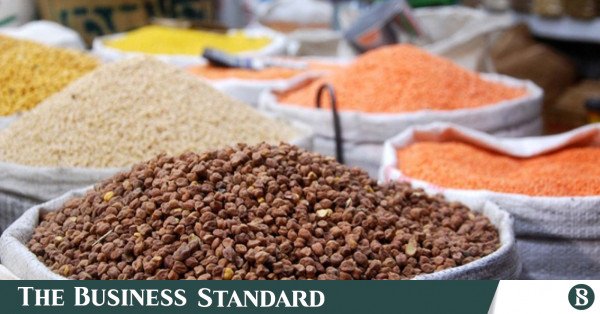
Chickpea prices have surged despite normal imports, raising concerns that traders may be creating an artificial supply shortage ahead of Ramadan when demand rises sharply.
Wholesale prices in Chattogram’s Khatunganj market have increased by Tk17-21 per kg over the past two months, even after the country imported more chickpeas in July and August than during the same period last year.

Traders claimed that low production in Australia and higher international booking rates fuelled the price increase.
Consumers, however, blamed importers and wholesalers for hoarding the product ahead of Ramadan and driving up prices.
Consumer rights advocates say inadequate market monitoring may be allowing manipulation and gradual price hikes ahead of the fasting month.
A visit to Khatunganj found chickpeas selling for Tk3,700-3,750 per maund (37.32kg), up from Tk2,900-3,000 two months ago.
Paritosh Dey, general secretary of the Khatunganj Chickpea Traders and Pulses Traders Association, told TBS that Australian chickpea booking rates had risen gradually over the past two months.
“At one point, booking rates for Australian chickpeas reached $850 per tonne. They have now eased to $820-830 per tonne, compared with $650-680 previously,” he said.
The earlier, lower-priced shipments came from the previous crop, while the market is currently relying largely on old stocks, he added. Prices could ease when supplies from the new harvest arrive.
The trader said increased imports from India could also help reduce price pressure, although international prices were currently affecting the domestic market.
At Dhaka’s Khilgaon kitchen market, chickpeas were selling for Tk100-110 per kg last week.
Imports rise well ahead of Ramadan
According to the Plant Quarantine Centre in Chattogram, Bangladesh imported 227,355 tonnes of chickpeas through Chattogram port in FY26, compared with 226,000 tonnes in FY25.
Imports reached 17,177 tonnes in July and August 2026, up from 1,381 tonnes during the same period in 2025, an increase of 15,796 tonnes.
Ahead of Ramadan, which began on 19 February this year, the country imported 178,792 tonnes between November 2025 and January 2026. January alone accounted for 79,771 tonnes.
Traders estimate monthly demand at 10,000-12,000 tonnes under normal conditions, rising to 80,000-100,000 tonnes during Ramadan. Annual demand is estimated at 220,000-230,000 tonnes.
SM Nazer Hossain, vice-president of the central committee of the Consumers Association of Bangladesh, said authorities should examine market stocks, importers’ sales records and distribution channels to determine whether artificial shortages or syndicates were driving prices up.
“Such situations are not new. They mainly arise from inadequate market monitoring,” he told TBS.
He said authorities should regularly monitor demand, import volumes, import costs and selling prices to prevent manipulation.
“If prices continue to rise gradually, they could climb further by Ramadan. The administration needs to take effective action quickly,” he added.
Australian output forecast adds to concerns
A report by Australian broadcaster ABC, citing the Australian Bureau of Agricultural and Resource Economics and Sciences, said Australia’s chickpea production could fall 52% to slightly above one million tonnes in FY27.
The forecast reflects the prospect of reduced cultivation and lower yields in major producing regions, including northern New South Wales and Queensland.
The report warned that actual production could be lower than forecast, raising concerns over global supplies. Supply-chain disruptions and below-normal seasonal rainfall in parts of India could also affect the market.
Prices in some Australian regions have reportedly reached around $1,000 per tonne, compared with approximately $600 earlier this year. However, increased supplies following the new harvest could ease prices.
Mohammad Mohiuddin, general secretary of the Chaktai-Khatunganj Aratdar General Traders Welfare Association, told TBS that higher Australian booking rates had affected domestic prices, although there was no major supply shortage at present.
Mohammad Faiz Ullah, deputy director of the Chattogram divisional office of the Directorate of National Consumer Rights Protection, said the agency would verify the issue and take action if necessary.
About The Author