Article 58(2) allows the prime minister to request a minister to resign at any time.
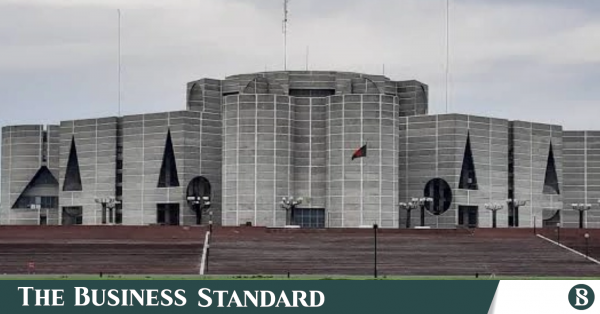
Bangladesh Parliament building. Photo: UNB
“>

Bangladesh Parliament building. Photo: UNB
Bangladesh’s president formally appoints ministers and state ministers, but the prime minister determines their number and can initiate their removal under the Constitution.
The Constitution of Bangladesh sets out how ministers, ministers of state and deputy ministers are appointed, how they can resign and when their offices become vacant.
Who appoints ministers?

Under Article 56(1), the prime minister determines the number of ministers, ministers of state and deputy ministers. Article 56(2) provides that they are formally appointed by the president.
However, Article 48(3) requires the president to act in accordance with the prime minister’s advice in exercising presidential functions, except for the appointment of the prime minister and the chief justice. The appointment of other ministers is not an exception.
The president therefore performs the formal constitutional act of appointment, while the prime minister determines the ministerial appointments.
The Constitution also requires at least nine-tenths of ministers be appointed from among MPs. Up to one-tenth may be chosen from among people qualified for election as MPs, even if they are not elected members.
How can a minister resign?
Under Article 58(1)(a), a minister must submit their resignation to the prime minister for submission to the president. The minister’s office becomes vacant on resignation under this provision.
The rule applies to ministers of state and deputy ministers as well. Article 58(5) explicitly includes both categories within the term “minister” for the purposes of the article.
Can the PM remove a minister?
Yes. Article 58(2) allows the prime minister to request a minister to resign at any time.
If the minister refuses, the prime minister may advise the president to terminate the appointment. The office becomes vacant if the president directs termination under this provision.
The president formally issues the direction, but the process is initiated by the prime minister. The Constitution does not require the minister’s consent to termination.
What happens if a minister ceases to be an MP?
Under Article 58(1)(b), a minister’s office becomes vacant if they cease to be a member of parliament. An exception applies to a minister appointed under the proviso to Article 56(2), which allows certain people qualified for election as MPs to be appointed without being elected.
Article 58(3) provides that the circumstances specified in Article 58(1)(a), (b) and (d) do not disqualify a minister from holding office while parliament stands dissolved.
What happens when the PM leaves office?
Under Article 58(4), if the prime minister resigns or ceases to hold office, all other ministers are deemed to have resigned as well. However, they continue in office, subject to the relevant constitutional provisions, until their successors take office.
This provision allows the government to continue functioning during a change of prime minister.
The bottom line: the president formally appoints ministers and directs termination when advised to do so under Article 58(2). The prime minister determines the number of ministers, advises on appointments and can initiate a minister’s removal. These powers and procedures are governed principally by Articles 48, 56 and 58 of the Constitution.
About The Author