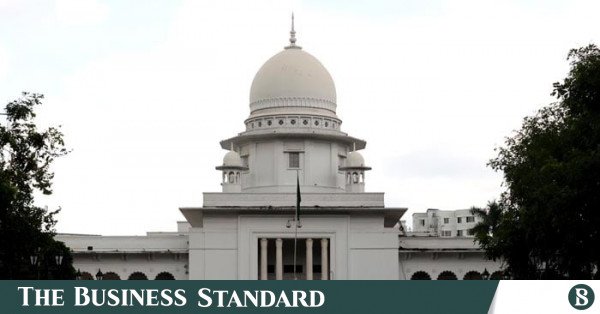
The High Court yesterday (17 October) ordered the liquidation of HG Aviation Ltd, the operator of Regent Airways under Habib Group, over its failure to repay more than $3.7 million in aircraft lease dues to US-based Wilmington Trust Company.
A company cannot evade an acknowledged and payable debt by citing the possibility of securing investment in the future, the court said.
The court also appointed Supreme Court lawyer Asif Bin Anwar as a government liquidator to oversee the liquidation process and recover the outstanding amount of $3,709,827.38 for the creditor.

The court directed him to begin the process within a week and submit a report on HG Aviation’s liquidation within two months.
Justice Md Toufiq Inam of the High Court’s Company Bench delivered the verdict on 19 August. The full 15-page judgment was released yesterday.
Barrister Md Mucktadir Rahman represented the US company, while HG Aviation had no lawyer appearing on its behalf.
Speaking to TBS, Mucktadir Rahman said Regent Airways had leased aircraft from Wilmington on several occasions but defaulted on lease payments.
Ten other Habib Group companies had acted as guarantors for the aircraft leases, he added.
Wilmington had tried various means to recover the dues before filing a liquidation petition in 2023 against 11 Habib Group companies.
The lawyer said the court had so far ordered the liquidation of only HG Aviation. If the outstanding amount cannot be recovered through this process, the court may take action against the group’s other 10 companies.
He said he would seek hearings on the remaining liquidation petitions after the court’s vacation ends this month.
The other companies facing liquidation petitions are Habib Steels Ltd, Diamond Cement Ltd, Legacy Fashion Ltd, Regent Spinning Mills Ltd, Regent Textile Mills Ltd, Siam Superior Ltd, MTS Re-Rolling Mills Ltd, Anwara Paper Mills Ltd, Regent Power Ltd and Regent Airways Ltd.
Together, the 11 companies reportedly owe around Tk4,000 crore to government agencies, banks and non-bank financial institutions.
Five senior Habib Group figures are also reported to have left the country amid the group’s business decline. They are Chairman Yakub Ali, Managing Director Yasin Ali, and directors Mashruf Habib, Salman Habib and Tanvir Habib.
Background of the case
According to the verdict, Wilmington, acting as owner trustee, signed an aircraft leasing agreement with HG Aviation Ltd on 14 December 2012. Under the agreement, the company leased a used Boeing 737-700 aircraft to HG Aviation, which operated as Regent Airways.
HG Aviation subsequently failed to meet its contractual obligations, including aircraft lease payments.
Wilmington Trust said $3,709,827.38 was outstanding as of 25 February 2020, excluding applicable interest and other contractual dues. It sent legal notices on 28 January, 3 February and 18 February that year demanding payment.
Following repeated demands, HG Aviation acknowledged the liability through its lawyers and agreed to a revised payment schedule. However, it subsequently failed to honour the agreed instalments, prompting Wilmington to file a liquidation petition.
In its judgment, the court noted that HG Aviation had not disputed the original liability. Instead, it had acknowledged the debt and agreed to repay it under a subsequent arrangement, which it also failed to honour.
From business empire to decline
Habib Group’s business began in Chattogram in 1947, when Habib Ullah Mia established Habib Trading, an import-export business dealing in consumer goods.
His three sons, Yakub Ali, Mahbub Ali and Yasin Ali, later joined the business, expanding it into garments, textiles, shipbreaking, steel, cement and paper.
Over the past decade, however, expansion into fertiliser, power generation and aviation reportedly contributed to the group’s financial difficulties.
Several of its 31 companies have ceased operations, while some have been leased to other businesses.
Various group companies began defaulting on loans in 2019, and Regent Airways suspended operations in 2020 during the Covid-19 pandemic.
Only four of the group’s 31 businesses are currently operating, according to the report. The group’s workforce, which once exceeded 16,000, has fallen to fewer than 1,000.
About The Author