More than 90% of e-waste collection in Bangladesh is carried out by informal-sector workers.
Logo of Transparency International Bangladesh.
“>

Logo of Transparency International Bangladesh.
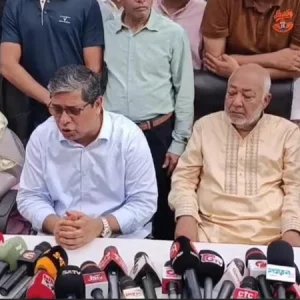
Policy gaps, poor coordination among government agencies and weak enforcement are hindering electronic waste (e-waste) management in Bangladesh, while the lack of a comprehensive database is making effective planning difficult, Transparency International Bangladesh (TIB) Executive Director Iftekharuzzaman said.
Although the government introduced e-waste management rules in 2021, their mandatory provisions are not being properly implemented due to weak institutional capacity, limited public awareness and a lack of accountability, according to him.
He made the remarks at a consultation “Good Governance in E-waste Management in Bangladesh: Challenges and Prospects” at the Bangladesh-China Friendship Conference Centre in Dhaka today (14 October), marking International E-Waste Day.

TIB and the Waste Electrical and Electronic Equipment Society Bangladesh jointly organised the event.
Iftekharuzzaman said Bangladesh has several policies and strategies related to e-waste, but they remain fragmented, with no comprehensive framework to guide implementation.
The TIB executive director said e-waste poses environmental and health risks but also offers economic opportunities through recycling and the recovery of valuable materials.
More than 90% of e-waste collection in Bangladesh is carried out by informal-sector workers, who lack formal recognition and adequate health protection, he added.
Iftekharuzzaman also warned that the growing use of solar power would eventually generate significant volumes of discarded solar panels and related equipment.
Bangladesh should establish collection, recycling and safe disposal systems before the waste becomes a major problem, he said.
Govt plans e-waste management centres
Dr Md Saimum Parvez, special assistant to the prime minister on environment, forests and climate change, said the government was planning to establish e-waste management centres at divisional and district levels.
Discussions are underway with foreign investors and local entrepreneurs to process household e-waste into intermediate products for export, he said.
The government is prioritising the management of domestically generated waste rather than importing hazardous e-waste, in line with the Basel Convention, he added.
The government is emphasising the three-R principle of reduce, reuse and recycle, in line with its electoral commitments, the special assistant said, stressing the need for effective recycling policies for discarded smartphones, batteries and electric vehicle waste.
On renewable energy, Parvez said the government was exploring solar and coastal wind power to reduce dependence on fossil fuels and move towards a renewable energy-based economy through a just transition.
Brig Gen (retd) Iqbal Ahmed, BTRC commissioner for engineering and operations; Brig Gen Shafiur Rahman, director general for engineering and operations at BTRC; Abdullah Zahid Osmani, research associate at TIB; and Sumon Ahmed Sabir, chairperson of WEEE Society Bangladesh, also attended the event.
About The Author