BNP Acting Secretary General Ruhul Kabir Rizvi has accused Jamaat-e-Islami of prioritising its own political interests over national and public welfare, saying the party has followed the same approach in 1971, 1986 and 2024.
“Jamaat has never practised politics in the national interest or in the interest of the people; it has practised politics for its own party interests. The same was true in 1971, in 1986 and in 2024. They have always placed party interests before state interests,” he said.
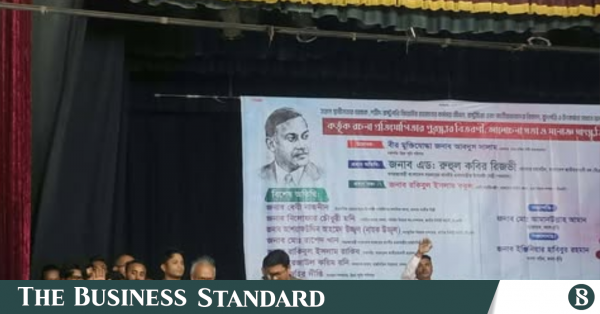
Rizvi, who is also the prime minister’s political adviser, made the remarks as chief guest at an award-giving ceremony and discussion organised by Zia Smriti Pathagar for the Komol Kuri essay competition today (9 October).

Referring to the arrest of Major (retd) Akhtaruzzaman, Rizvi criticised a senior opposition leader’s call to halt remittance flows, questioning the rationale and potential consequences of such a move.
“Without considering the extent of an individual’s alleged offence, you are quickly turning the issue into a political one. Now one of your top leaders is calling for a remittance shutdown. But how will you do that? What does it mean to call for a remittance shutdown?” he said.
He warned that disrupting remittance flows could undermine the country’s development and economy.
“Remittances are a driving force behind our development and national economy. You are threatening to shut down that driving force! What kind of politics do you practise?” he said.
Rizvi said student politics should extend beyond rallies, meetings and slogans, arguing that students needed a deeper understanding of society, the state, domestic institutions and global affairs.
He urged the Bangladesh Jatiotabadi Chhatra Dal to strengthen its capabilities through academic merit, knowledge and democratic practices.
Rizvi also recalled that young people had previously faced doubts about their ability to bring about change, but their role in the 2024 movement had challenged those perceptions.
He said the movement demonstrated how the determination and collective strength of young people could drive social change.
About The Author