Bangladesh Bank data show that $101 million was traded in the interbank market on the 7th of this month.
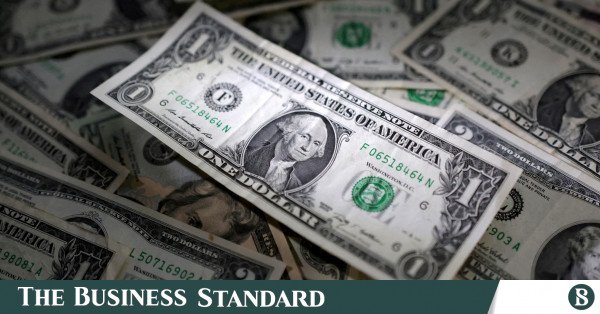
US dollar banknotes are seen in this illustration taken on 10 March 2023. Photo: Reuters
“>

US dollar banknotes are seen in this illustration taken on 10 March 2023. Photo: Reuters
Commercial banks traded more than $200 million in the interbank market yesterday, marking a very high level of dollar transactions in recent times.
A senior Bangladesh Bank official confirmed the information to The Business Standard.
Officials at Bangladesh Bank and bankers said the volume of dollar transactions in the interbank market was the highest in five years.

Commercial banks traded $155 million in spot transactions and more than $50 million through swaps in the interbank market, at rates ranging from Tk123.10 to Tk123.22 per dollar.
Bangladesh Bank data show that $101 million was traded in the interbank market on the 7th of this month, while transactions amounted to $82 million on the 6th.
The interbank market is a system in which commercial banks directly trade money, short-term loans or foreign currencies among themselves.
Ordinary customers or institutions cannot participate directly in this market. A senior Bangladesh Bank official told TBS that there is currently a relatively high supply of dollars, while demand in the market is comparatively low.
This is because demand for dollars has fallen significantly below the inflow of remittances and export earnings.
As a result, the NOP of many commercial banks are approaching the higher limit.
NOP (Net Open Position) is the difference between a bank’s total foreign currency assets and its total foreign currency liabilities) Normally, when this happens, commercial banks have to sell their excess dollars to the central bank or in the interbank market.
However, Bangladesh Bank has not been purchasing dollars from commercial banks recently.
At the same time, the government has payments due next week. This could be one reason for the higher volume of dollar transactions in the interbank market.
The official said banks whose NOP positions have reached the higher limit are therefore selling dollars to other banks through the interbank market.
Banks facing dollar demand, meanwhile, are purchasing dollars from the interbank market.
A senior commercial bank official told TBS that banks with government payments due this month have purchased dollars from other banks.
Many of these banks have increased their NOP positions after purchasing dollars, as they expect remittance inflows to decline this month.
As a result, banks with payment requirements have been buying dollars from the interbank market. In September, expatriate Bangladeshis sent the lowest amount of remittances in 11 months. They sent $2.76 billion in remittances during the month.
A senior commercial bank official told TBS that the interbank market had not been viable for a long time. However, the market has recently become somewhat more viable.
“It is a positive development that $200 million in transactions took place in this market in a single day,” he said. Bangladesh Bank data show that the country’s current account surplus more than tripled to $599 million in the first two months of the current fiscal year, July-August, from $197 million a year earlier, largely supported by strong growth in workers’ remittances.
Bangladesh received $5.83 billion in remittances during this time, marking a robust growth of nearly 20% compared to the same period of the previous year.
As the dollar exchange rate continued to fall in the market in September this year, Bangladesh Bank purchased $50 million from commercial banks through an auction after a gap of nearly three months.
About The Author