As the scorching sun beats down on the drought-prone Barendra region, the fields are witnessing a quiet agricultural transformation—without the roar of diesel engines or the noise of machinery.
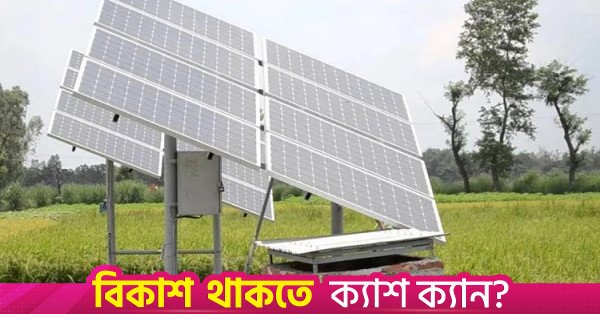
Instead, solar-powered irrigation pumps are drawing clear water from underground and supplying it to once-parched fields, turning previously fallow lands into productive croplands.
The technology is helping farmers in Rajshahi’s Mohanpur upazila grow paddy, brinjal, tomato, cauliflower, cabbage, and chilli, with some farmers now cultivating paddy three times a year.

Local farmer Anarul said farmers previously had to struggle for water, often bringing it through long pipelines from distant ponds using diesel-run pumps.
“The cost of irrigation was so high that it was difficult to make any profit. There were also no rural electricity connections,” he said.
The situation has changed with the installation of solar irrigation systems.
“Now, as soon as the sun rises, the pump starts operating and water comes up without any fuel cost,” Anarul said.
According to him, the solar pump is currently irrigating around 30 to 35 bighas of land belonging to about 20 farmers.
The system is being managed jointly by a committee formed by the participating farmers rather than by a single owner.
Another farmer, Suman, said they previously depended mainly on Aman paddy and winter vegetables or pulses.
“With easy access to irrigation water, we are now cultivating early varieties of vegetables alongside Aus and Boro paddy and earning additional income,” he said.
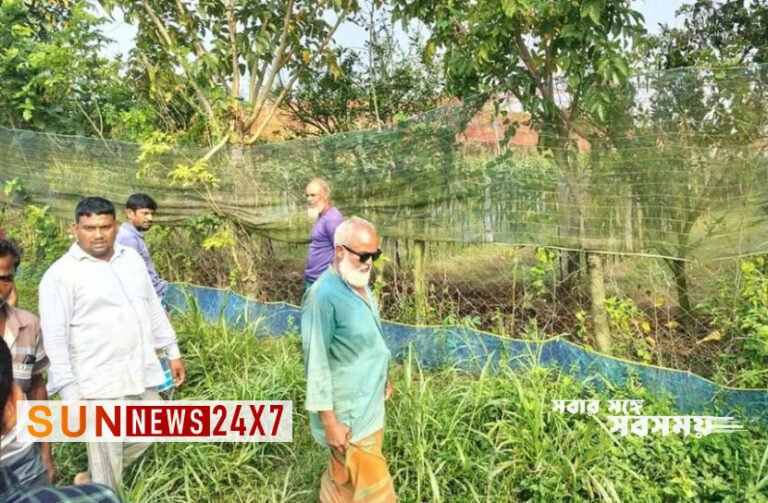
Farmer Akhtar Hossain said the availability of irrigation water had transformed previously uncultivated and almost barren land into productive farmland.
While harvesting brinjal from a nearby field, he said he was also preparing early cauliflower seedlings using the polythene mulching method.
Solar-powered irrigation systems are being expanded across the Barendra region under the Department of Agricultural Extension’s project titled “Agricultural Development Project of Rajshahi Division through Expansion of Modern Technology.”
Project officials said the initiative was introduced as declining groundwater levels were reducing the effectiveness of deep tube wells.
Under the project, farmers are being provided solar irrigation systems free of cost to help address the irrigation crisis.
Project sources said 32 solar irrigation pumps had been installed in the Rajshahi division over the past two years.
Of these, 24 are fixed solar irrigation systems, each with a capacity of two horsepower, for irrigating designated areas. Eight portable systems have also been provided so that farmers can move them from one field to another, while 10 precision solar systems have been installed for targeted irrigation of orchards.
Project Director S M Hasanuzzaman said each solar pump costs around Tk5 lakh to install according to the tender.
“Six solar panels, each generating 550 watts, produce a total of 3,200 watts of electricity. The two-horsepower pump can supply water to around 20 to 25 bighas of land daily from 8am to 4pm,” he said.
He said the technology was particularly useful in areas where the command area of deep tube wells had declined because of falling groundwater levels.
“For example, the command area of a deep tube well that previously covered around 150 bighas has fallen to about 80 bighas. In such areas, this technology is a blessing,” Hasanuzzaman said.
He said solar irrigation had brought irrigation costs for farmers close to zero and increased cropping intensity by around 50%.
“There are plans to add solar panels to existing diesel- and electricity-powered irrigation pumps in the future,” he added.
Mohanpur Upazila Agriculture Extension Officer Abdul Matin said solar irrigation was particularly effective in remote areas where electricity connections were unavailable.
“However, the initiative would become more meaningful if there were arrangements to supply surplus electricity to the national grid during the off-irrigation season,” he said.
Agricultural economist Dr Jahangir Alam described the development as significant, noting that irrigation is one of the most energy-dependent components of agricultural production in Bangladesh.
About The Author